

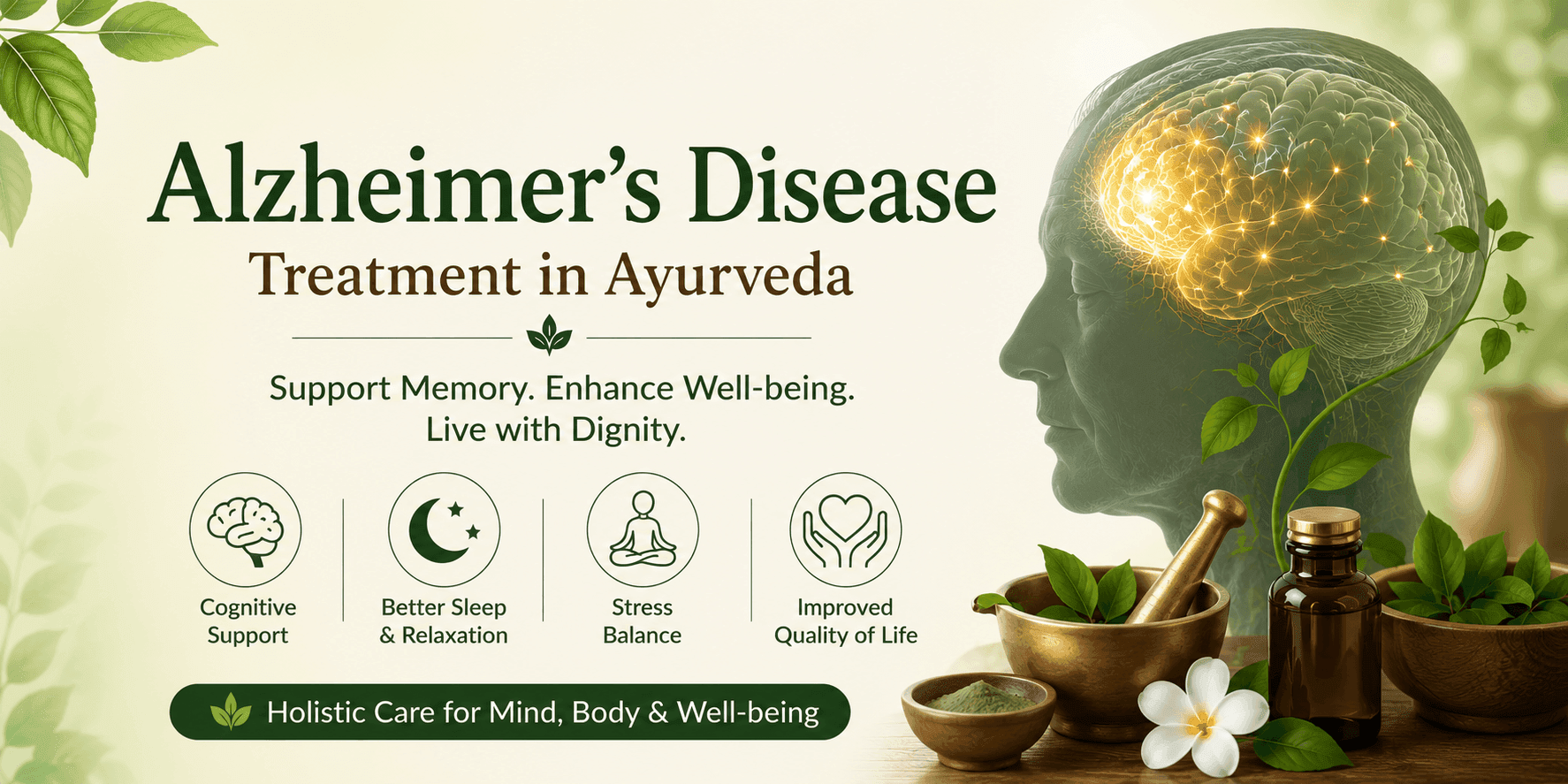
Alzheimer's Disease Treatment in Ayurveda
Experience holistic Ayurvedic approach to restoring natural vitality.
Request an Appointment
Table of Contents
Need personalized advice?
Introduction
Author Information
Introduction
Alzheimer's disease is a progressive neurological condition that affects memory, thinking abilities, behavior, and daily functioning. It is the most common cause of dementia and primarily affects older adults, although symptoms may begin years before a formal diagnosis is made.
As the condition progresses, individuals may experience increasing difficulty with memory, communication, decision-making, recognition of familiar people or places, and performing routine daily activities. Alzheimer's disease can significantly impact both patients and caregivers, making comprehensive medical care and long-term support essential.
Many families explore Alzheimer's disease treatment in Ayurveda as a complementary approach to support cognitive health, emotional wellbeing, sleep quality, stress management, and overall quality of life alongside conventional neurological care.
At Adyant Ayurveda, Ayurvedic management plans are personalized after a detailed assessment of an individual's constitution (Prakriti), age, symptoms, digestive health, sleep patterns, emotional wellbeing, and overall medical condition.
This article explains:
- What Alzheimer's disease is
- Early symptoms and warning signs
- Risk factors and causes
- How Ayurveda understands cognitive decline
- Ayurvedic therapies and supportive care
- Adyant Ayurveda treatment protocol
- Diet and lifestyle recommendations
- Scientific evidence and limitations
- When medical care is necessary
Important Medical Disclaimer: Alzheimer's disease is a serious neurodegenerative disorder that requires evaluation and ongoing management by qualified neurologists and healthcare professionals. Ayurveda may be used as a complementary wellness approach but should not replace evidence-based medical diagnosis, prescribed medications, or specialist care.
Quick Answer: Can Ayurveda Help in Alzheimer's Disease?
Ayurvedic management of Alzheimer's disease focuses on supporting cognitive wellness, promoting healthy aging, improving sleep quality, managing stress, supporting overall brain health, and enhancing quality of life through personalized herbal support, diet, lifestyle guidance, Panchakarma therapies where appropriate, and caregiver education.
Ayurveda does not claim to cure, reverse, or permanently eliminate Alzheimer's disease.
Key Highlights
- Alzheimer's disease is a progressive neurological condition.
- Early diagnosis and intervention are important.
- Ayurveda emphasizes holistic cognitive wellness.
- Personalized care plans are based on individual assessment.
- Stress management, sleep, nutrition, and routine are important.
- Ayurvedic therapies may support quality of life and wellbeing.
- Conventional neurological care remains essential.
What Is Alzheimer's Disease?
Alzheimer's disease is a progressive brain disorder that gradually affects:
- Memory
- Thinking abilities
- Language
- Decision-making
- Behavior
- Daily functioning
The condition develops slowly and may worsen over several years.
It is one of the most common causes of dementia worldwide.
Memory-Related Symptoms
- Forgetting recent conversations
- Repeatedly asking the same questions
- Misplacing items frequently
- Difficulty remembering appointments
Cognitive Symptoms
- Difficulty solving problems
- Confusion regarding time or place
- Reduced concentration
- Difficulty planning tasks
Communication Changes
- Trouble finding words
- Difficulty following conversations
- Problems expressing thoughts clearly
Behavioral Changes
- Mood swings
- Irritability
- Anxiety
- Social withdrawal
Early Stage
- Mild memory problems
- Occasional confusion
- Difficulty remembering recent events
Moderate Stage
- Increased forgetfulness
- Difficulty performing daily activities
- Communication challenges
- Behavioral changes
Advanced Stage
- Significant memory loss
- Dependence on caregivers
- Difficulty recognizing family members
- Reduced mobility and communication
Causes and Risk Factors
The exact cause of Alzheimer's disease is not fully understood.
Several factors may contribute:
Age
Advancing age is the strongest risk factor.
Genetics
Family history may increase risk.
Cardiovascular Risk Factors
- High blood pressure
- Diabetes
- Obesity
- High cholesterol
Lifestyle Factors
- Physical inactivity
- Poor sleep
- Smoking
- Chronic stress
Brain Changes
Abnormal protein accumulation within brain tissue is associated with Alzheimer's disease.
Potential Complications
As Alzheimer's disease progresses, complications may include:
- Falls and injuries
- Malnutrition
- Difficulty swallowing
- Sleep disturbances
- Increased infection risk
- Reduced independence
How Is Alzheimer's Disease Diagnosed?
Diagnosis may involve:
Medical Evaluation
- Medical history review
- Cognitive assessment
- Neurological examination
Diagnostic Testing
- Brain imaging
- Blood tests
- Memory testing
- Neuropsychological evaluation
Early diagnosis may help improve care planning and symptom management.
Conventional Treatment Overview
Current medical treatment focuses on symptom management and supportive care.
Treatment may include:
- Cognitive-support medications
- Behavioral management strategies
- Occupational therapy
- Physical therapy
- Nutritional support
- Caregiver education
There is currently no universally accepted cure for Alzheimer's disease.
How Ayurveda Understands Alzheimer's Disease
Ayurveda does not describe Alzheimer's disease using modern medical terminology. However, age-related cognitive decline may be understood through concepts involving:
- Vata imbalance
- Majja Dhatu (nervous system tissue)
- Ojas depletion
- Age-related degeneration
- Mental and cognitive disturbances
Vata Dosha and Aging
Ayurveda associates aging with increased Vata predominance, which may influence:
- Memory
- Concentration
- Sleep quality
- Emotional stability
Medhya Concept
Ayurvedic texts describe "Medhya" approaches that traditionally support:
- Learning
- Memory
- Cognitive function
- Mental clarity
Alzheimer's Disease Treatment in Ayurveda
Ayurvedic care focuses on supporting overall wellbeing rather than promising reversal of disease.
Management may include:
- Cognitive wellness support
- Sleep improvement strategies
- Stress reduction
- Nutritional guidance
- Routine stabilization
- Caregiver education
1. Comprehensive Ayurvedic Assessment
Each individual undergoes:
- Prakriti assessment
- Dosha evaluation
- Cognitive symptom review
- Sleep assessment
- Digestive health evaluation
- Emotional wellbeing assessment
- Lifestyle review
2\. Personalized Herbal Support
Protocols may include Ayurvedic formulations traditionally used for:
- Cognitive wellness
- Nervous system support
- Stress management
- Sleep support
- Healthy aging
All recommendations are individualized and medically reviewed.
3\. Dietary and Nutritional Assessment
At Adyant Ayurveda, nutrition is considered an important component of cognitive wellness.
Areas reviewed include:
- Meal quality
- Appetite
- Hydration
- Digestive health
- Nutritional adequacy
4\. Lifestyle and Routine Planning
Patients and caregivers receive guidance regarding:
- Daily routines
- Sleep hygiene
- Cognitive engagement
- Physical activity
- Stress management
5\. Panchakarma Planning
Selected therapies may be considered for appropriate individuals after careful evaluation of:
- Age
- Overall health
- Mobility
- Cognitive status
- Medical history
6\. Ongoing Monitoring and Caregiver Support
Long-term care plans focus on:
- Quality of life
- Functional independence
- Emotional wellbeing
- Caregiver education
Panchakarma Therapies Used in Cognitive Wellness Programs
Therapies are selected individually and only when appropriate.
Shirodhara
Traditionally used for relaxation and mental wellbeing.
Abhyanga
Therapeutic oil massage used to support relaxation and comfort.
Nasya
Traditionally used in Ayurvedic head and sensory wellness programs.
Shiro Abhyanga
Head massage traditionally used for relaxation and stress reduction.
These therapies should always be performed under qualified Ayurvedic supervision.
Brahmi (Bacopa monnieri)
Traditionally used to support memory and cognitive wellness.
Ashwagandha (Withania somnifera)
Traditionally used to support stress resilience and vitality.
Shankhpushpi
Used in traditional Ayurvedic cognitive wellness formulations.
Guduchi (Tinospora cordifolia)
Traditionally used for overall wellness and healthy aging.
Jyotishmati
Traditionally referenced in Ayurvedic texts for cognitive support.
Herbal use should always be supervised by qualified healthcare professionals, particularly in older adults taking prescription medications.
Foods to Include
- Fresh vegetables
- Seasonal fruits
- Whole grains
- Healthy fats
- Nuts and seeds
- Adequate hydration
Foods to Limit
- Highly processed foods
- Excess sugar
- Excess alcohol
- Smoking and tobacco use
Diet plans should be individualized based on medical conditions and nutritional needs.
Helpful Habits
- Maintain a consistent routine
- Engage in social interaction
- Stay physically active
- Practice mental stimulation activities
- Ensure adequate sleep
- Manage stress effectively
Caregiver Support Is Essential
Caregivers play a critical role in Alzheimer's care.
Supportive measures include:
- Structured daily routines
- Safe home environments
- Medication management
- Emotional support
- Professional guidance
Caregiver wellbeing should also be prioritized.
Scientific Research and Evidence
Research has explored the role of certain Ayurvedic herbs, lifestyle interventions, stress management techniques, and wellness practices in supporting cognitive health and healthy aging.
However:
- More large-scale clinical studies are needed.
- Evidence remains limited for disease modification.
- Ayurvedic therapies should complement standard neurological care.
Current scientific evidence does not support claims that Ayurveda can cure or reverse Alzheimer's disease.
Potential Benefits
- Holistic care approach
- Personalized wellness support
- Stress management assistance
- Sleep support
- Quality-of-life enhancement
- Caregiver guidance
Limitations
- Alzheimer's disease remains progressive
- Results vary among individuals
- Conventional medical care remains essential
- No guaranteed outcomes
When to Consult a Doctor Immediately
Seek urgent medical attention if the patient develops:
- Sudden confusion
- New neurological symptoms
- Difficulty swallowing
- Falls or injuries
- Severe behavioral changes
- Sudden weakness
- Suspected stroke symptoms
Frequently Asked Questions
No. Ayurveda does not claim to cure or reverse Alzheimer's disease. Management focuses on supporting wellbeing, quality of life, and cognitive wellness alongside conventional care.
Brahmi, Ashwagandha, Shankhpushpi, Guduchi, and Jyotishmati are traditionally used in Ayurvedic cognitive wellness programs.
Selected therapies may be recommended in appropriate individuals under professional supervision, primarily for comfort, relaxation, and wellbeing support.
No. Prescribed medications should never be discontinued without consulting the treating neurologist.
Yes. Early diagnosis allows better planning, symptom management, caregiver education, and support services.
At Adyant Ayurveda, our approach to cognitive wellness emphasizes compassionate, individualized, and evidence-informed care. Our programs focus on: * Personalized Ayurvedic assessment * Cognitive wellness support * Lifestyle optimization * Stress management * Nutritional guidance * Caregiver education * Long-term wellbeing planning We work alongside conventional healthcare providers to support the overall quality of life of patients and families affected by Alzheimer's disease.
Medical Disclaimer
This content is for educational purposes only and should not be considered medical advice. Always consult a qualified Ayurvedic doctor before undergoing any treatments.