
Best Ayurvedic Herbs for Heart Health
Experience holistic Ayurvedic approach to restoring natural vitality.
Request an Appointment
Table of Contents
Need personalized advice?
Introduction
Heart health is one of the most important aspects of overall wellness. Modern lifestyles characterized by stress, poor dietary habits, lack of physical activity, obesity, high cholesterol, hypertension, and diabetes have significantly increased the risk of cardiovascular diseases worldwide.
While conventional medicine plays a critical role in diagnosing and treating heart disease, many individuals seek natural and complementary approaches to support cardiovascular wellness. Ayurveda, the traditional system of medicine practiced for thousands of years, emphasizes preventive healthcare, balanced nutrition, healthy lifestyle habits, stress management, and the use of carefully selected herbs for heart health.
Ayurvedic herbs have traditionally been used to support healthy circulation, metabolic balance, cardiovascular function, stress resilience, and overall wellbeing. These herbs are generally incorporated as part of a comprehensive wellness program rather than as substitutes for medical treatment.
At Adyant Ayurveda, herbal recommendations are personalized based on an individual's body constitution (Prakriti), dosha balance, cardiovascular risk profile, digestive health, and overall wellness goals.
This article explores:
- The Ayurvedic approach to heart health
- The best herbs for heart health
- Traditional uses of cardiac-supportive herbs
- Benefits and precautions
- Adyant Ayurveda's herbal approach to cardiovascular wellness
- Frequently asked questions
Important Medical Disclaimer: Heart disease is a serious medical condition. Ayurvedic herbs should be used under professional guidance and should not replace prescribed medications, emergency care, or cardiology treatment. Always consult your healthcare provider before starting herbal supplements.
Quick Answer: Which Are the Best Herbs for Heart Health?
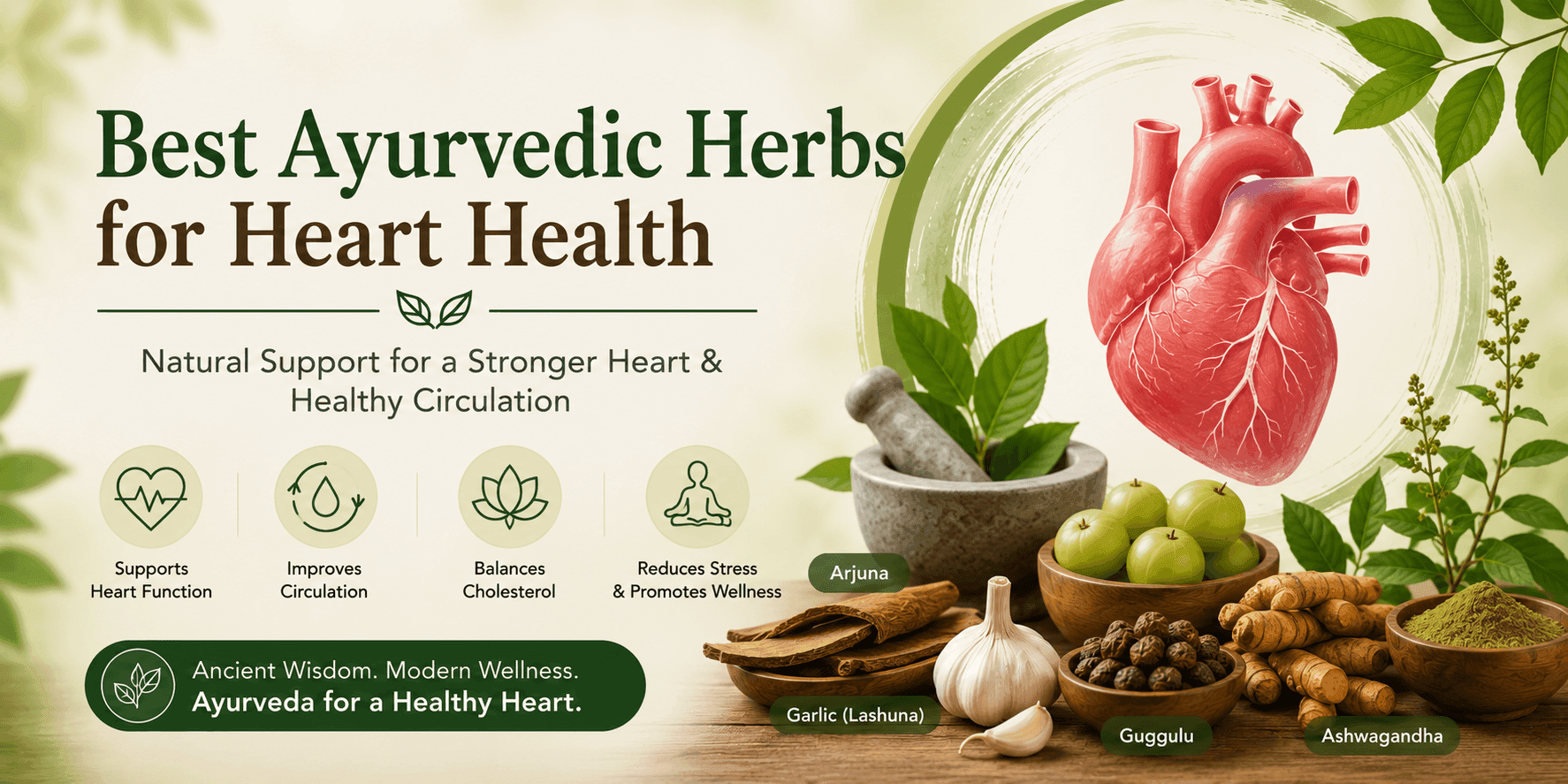
Some of the most widely used Ayurvedic herbs for heart health include:
- Arjuna
- Garlic (Lashuna)
- Guggulu
- Ashwagandha
- Brahmi
- Guduchi
- Pushkarmool
- Tulsi
- Turmeric (Haridra)
- Triphala
These herbs are traditionally used in Ayurveda to support cardiovascular wellness, healthy circulation, metabolic balance, stress management, and overall heart function.
Why Heart Health Matters
The heart continuously pumps blood throughout the body, supplying oxygen and nutrients to tissues and organs.
Maintaining heart health supports:
- Healthy circulation
- Energy production
- Brain function
- Physical endurance
- Organ function
- Overall longevity
Preventive care plays a major role in reducing cardiovascular risk.
How Ayurveda Views Heart Health
In Ayurveda, the heart is known as Hridaya and is considered one of the most vital organs.
Heart health is associated with:
- Balanced Doshas
- Healthy circulation
- Strong digestion (Agni)
- Proper nourishment of tissues
- Mental and emotional wellbeing
According to Ayurvedic principles, imbalances involving Vata, Pitta, Kapha, Meda Dhatu (fat metabolism), and Rakta Dhatu (blood tissue) may influence cardiovascular wellness.
Why Arjuna Is Considered the King of Heart Herbs
Arjuna is one of the most respected herbs in Ayurveda for cardiovascular wellness and has been traditionally used for centuries to support heart function.
Traditional Ayurvedic Uses
- Supports cardiovascular wellness
- Promotes healthy circulation
- Supports cardiac strength
- Traditionally used in heart-supportive formulations
Potential Benefits
- Supports overall heart health
- May help maintain healthy circulation
- Supports cardiovascular function
Common Forms
- Arjuna powder
- Arjuna capsules
- Arjuna decoction
- Ayurvedic formulations containing Arjuna
2\. Garlic (Lashuna)
Garlic has been used traditionally in Ayurveda and is widely recognized for its role in cardiovascular wellness.
Traditional Uses
- Supports healthy metabolism
- Promotes circulation
- Supports cardiovascular health
Potential Benefits
- Supports healthy lipid metabolism
- May help maintain cardiovascular wellness
- Supports vascular health
3\. Guggulu (Commiphora mukul)
Guggulu is one of Ayurveda's most important herbs for metabolic balance.
Traditional Uses
- Supports Meda Dhatu (fat metabolism)
- Supports healthy circulation
- Traditionally used in wellness programs focused on metabolic health
Potential Benefits
- Supports healthy lipid balance
- Supports weight management efforts
- Promotes metabolic wellness
4\. Ashwagandha (Withania somnifera)
Stress is a major contributor to cardiovascular risk, and Ashwagandha is one of Ayurveda's most valued adaptogenic herbs.
Traditional Uses
- Supports stress resilience
- Promotes vitality
- Supports nervous system balance
Potential Benefits
- Supports healthy stress response
- Promotes relaxation
- Supports overall wellbeing
5\. Brahmi (Bacopa monnieri)
Brahmi is traditionally known for supporting cognitive function and emotional balance.
Traditional Uses
- Supports mental clarity
- Promotes relaxation
- Supports nervous system health
Potential Benefits
- Helps support stress management
- Promotes emotional wellbeing
- Supports overall cardiovascular wellness indirectly through stress reduction
6\. Guduchi (Tinospora cordifolia)
Guduchi is considered a rejuvenating herb in Ayurveda.
Traditional Uses
- Supports immune health
- Promotes overall wellness
- Supports metabolic balance
Potential Benefits
- Supports healthy inflammatory balance
- Promotes vitality
- Supports long-term wellness
7\. Pushkarmool (Inula racemosa)
Pushkarmool has a long history of traditional use in respiratory and cardiovascular wellness.
Traditional Uses
- Supports circulation
- Traditionally used in heart-supportive formulations
Potential Benefits
- Supports cardiovascular wellness
- Promotes healthy respiratory and circulatory function
8\. Tulsi (Ocimum sanctum)
Tulsi, also known as Holy Basil, is highly valued in Ayurveda.
Traditional Uses
- Supports stress management
- Promotes respiratory wellness
- Supports immune balance
Potential Benefits
- Supports overall wellness
- Promotes healthy stress response
- Supports cardiovascular health indirectly
9\. Turmeric (Haridra)
Turmeric is one of the most researched Ayurvedic herbs worldwide.
Traditional Uses
- Supports healthy inflammatory balance
- Promotes digestive wellness
- Supports metabolism
Potential Benefits
- Supports overall cardiovascular wellness
- Promotes healthy metabolic function
10\. Triphala
Triphala is a classical Ayurvedic formulation made from three fruits.
Traditional Uses
- Supports digestion
- Promotes bowel regularity
- Supports detoxification processes
Potential Benefits
- Supports metabolic wellness
- Promotes digestive health
- Supports long-term cardiovascular wellness through healthy metabolism
Adyant Ayurveda Heart Wellness Protocol
At Adyant Ayurveda, herbal support is never prescribed based solely on a diagnosis.
Our approach includes:
Comprehensive Assessment
- Prakriti analysis
- Dosha assessment
- Lifestyle review
- Digestive evaluation
- Stress assessment
- Cardiovascular risk review
Personalized Herbal Planning
Recommendations are customized based on:
- Individual constitution
- Existing health conditions
- Current medications
- Age
- Wellness goals
Lifestyle Integration
Herbal support is combined with:
- Dietary counseling
- Physical activity guidance
- Stress management
- Sleep optimization
- Weight management support
Can Herbs Alone Prevent Heart Disease?
No.
Heart health requires a comprehensive approach that includes:
- Healthy eating habits
- Regular physical activity
- Blood pressure management
- Cholesterol control
- Stress management
- Weight management
- Medical monitoring
Herbs should be viewed as one component of a broader wellness strategy.
Include
- Fresh vegetables
- Fruits
- Whole grains
- Legumes
- Healthy fats
- Fiber-rich foods
- Adequate hydration
Limit
- Processed foods
- Excess sugar
- Deep-fried foods
- Excess salt
- Smoking
- Excess alcohol
Daily Walking
Walking remains one of the most effective cardiovascular wellness practices.
Yoga
Supports flexibility, circulation, and stress reduction.
Meditation
May help reduce stress and improve emotional wellbeing.
Adequate Sleep
Sleep is essential for cardiovascular recovery and overall health.
Stress Management
Chronic stress is associated with increased cardiovascular risk.
Scientific Research and Evidence
Several Ayurvedic herbs used for heart health have been studied for their potential role in supporting cardiovascular wellness, healthy lipid metabolism, stress management, and circulatory health.
However:
- More large-scale clinical trials are needed
- Results vary among individuals
- Herbal therapies should complement evidence-based medical care
Ayurvedic herbs should be used responsibly under professional supervision.
Safety Considerations
Always consult a healthcare professional if you:
- Have heart disease
- Take blood thinners
- Take blood pressure medications
- Have diabetes
- Are pregnant or breastfeeding
- Have chronic medical conditions
Some herbs may interact with medications.
References
- World Health Organization (WHO)
- American Heart Association
- National Heart, Lung, and Blood Institute
- Ayurvedic Classical Texts (Charaka Samhita, Sushruta Samhita)
- Peer-Reviewed Herbal and Cardiovascular Research Studies
Why Choose Adyant Ayurveda?
At Adyant Ayurveda, heart wellness programs are personalized using classical Ayurvedic principles combined with modern health awareness.
Our approach includes:
- Detailed Ayurvedic consultations
- Personalized herbal recommendations
- Diet and lifestyle guidance
- Stress management support
- Long-term wellness planning
Our goal is to support cardiovascular wellness naturally while encouraging evidence-based healthcare and preventive lifestyle practices.
Frequently Asked Questions
Arjuna is often regarded as one of the most important Ayurvedic herbs traditionally used for cardiovascular wellness.
No. Ayurvedic herbs should not replace prescribed medications without physician guidance.
Some herbs may be appropriate under professional supervision, but individuals with heart disease should always consult qualified healthcare providers before use.
Certain Ayurvedic herbs such as Ashwagandha, Brahmi, and Tulsi are traditionally used to support stress management and overall wellbeing.
Responses vary depending on the individual, health condition, lifestyle habits, and consistency of use.
At Adyant Ayurveda, heart wellness programs are personalized using classical Ayurvedic principles combined with modern health awareness. Our approach includes: *Detailed Ayurvedic consultations, *Personalized herbal recommendations, *Diet and lifestyle guidance, *Stress management support, *Long-term wellness planning. | Our goal is to support cardiovascular wellness naturally while encouraging evidence-based healthcare and preventive lifestyle practices.
Medical Disclaimer
This content is for educational purposes only and should not be considered medical advice. Always consult a qualified Ayurvedic doctor before undergoing any treatments.
Specialists

Dr. Srilakshmi
Bangalore
Panchakarma & Detoxification Therapies, Women’s Health & Gynaecological Disorders, Infertility & Reproductive Health, Skin Disorders & Ayurvedic Cosmetology, Hair & Scalp Disorders, Weight Management & Metabolic Disorders, Diabetes & Lifestyle Disorders, Bone, Joint & Musculoskeletal Disorders, Ayurvedic Proctology, Ayurvedic Surgery & Kshara Sutra, ENT & Head-Neck Disorders, Digestive & Gastrointestinal Disorders, Neurological Disorders, Stress, Anxiety & Sleep Disorders, Chronic Health Conditions, Ayurvedic Diet & Nutrition

Dr.Sumana Patavardhan.K.S.
Bangalore
Panchakarma & Detoxification Therapies, Women’s Health & Gynaecological Disorders, Infertility & Reproductive Health, Skin Disorders & Ayurvedic Cosmetology, Hair & Scalp Disorders, Weight Management & Metabolic Disorders, Diabetes & Lifestyle Disorders, Bone, Joint & Musculoskeletal Disorders, Ayurvedic Proctology, Ayurvedic Surgery & Kshara Sutra, ENT & Head-Neck Disorders, Digestive & Gastrointestinal Disorders, Neurological Disorders, Stress, Anxiety & Sleep Disorders, Chronic Health Conditions, Ayurvedic Diet & Nutrition