
Sinusitis Treatment in Ayurveda
Experience holistic Ayurvedic approach to restoring natural vitality.
Request an Appointment
Table of Contents
Need personalized advice?
Quick Answer
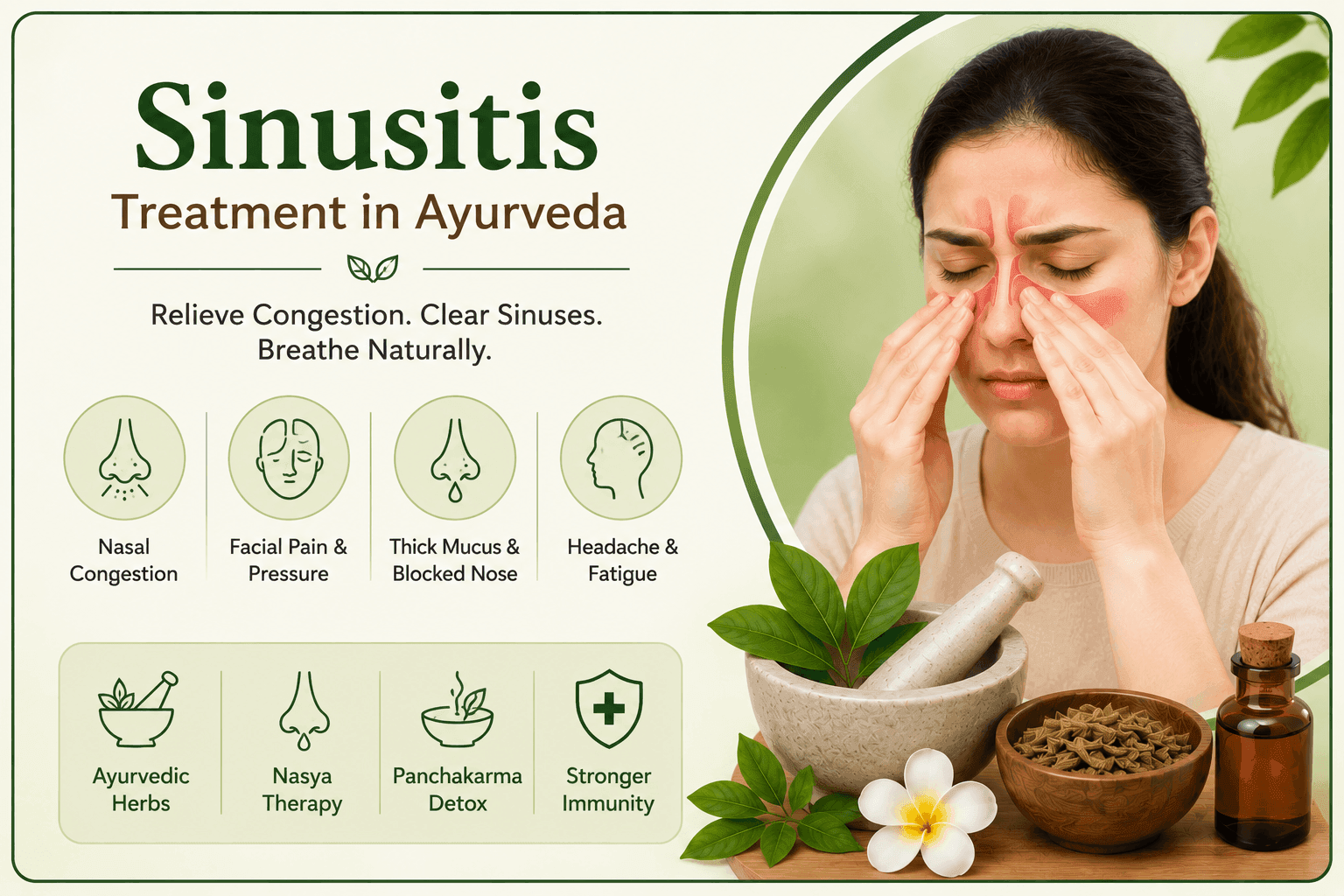
Sinusitis is inflammation of the sinus cavities surrounding the nose, eyes, cheeks, and forehead. It commonly develops due to infections, allergies, nasal polyps, environmental irritants, or structural nasal abnormalities. Symptoms include nasal congestion, facial pain or pressure, headache, postnasal drip, thick mucus discharge, reduced sense of smell, cough, and fatigue.
In Ayurveda, sinusitis is commonly correlated with Peenasa and conditions involving aggravated Kapha Dosha, accumulated Ama (toxins), and obstruction of respiratory channels. Ayurvedic treatment focuses on reducing congestion, improving sinus drainage, balancing doshas, strengthening immunity, and reducing recurrence through herbal medicines, Panchakarma therapies, dietary modifications, and lifestyle management.
What Is Sinusitis?
Sinusitis, also called a sinus infection or rhinosinusitis, occurs when the lining of the sinuses becomes inflamed and swollen. This swelling blocks normal mucus drainage, creating an environment where infections and chronic inflammation can develop.
The sinuses are air-filled cavities located in:
- Frontal sinuses (forehead)
- Maxillary sinuses (cheekbones)
- Ethmoid sinuses (between the eyes)
- Sphenoid sinuses (behind the eyes)
When these passages become blocked, mucus accumulates and symptoms develop.
Acute Sinusitis
- Symptoms last less than 4 weeks
- Usually follows viral upper respiratory infections
- May be bacterial in some cases
Subacute Sinusitis
- Lasts 4–12 weeks
- Persistent inflammation after infection
Chronic Sinusitis
- Symptoms persist for more than 12 weeks
- May involve allergies, nasal polyps, fungal infections, or structural abnormalities
Recurrent Sinusitis
- Multiple episodes per year
- Symptoms resolve completely between attacks
Sinusitis Symptoms
Common symptoms include:
- Blocked or stuffy nose
- Thick yellow or green mucus
- Postnasal drip
- Facial pain or pressure
- Headache
- Forehead pain
- Pain around eyes and cheeks
- Reduced sense of smell
- Reduced sense of taste
- Ear pressure
- Bad breath
- Cough, especially at night
- Fatigue
- Mild fever
Early Warning Signs of Sinusitis
Early symptoms may include:
- Persistent nasal congestion
- Pressure around the eyes and cheeks
- Thick nasal discharge
- Postnasal drip
- Frequent throat clearing
- Mild headache
- Reduced sense of smell
- Facial heaviness when bending forward
- Fatigue and reduced energy
Early treatment may help prevent progression to chronic sinusitis.
Infections
- Viral infections
- Bacterial infections
- Fungal infections
Allergic Conditions
- Allergic rhinitis
- Dust allergy
- Pollen allergy
- Pet dander allergy
Structural Problems
- Deviated nasal septum
- Enlarged turbinates
- Nasal polyps
Environmental Factors
- Air pollution
- Cigarette smoke
- Chemical irritants
- Dry air
Medical Conditions
- Asthma
- Immune deficiencies
- Gastroesophageal reflux disease (GERD)
- Cystic fibrosis
Sinusitis vs Common Cold
Feature | Common Cold | Sinusitis |
Duration | Usually 7–10 days | Often more than 10 days |
Nasal Congestion | Common | Common |
Facial Pain | Rare | Common |
Sinus Pressure | Minimal | Significant |
Thick Mucus | Sometimes | Frequently present |
Reduced Smell | Mild | More common |
Fever | Occasionally | May occur |
Persistent symptoms lasting beyond 10 days may indicate sinusitis rather than a common cold.
Risk Factors
You may have a higher risk of sinusitis if you have:
- Frequent colds
- Allergies
- Asthma
- Nasal polyps
- Smoking habits
- Exposure to pollutants
- Weak immunity
- Structural nasal abnormalities
Diagnosis of Sinusitis
Healthcare providers diagnose sinusitis based on:
Medical History
- Duration of symptoms
- Allergy history
- Previous sinus infections
- Environmental exposures
Physical Examination
- Nasal examination
- Facial tenderness assessment
- Evaluation of nasal obstruction
Diagnostic Tests
In selected cases:
- Nasal endoscopy
- CT scan of the sinuses
- MRI (rarely required)
- Allergy testing
- Nasal culture testing
Proper diagnosis helps determine the underlying cause and appropriate treatment plan.
Sinusitis in Ayurveda
Ayurveda describes chronic nasal disorders under Peenasa, Dushta Pratishyaya, and Kapha-related respiratory disorders.
According to Ayurveda:
- Excess Kapha accumulates in nasal passages
- Ama blocks respiratory channels
- Vata becomes obstructed
- Chronic inflammation develops
- Immunity weakens
- Recurrence becomes common
Kapha Dosha
Responsible for:
- Thick mucus
- Nasal blockage
- Congestion
- Heaviness in the head
Vata Dosha
Responsible for:
- Headache
- Dryness
- Sinus pain
- Airway irritation
Pitta Dosha
Responsible for:
- Inflammation
- Burning sensation
- Yellow discharge
- Infection tendency
Ayurvedic Pathogenesis (Samprapti) of Sinusitis
According to Ayurvedic principles:
- Weak digestive fire (Mandagni) leads to Ama formation.
- Ama combines with aggravated Kapha Dosha.
- Kapha accumulates in the Urdhvajatrugata region (head and neck).
- Obstruction of Pranavaha Srotas develops.
- Vata becomes obstructed.
- Chronic congestion, mucus accumulation, and inflammation occur.
- Recurrent sinus disorders may develop if the underlying imbalance remains untreated.
Ayurvedic treatment focuses on breaking this cycle by removing Ama, balancing Doshas, and restoring normal respiratory function.
Ayurvedic Approach to Sinusitis Treatment
The Ayurvedic management of sinusitis aims to:
- Reduce inflammation
- Clear blocked sinuses
- Eliminate excess Kapha
- Improve sinus drainage
- Strengthen immunity
- Prevent recurrence
- Improve respiratory health
Panchakarma Treatment for Sinusitis
Panchakarma therapies are often considered an important part of Ayurvedic management for chronic and recurrent sinusitis.
Nasya Karma (Primary Therapy)
Nasya is one of the most important Ayurvedic treatments for sinus disorders.
Benefits include:
- Clears nasal passages
- Reduces congestion
- Improves sinus drainage
- Enhances breathing
- Helps reduce headache
- Supports healthy respiratory channels
Medicinal oils may be administered under Ayurvedic supervision.
Vamana Therapy
In selected Kapha-dominant patients:
- Helps remove excess Kapha
- Supports respiratory health
- May reduce recurrent congestion
Performed only under qualified Ayurvedic supervision.
Virechana Therapy
Virechana is a therapeutic detoxification procedure used to eliminate excess Pitta and accumulated toxins from the body.
Potential benefits include:
- Helps reduce chronic inflammation
- Supports detoxification pathways
- May improve allergic tendencies
- Assists in balancing Pitta-Kapha disorders
- Supports long-term respiratory health
This therapy should only be performed after proper evaluation by an experienced Ayurvedic physician.
Swedana (Therapeutic Sudation)
Benefits:
- Helps loosen mucus
- Improves circulation
- Reduces sinus pressure
- Relieves heaviness in the head
Dhoomapana (Medicated Herbal Fumigation)
Traditionally used in selected patients to:
- Reduce Kapha accumulation
- Improve nasal passage clearance
- Support respiratory function
Only under professional guidance.
Common Ayurvedic Herbs Used for Sinusitis
The selection of herbs depends on an individual's constitution, symptoms, and medical history.
Commonly used herbs include:
Tulsi (Holy Basil)
Potential benefits:
- Supports respiratory health
- May help reduce congestion
- Supports immunity
Haridra (Turmeric)
Potential benefits:
- Anti-inflammatory properties
- Supports immune function
- May help reduce allergic responses
Pippali (Long Pepper)
Potential benefits:
- Supports respiratory function
- Helps reduce mucus accumulation
Ginger (Shunthi)
Potential benefits:
- Supports digestion
- Helps reduce Ama
- May relieve congestion
Yashtimadhu (Licorice)
Potential benefits:
- Soothes irritated respiratory tissues
- Supports mucosal health
Guduchi (Tinospora cordifolia)
Potential benefits:
- Immune-supportive properties
- Supports recovery from recurrent infections
Ayurvedic Medicines Commonly Used
Depending on individual assessment, Ayurvedic physicians may prescribe:
- Sitopaladi Churna
- Talisadi Churna
- Tribhuvan Kirti Rasa
- Chandramrita Rasa
- Vyoshadi Vati
- Lavangadi Vati
- Anu Taila (for Nasya)
- Shadbindu Taila
- Guduchi preparations
Important: Medicines should only be taken under the supervision of a qualified Ayurvedic practitioner.
Home Remedies for Sinusitis
Certain supportive measures may help improve comfort:
- Warm steam inhalation
- Saline nasal rinsing
- Drinking warm water throughout the day
- Ginger and Tulsi herbal tea
- Turmeric milk (if tolerated)
- Gargling with warm salt water
- Avoiding cold foods and beverages
- Using a humidifier in dry environments
Home remedies should complement, not replace, professional medical care.
Diet for Sinusitis in Ayurveda
Diet plays a major role in reducing Kapha accumulation.
Foods to Prefer
- Warm water
- Herbal teas
- Ginger tea
- Tulsi tea
- Light soups
- Warm cooked vegetables
- Moong dal
- Garlic
- Black pepper
- Turmeric
Foods to Limit
- Cold drinks
- Ice cream
- Refrigerated foods
- Excess dairy products
- Excess sweets
- Refined sugar
- Fried foods
- Heavy meals
- Processed foods
Lifestyle Recommendations
Helpful habits include:
- Regular steam inhalation
- Adequate hydration
- Daily exercise
- Breathing exercises
- Proper sleep
- Stress management
- Avoiding allergens
- Avoiding smoking
- Maintaining indoor air quality
Yoga and Pranayama for Sinus Health
Under proper guidance:
Pranayama
- Anulom Vilom
- Bhramari
- Nadi Shodhana
Yoga Asanas
- Bhujangasana
- Setu Bandhasana
- Matsyasana
- Surya Namaskar
These practices may help improve respiratory function and overall well-being.
Modern Medical Treatment of Sinusitis
Medical management depends on the cause and severity.
Options may include:
- Saline nasal irrigation
- Nasal corticosteroid sprays
- Antihistamines
- Decongestants
- Antibiotics (when bacterial infection is confirmed)
- Allergy management
- Immunotherapy
- Endoscopic sinus surgery in selected chronic cases
When Is Surgery Recommended?
Surgery may be considered when:
- Chronic sinusitis does not improve with medical treatment
- Nasal polyps obstruct sinus drainage
- Structural abnormalities block airflow
- Recurrent infections significantly affect quality of life
- Complications develop
Endoscopic sinus surgery is the most commonly performed procedure in selected patients.
Possible Complications of Untreated Sinusitis
If left untreated, sinusitis may lead to:
- Chronic sinus disease
- Recurrent infections
- Nasal polyps
- Sleep disturbances
- Ear infections
- Reduced quality of life
- Rare orbital or intracranial complications
When to Seek Immediate Medical Care
Seek urgent medical attention if you experience:
- High fever
- Severe headache
- Vision changes
- Swelling around the eyes
- Confusion
- Persistent symptoms despite treatment
- Recurrent sinus infections
Can Ayurveda Help Prevent Recurrent Sinusitis?
Ayurvedic management aims not only to reduce symptoms but also to address contributing factors such as:
- Kapha imbalance
- Poor digestion
- Ama accumulation
- Allergic tendencies
- Reduced immunity
Long-term dietary guidance, lifestyle modifications, and individualized treatment plans may help reduce the frequency of recurrent episodes in some individuals.
Prevention Tips
To reduce recurrence:
- Control allergies
- Avoid smoking
- Maintain good hydration
- Practice hand hygiene
- Manage respiratory infections early
- Use humidification when appropriate
- Follow an immune-supportive lifestyle
- Maintain digestive health according to Ayurvedic principles
Expert Ayurvedic Perspective
From an Ayurvedic perspective, chronic sinusitis is often associated with Kapha accumulation, impaired digestive function, and recurrent respiratory channel obstruction. Management focuses on individualized assessment, Dosha balancing, Panchakarma therapies where appropriate, dietary modifications, and strengthening overall respiratory health.
Because symptoms of sinusitis can overlap with allergies, nasal polyps, fungal infections, and other conditions, professional evaluation is recommended before beginning treatment.
Key Takeaway
Sinusitis is a common condition characterized by inflammation and blockage of the sinus passages, leading to congestion, facial pressure, headaches, and mucus accumulation. Ayurveda associates sinusitis with Peenasa, Kapha imbalance, and Ama accumulation. Ayurvedic management focuses on clearing congestion, supporting sinus drainage, balancing doshas, improving immunity, and reducing recurrence through Panchakarma therapies such as Nasya, herbal support, dietary modifications, and lifestyle measures. Modern medical evaluation remains important, especially for persistent, severe, or recurrent symptoms.
Medical Disclaimer: This article is for educational purposes only and does not replace professional medical advice, diagnosis, or treatment. Individuals with severe, persistent, or recurrent sinus symptoms should consult a qualified healthcare professional or Ayurvedic physician for personalized care.
Frequently Asked Questions
<p>Ayurveda aims to address underlying imbalances, improve sinus drainage, reduce inflammation, and strengthen immunity. Results vary depending on the cause, severity, and individual response to treatment.</p>
<p>Nasya Karma is traditionally considered one of the most important Ayurvedic therapies for sinus disorders. Other Panchakarma procedures may be recommended based on individual assessment.</p>
<p>Steam inhalation may temporarily reduce congestion and improve comfort in some individuals.</p>
<p>Cold foods, excess dairy products, sugary foods, fried foods, and processed foods are commonly restricted in Ayurvedic dietary recommendations for Kapha-related disorders.</p>
<p>Yes. Chronic allergic rhinitis is one of the most common factors contributing to recurrent and chronic sinusitis.</p>
<p>No. Surgery is generally reserved for selected cases involving nasal polyps, structural abnormalities, or chronic symptoms that do not respond to medical treatment.</p>
<p>Nasya Karma is traditionally regarded as one of the primary Ayurvedic therapies for sinus disorders. Treatment plans vary according to individual needs.</p>
<p>Tulsi, Pippali, Haridra, Guduchi, and Ginger are commonly used in Ayurvedic respiratory support protocols under professional supervision.</p>
<p>Yes. Allergies, environmental triggers, nasal polyps, smoking, and structural abnormalities may contribute to recurrence.</p>
<p>Yes. Nasal congestion and postnasal drip can interfere with sleep quality and may contribute to daytime fatigue.</p>
Medical Disclaimer
This content is for educational purposes only and should not be considered medical advice. Always consult a qualified Ayurvedic doctor before undergoing any treatments.
Specialists

Dr. Srilakshmi
Bangalore
Panchakarma & Detoxification Therapies, Women’s Health & Gynaecological Disorders, Infertility & Reproductive Health, Skin Disorders & Ayurvedic Cosmetology, Hair & Scalp Disorders, Weight Management & Metabolic Disorders, Diabetes & Lifestyle Disorders, Bone, Joint & Musculoskeletal Disorders, Ayurvedic Proctology, Ayurvedic Surgery & Kshara Sutra, ENT & Head-Neck Disorders, Digestive & Gastrointestinal Disorders, Neurological Disorders, Stress, Anxiety & Sleep Disorders, Chronic Health Conditions, Ayurvedic Diet & Nutrition

Dr.Sumana Patavardhan.K.S.
Bangalore
Panchakarma & Detoxification Therapies, Women’s Health & Gynaecological Disorders, Infertility & Reproductive Health, Skin Disorders & Ayurvedic Cosmetology, Hair & Scalp Disorders, Weight Management & Metabolic Disorders, Diabetes & Lifestyle Disorders, Bone, Joint & Musculoskeletal Disorders, Ayurvedic Proctology, Ayurvedic Surgery & Kshara Sutra, ENT & Head-Neck Disorders, Digestive & Gastrointestinal Disorders, Neurological Disorders, Stress, Anxiety & Sleep Disorders, Chronic Health Conditions, Ayurvedic Diet & Nutrition