
Slip Disc Treatment in Ayurveda
Experience holistic Ayurvedic approach to restoring natural vitality.
Request an Appointment
Table of Contents
Need personalized advice?
Quick Answer
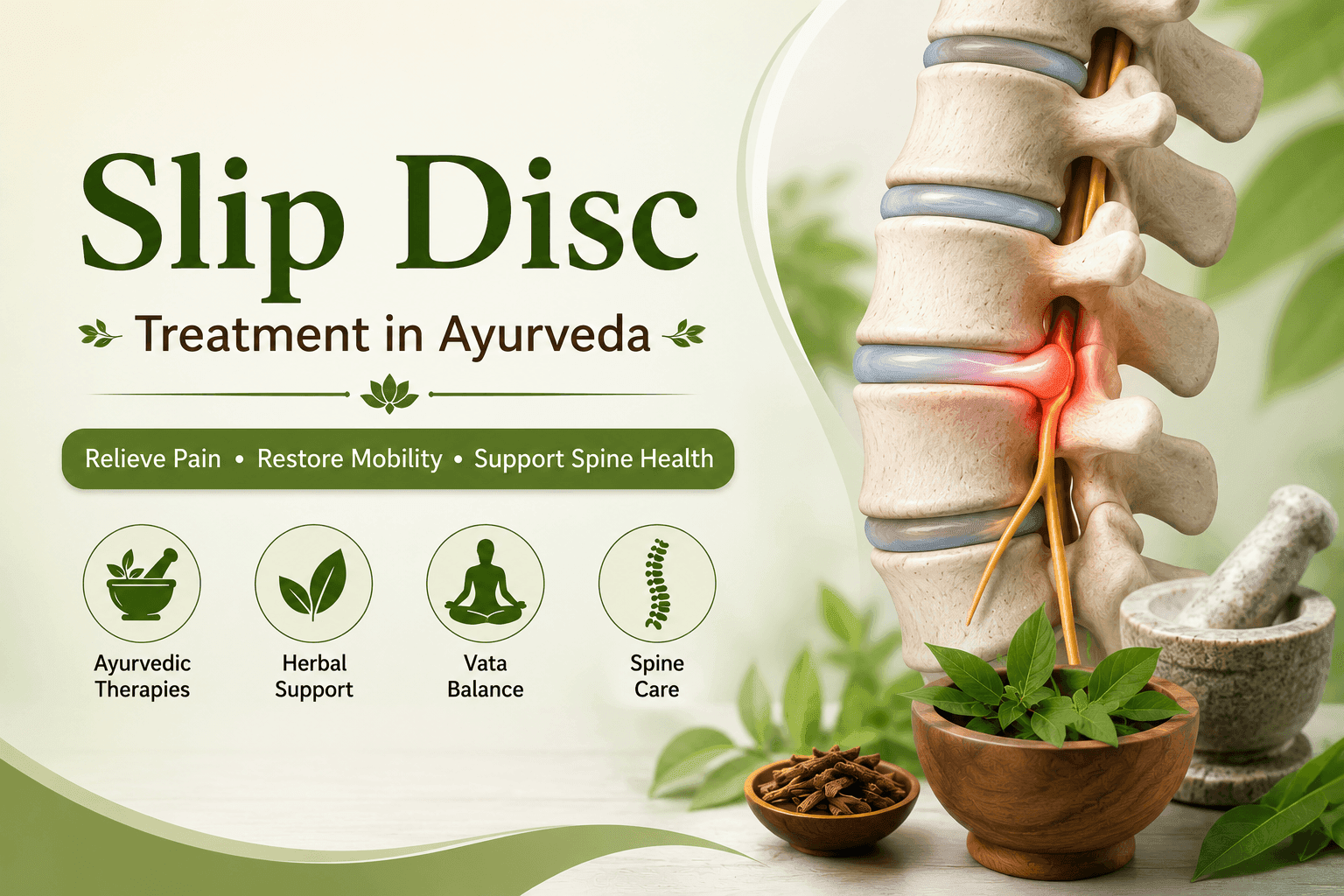
A slip disc, also known as a herniated disc, prolapsed disc, or disc prolapse, occurs when the soft inner portion of a spinal disc pushes through its outer layer and irritates nearby nerves. Common symptoms include back pain, neck pain, sciatica, numbness, tingling, and muscle weakness. According to Ayurveda, slip disc is primarily associated with aggravated Vata Dosha affecting the spine, nerves, and musculoskeletal system. Ayurvedic treatment may include Panchakarma therapies, herbal support, dietary modifications, physiotherapy, yoga, and lifestyle management to help reduce pain, improve mobility, and support spinal health.
Important: Severe symptoms such as loss of bladder control, bowel dysfunction, or progressive weakness require immediate medical evaluation.
What Is a Slip Disc?
A slip disc is a condition in which an intervertebral disc of the spine becomes damaged and protrudes beyond its normal position. These discs act as cushions between the vertebrae and help absorb shock during movement.
When the outer layer of the disc weakens or tears, the soft inner material may bulge outward and compress nearby nerves. This can result in pain, inflammation, numbness, tingling sensations, and reduced mobility.
Although commonly called a "slipped disc," the disc does not actually slip out of place. Instead, it bulges or herniates.
Difference between Slip Disc, Disc Bulge and Herniated Disc
Many patients use the terms slip disc, bulging disc, and herniated disc interchangeably, but they are not exactly the same.
This distinction helps patients better understand MRI findings and treatment recommendations.
Severe
This distinction helps patients better understand MRI findings and treatment recommendations.
Understanding Slip Disc According to Ayurveda
In Ayurveda, spinal disorders are commonly associated with Vata Dosha imbalance. Vata governs movement, nerve impulses, flexibility, and musculoskeletal functions.
Slip disc may be correlated with conditions involving:
- Vata Vyadhi (neuromuscular disorders)
- Katigraha (lower back stiffness)
- Gridhrasi (sciatica)
- Asthi Dhatu Dushti (bone tissue imbalance)
- Majja Dhatu Dushti (nervous tissue imbalance)
According to Ayurvedic principles, improper diet, aging, excessive physical exertion, stress, poor posture, and degeneration may aggravate Vata, leading to pain, stiffness, and nerve-related symptoms.
Ayurvedic Pathogenesis (Samprapti) of Slip Disc
According to Ayurvedic principles, factors such as aging, excessive physical strain, improper posture, irregular eating habits, and Vata-aggravating lifestyles may lead to Vata Dosha imbalance. Over time, this imbalance can affect Asthi Dhatu (bone tissue) and Majja Dhatu (nervous tissue), contributing to pain, stiffness, restricted movement, and nerve-related symptoms.
This section increases EEAT for Ayurvedic readers and strengthens topical authority.
The spine consists of:
- Cervical spine (neck)
- Thoracic spine (mid-back)
- Lumbar spine (lower back)
- Sacrum and coccyx
Between each vertebra lies an intervertebral disc composed of:
These discs act as shock absorbers and allow flexibility and movement.
Connect disc to vertebrae
These discs act as shock absorbers and allow flexibility and movement.
Occurs in the neck region and may cause:
- Neck pain
- Shoulder pain
- Arm numbness
- Hand weakness
Less common and may cause:
- Mid-back pain
- Chest discomfort
- Postural difficulties
Lumbar Slip Disc
The most common type affecting the lower back and often causing sciatica.
Symptoms Based on Slip Disc Location
Symptoms of Slip Disc
Symptoms vary depending on the location and severity of nerve compression.
Common Symptoms
- Lower back pain
- Neck pain
- Muscle stiffness
- Reduced flexibility
- Pain while bending
Nerve Compression Symptoms
- Tingling sensations
- Numbness
- Burning pain
- Electric shock-like sensations
- Sciatica
Advanced Symptoms
- Muscle weakness
- Difficulty walking
- Reduced grip strength
- Loss of balance
Is Every Back Pain a Slip Disc?
No. Most episodes of back pain are caused by muscle strain, ligament injury, posture-related problems, or degenerative changes.
A slip disc is only one possible cause of back pain and often presents with nerve-related symptoms such as:
- Sciatica
- Numbness
- Tingling
- Weakness
Consult a healthcare professional if:
- Pain persists beyond a few weeks
- Symptoms interfere with daily activities
- Numbness increases
- Muscle weakness develops
- Walking becomes difficult
- Symptoms worsen despite home care
Early diagnosis may help prevent complications.
Seek urgent medical attention if you experience:
- Loss of bladder control
- Loss of bowel control
- Severe leg weakness
- Saddle anesthesia (numbness around the groin area)
- Sudden inability to walk
These symptoms may indicate serious nerve compression requiring immediate treatment.
Causes of Slip Disc
Several factors may contribute to disc herniation.
Age-Related Degeneration
Discs lose water content and elasticity with age, making them more vulnerable to injury.
Improper Lifting
Lifting heavy objects incorrectly places excessive pressure on spinal discs.
Sedentary Lifestyle
Weak back and core muscles increase spinal stress.
Obesity
Excess body weight increases pressure on the spine.
Repetitive Strain
Repeated bending, twisting, or lifting may contribute to disc damage.
Trauma or Injury
Accidents, falls, or sports injuries may cause acute disc herniation.
Risk Factors
You may have a higher risk of slip disc if you:
- Are above 30 years of age
- Sit for prolonged periods
- Have poor posture
- Perform heavy physical labor
- Smoke regularly
- Are overweight
- Have weak core muscles
- Have a family history of disc disease
Stages of Slip Disc
Early treatment may help prevent progression.
Commonly Affected Disc Levels
Why Does a Slip Disc Cause Sciatica?
Sciatica occurs when a herniated lumbar disc compresses or irritates the sciatic nerve roots. This may lead to:
- Pain radiating from the lower back to the leg
- Tingling sensations
- Numbness
- Burning pain
- Muscle weakness
The L4-L5 and L5-S1 discs are most commonly associated with sciatica symptoms.
Diagnosis of Slip Disc
Proper diagnosis helps determine severity and treatment options.
Your doctor will review:
- Symptoms
- Injury history
- Pain patterns
- Functional limitations
Assessment includes:
- Muscle strength
- Reflexes
- Sensation
- Range of motion
MRI Scan
MRI is often the most useful imaging test for identifying disc herniation and nerve compression.
Additional Tests
- X-ray
- CT scan
- Nerve conduction studies
- Electromyography (EMG)
Modern Medical Treatment for Slip Disc
Treatment depends on symptom severity and neurological findings.
Conservative Management
- Activity modification
- Physical therapy
- Pain management
- Anti-inflammatory medications
- Muscle relaxants when prescribed
Interventional Procedures
- Epidural steroid injections
- Nerve root blocks
Surgical Treatment
- Microdiscectomy
- Endoscopic discectomy
- Laminectomy (selected cases)
Most patients improve without surgery.
Ayurvedic Treatment for Slip Disc
Ayurvedic treatment focuses on balancing aggravated Vata Dosha and improving mobility and quality of life.
Treatment Goals
- Reduce pain
- Improve flexibility
- Support nerve function
- Improve mobility
- Promote spinal health
- Reduce recurrence risk
Panchakarma Therapies for Slip Disc
Treatment is individualized after assessment by an Ayurvedic physician.
Kati Basti
A localized therapy where medicated oil is retained over the lower back region.
Potential benefits include:
- Reduced stiffness
- Improved circulation
- Better flexibility
Greeva Basti
Often considered for cervical disc disorders affecting the neck.
Therapeutic oil massage that may help:
- Relax muscles
- Improve circulation
- Reduce Vata aggravation
Swedana (Sudation Therapy)
Heat therapies may help reduce stiffness and improve movement.
Patra Pinda Sweda
Uses medicated herbal boluses for localized therapy.
Nadi Sweda
Steam therapy directed to affected areas.
Basti Therapy
In Ayurveda, Basti is considered one of the primary treatments for Vata disorders.
Types may include:
- Matra Basti
- Anuvasana Basti
- Niruha Basti
- Yoga Basti
Panchakarma Therapy Summary Table
Ayurvedic Herbs Traditionally Used
Various Ayurvedic herbs have traditionally been used in musculoskeletal disorders.
Examples include:
- Shallaki
- Ashwagandha
- Rasna
- Guggulu preparations
- Nirgundi
- Bala
- Eranda
Disclaimer: Herbal medicines should only be prescribed by qualified Ayurvedic practitioners after proper assessment.
Can a Slip Disc Heal Naturally?
In some cases, mild to moderate disc herniations may improve over time through natural healing mechanisms. The body may gradually reduce inflammation around the affected nerve and reabsorb portions of the herniated disc.
Factors influencing recovery include:
- Severity of disc damage
- Age
- Overall health
- Weight management
- Physical activity levels
- Adherence to treatment recommendations
Although symptoms may improve, medical evaluation is important to determine the extent of disc injury.
Can Slip Disc Be Treated Without Surgery?
Many patients improve with conservative management.
Conservative treatment may include:
- Rest during acute flare-ups
- Physiotherapy
- Exercise rehabilitation
- Weight management
- Ergonomic corrections
- Ayurvedic supportive therapies
- Medical pain management when required
The need for surgery depends on symptom severity, neurological findings, and imaging results.
Physiotherapy for Slip Disc
Physiotherapy plays an important role in recovery.
Benefits
- Improves flexibility
- Strengthens core muscles
- Improves posture
- Reduces recurrence risk
Common Exercises
- McKenzie exercises
- Pelvic tilts
- Core strengthening
- Hamstring stretches
- Lumbar stabilization exercises
Exercises should be individualized by a qualified physiotherapist.
Yoga for Slip Disc Recovery
After medical clearance, certain yoga practices may support flexibility and posture.
Commonly recommended practices may include:
- Bhujangasana
- Makarasana
- Setu Bandhasana
- Marjariasana (Cat-Cow Stretch)
- Shalabhasana
Avoid
- Sudden twisting movements
- Deep forward bends
- High-impact activities during acute pain
Diet for Slip Disc Patients
A balanced diet may support recovery and overall spinal health.
Foods to Include
Foods to Limit
Maintain Proper Posture
Keep the spine aligned while sitting and standing.
Avoid Heavy Lifting
Use proper lifting techniques when handling objects.
Improve Workplace Ergonomics
- Proper chair support
- Correct monitor height
- Frequent movement breaks
Many individuals benefit from:
- Side sleeping with a pillow between knees
- Back sleeping with knee support
Maintain Healthy Weight
Reducing excess weight decreases spinal stress.
Recovery Timeline
Recovery varies among individuals.
*Recovery depends on severity, treatment adherence, age, and overall health.
Several months or longer
- Recovery depends on severity, treatment adherence, age, and overall health.
Surgery may be considered when:
- Severe nerve compression exists
- Progressive weakness develops
- Symptoms fail to improve with conservative treatment
- Cauda equina syndrome is suspected
Treatment decisions should always be made by qualified spine specialists.
Without appropriate management, complications may include:
- Chronic pain
- Persistent sciatica
- Reduced mobility
- Muscle weakness
- Nerve damage
- Reduced quality of life
To reduce recurrence risk:
- Exercise regularly
- Strengthen core muscles
- Maintain healthy body weight
- Avoid prolonged sitting
- Practice proper lifting techniques
- Improve posture
- Stay physically active
What is the fastest way to recover from a slip disc?
Early diagnosis, appropriate medical care, physiotherapy, posture correction, and adherence to rehabilitation plans may help optimize recovery.
Can walking worsen a slip disc?
Gentle walking is often beneficial, but excessive activity during acute pain may aggravate symptoms.
Which disc level is most commonly affected?
L4-L5 and L5-S1 are among the most commonly affected spinal levels.
Can slip disc cause permanent nerve damage?
Severe untreated nerve compression may increase the risk of long-term neurological complications.
Is MRI necessary for slip disc diagnosis?
MRI is commonly used when symptoms persist, neurological signs are present, or surgical evaluation is being considered.
Key Takeaway
Slip disc is a common spinal disorder that can significantly affect daily activities and quality of life. Early diagnosis, appropriate medical assessment, physiotherapy, ergonomic improvements, and individualized Ayurvedic management may help reduce pain, improve mobility, and support long-term spinal health. Patients experiencing severe neurological symptoms should seek immediate medical care.
This article is for educational purposes only and does not replace professional medical advice, diagnosis, or treatment. Always consult qualified healthcare professionals before starting any Ayurvedic, medical, physiotherapy, or exercise program for slip disc management.
Frequently Asked Questions
Ayurvedic treatment aims to support symptom management, spinal health, mobility, and overall well-being. Outcomes vary depending on the severity of disc damage and individual factors.
No. Many patients improve with conservative treatment, physiotherapy, exercise rehabilitation, and appropriate medical care.
Depending on the patient's condition, therapies such as Kati Basti, Abhyanga, Swedana, and Basti may be recommended by Ayurvedic physicians.
Some mild to moderate disc herniations may improve over time with proper treatment, rehabilitation, and lifestyle modifications.
Gentle walking is often recommended during recovery, but activity levels should be individualized.
Yes. Compression of spinal nerves may cause numbness, tingling, pain, or weakness in the legs.
Avoid heavy lifting, poor posture, prolonged sitting, sudden twisting movements, and unsupervised exercises.
Medical Disclaimer
This content is for educational purposes only and should not be considered medical advice. Always consult a qualified Ayurvedic doctor before undergoing any treatments.
Specialists

Dr. Srilakshmi
Bangalore
Panchakarma & Detoxification Therapies, Women’s Health & Gynaecological Disorders, Infertility & Reproductive Health, Skin Disorders & Ayurvedic Cosmetology, Hair & Scalp Disorders, Weight Management & Metabolic Disorders, Diabetes & Lifestyle Disorders, Bone, Joint & Musculoskeletal Disorders, Ayurvedic Proctology, Ayurvedic Surgery & Kshara Sutra, ENT & Head-Neck Disorders, Digestive & Gastrointestinal Disorders, Neurological Disorders, Stress, Anxiety & Sleep Disorders, Chronic Health Conditions, Ayurvedic Diet & Nutrition

Dr.Sumana Patavardhan.K.S.
Bangalore
Panchakarma & Detoxification Therapies, Women’s Health & Gynaecological Disorders, Infertility & Reproductive Health, Skin Disorders & Ayurvedic Cosmetology, Hair & Scalp Disorders, Weight Management & Metabolic Disorders, Diabetes & Lifestyle Disorders, Bone, Joint & Musculoskeletal Disorders, Ayurvedic Proctology, Ayurvedic Surgery & Kshara Sutra, ENT & Head-Neck Disorders, Digestive & Gastrointestinal Disorders, Neurological Disorders, Stress, Anxiety & Sleep Disorders, Chronic Health Conditions, Ayurvedic Diet & Nutrition