Spinal Stenosis Treatment in Ayurveda
Experience holistic Ayurvedic approach to restoring natural vitality.
Request an Appointment
Table of Contents
Need personalized advice?
Quick Answer
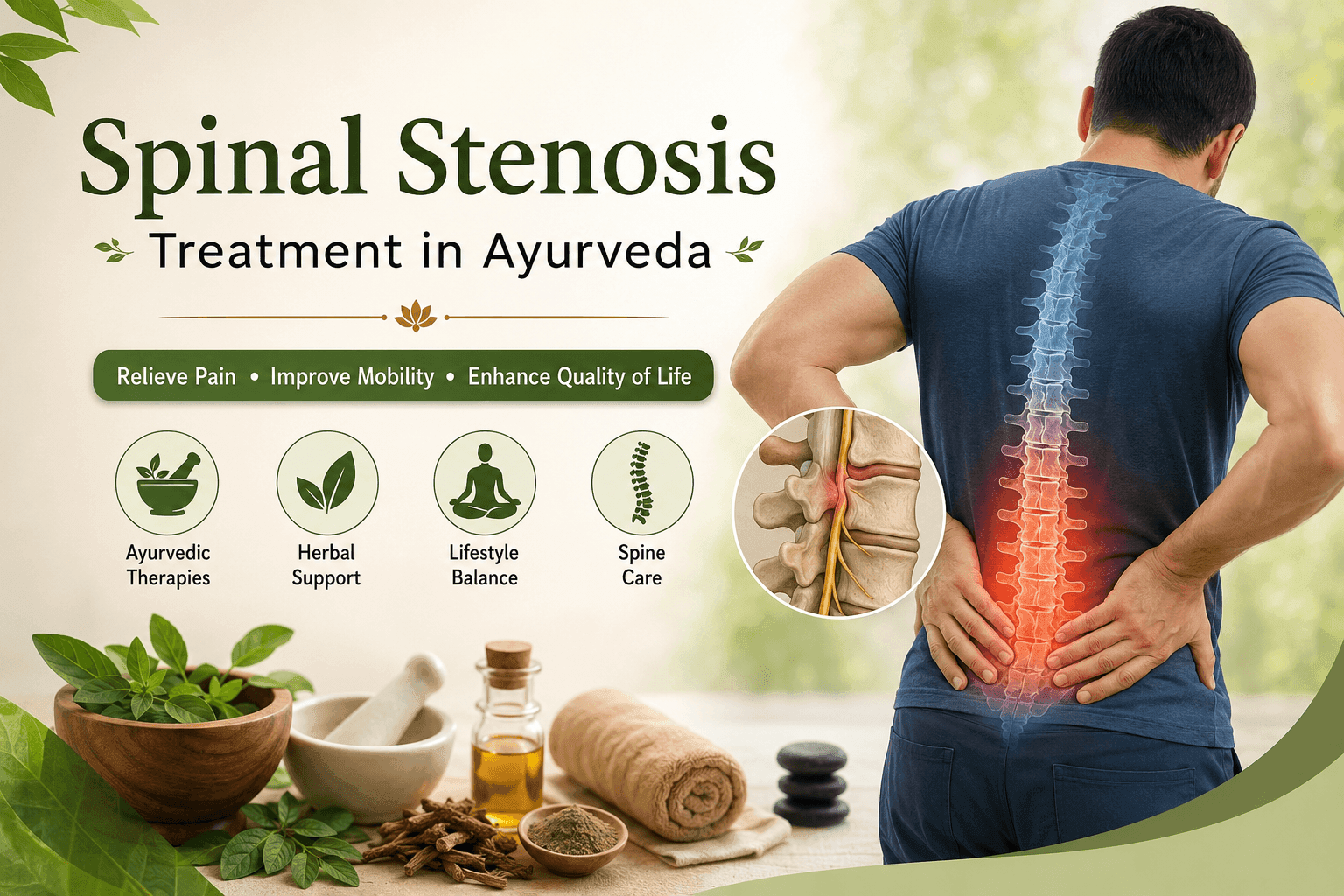
Spinal stenosis is a condition in which the spinal canal becomes narrow and places pressure on the spinal cord or nerves. Common symptoms include lower back pain, neck pain, leg pain, numbness, tingling, weakness, and difficulty walking. Ayurvedic treatment aims to balance aggravated Vata Dosha through Panchakarma therapies, herbal medicines, diet, and lifestyle modifications. While Ayurveda may help reduce symptoms and improve quality of life, severe cases may require medical or surgical treatment.
What Is Spinal Stenosis?
Spinal stenosis refers to narrowing of the spaces within the spine that can compress nearby nerves. It commonly develops due to age-related degeneration of spinal structures such as discs, joints, and ligaments.
The condition can affect:
- Lumbar spine (lower back)
- Cervical spine (neck)
- Thoracic spine (mid-back)
Lumbar spinal stenosis is the most common type and is a frequent cause of back and leg pain in older adults.
What Is the Meaning of Spinal Stenosis in Ayurveda?
Spinal stenosis is not described as a single disease entity in classical Ayurvedic texts. However, its symptoms closely resemble Vata disorders such as:
- Katishoola (lower back pain)
- Katigraha (lower back stiffness)
- Gridhrasi (sciatica)
- Asthi-Majjagata Vata
- Greevastambha (neck stiffness)
- Sandhigata Vata
According to Ayurveda, degeneration of spinal tissues occurs due to:
- Aggravated Vata Dosha
- Dhatu Kshaya (tissue depletion)
- Aging-related degeneration
- Weak nourishment of Asthi Dhatu (bone tissue)
- Weak nourishment of Majja Dhatu (nervous tissue)
Lumbar Spinal Stenosis
Lumbar spinal stenosis affects the lower back.
Common Symptoms
- Lower back pain
- Pain radiating into the legs
- Numbness or tingling in the legs
- Weakness in lower limbs
- Difficulty walking
- Symptoms improve while sitting or bending forward
Cervical Spinal Stenosis
Cervical spinal stenosis affects the neck region.
Common Symptoms
- Neck pain
- Arm pain
- Hand numbness
- Weak grip strength
- Difficulty maintaining balance
- Coordination problems
Thoracic Spinal Stenosis
Thoracic spinal stenosis affects the middle back.
Common Symptoms
- Mid-back pain
- Leg weakness
- Balance difficulties
- Walking problems
Severity of Spinal Stenosis
Doctors often classify spinal stenosis based on the degree of narrowing and symptoms.
Mild Spinal Stenosis
- Occasional pain
- Minimal nerve compression
- Little impact on daily activities
Moderate Spinal Stenosis
- Frequent pain
- Walking limitations
- Intermittent numbness and tingling
Severe Spinal Stenosis
- Significant nerve compression
- Persistent weakness
- Balance problems
- Difficulty walking
- Possible bowel or bladder dysfunction
Early treatment may help prevent progression of symptoms
Lumbar vs Cervical Spinal Stenosis
Causes of Spinal Stenosis
The most common cause is age-related wear and tear of the spine.
Other causes include:
- Osteoarthritis
- Rheumatoid arthritis
- Herniated or slipped disc
- Thickened spinal ligaments
- Bone spur formation
- Previous spinal injuries
- Congenital narrow spinal canal
- Ankylosing spondylitis
- Spinal tumors
- Previous spinal surgery
You may have a higher risk of developing spinal stenosis if you:
- Are over 50 years of age
- Have arthritis
- Are overweight or obese
- Perform repetitive heavy lifting
- Have poor posture
- Smoke regularly
- Have a family history of spinal disorders
- Have experienced spinal trauma
Symptoms of Spinal Stenosis
Symptoms depend on the location and severity of nerve compression.
Pain Symptoms
- Lower back pain
- Neck pain
- Leg pain
- Arm pain
- Buttock pain
Nerve Symptoms
- Numbness
- Tingling sensations
- Burning pain
- Weakness
- Reduced coordination
Functional Symptoms
- Difficulty walking
- Reduced walking distance
- Frequent falls
- Difficulty standing for long periods
- Balance problems
People with spinal stenosis often describe their symptoms as:
- Aching pain in the lower back or neck
- Burning pain radiating into the legs or arms
- Numbness and tingling sensations
- Leg heaviness while walking
- Weakness in the feet or hands
- Relief when bending forward or sitting down
Many patients notice that walking uphill or leaning on a shopping cart reduces symptoms because it temporarily increases space within the spinal canal.
Seek urgent medical care if you develop:
- Sudden severe weakness in the legs
- Loss of bladder control
- Loss of bowel control
- Progressive paralysis
- Severe difficulty walking
- Numbness around the groin or saddle area
These symptoms may indicate serious nerve compression requiring emergency treatment.
Medical Evaluation
- Detailed medical history
- Physical examination
- Neurological examination
- Assessment of muscle strength
- Reflex testing
- Walking assessment
MRI is the most commonly used investigation because it clearly shows:
- Spinal canal narrowing
- Nerve compression
- Disc degeneration
- Soft tissue structures
CT Scan
CT scans provide detailed information about spinal bones.
X-rays may reveal:
- Arthritis
- Bone spurs
- Spinal alignment changes
Nerve Conduction Studies and EMG
These tests help evaluate nerve function and nerve damage.
Increased Vata can lead to:
- Pain
- Dryness
- Degeneration
- Stiffness
- Reduced mobility
Degeneration of:
- Asthi Dhatu (bone tissue)
- Majja Dhatu (nervous tissue)
Blockage of body channels leading to:
- Restricted movement
- Poor tissue nourishment
- Pain and discomfort
Ayurvedic treatment is individualized according to:
- Age
- Disease severity
- Dosha imbalance
- Associated health conditions
- Overall health status
Treatment goals include:
- Reducing pain
- Improving mobility
- Supporting nerve function
- Enhancing quality of life
- Slowing degeneration
Ayurvedic treatment may be considered as supportive care for:
- Mild spinal stenosis
- Moderate spinal stenosis
- Chronic back pain associated with degeneration
- Cervical stenosis-related neck pain
- Patients seeking non-surgical symptom management
- Post-treatment rehabilitation under medical supervision
Patients with severe neurological deficits should seek immediate specialist evaluation.
Basti Therapy
Basti is considered one of the most important Ayurvedic treatments for Vata disorders.
Potential benefits include:
- Balancing Vata Dosha
- Improving flexibility
- Supporting nerve health
- Reducing stiffness
Kati Basti
Kati Basti involves retaining warm medicated oil over the lower back.
Potential benefits:
- Pain relief
- Improved circulation
- Reduced stiffness
Greeva Basti
Greeva Basti is commonly used for cervical spinal stenosis.
Potential benefits:
- Neck pain relief
- Better neck mobility
- Reduced muscle tension
Abhyanga is a therapeutic oil massage that may help:
- Improve circulation
- Relax muscles
- Reduce stiffness
- Support Vata balance
Swedana involves therapeutic sweating procedures that may help:
- Improve flexibility
- Reduce stiffness
- Relieve discomfort
This therapy uses warm herbal boluses and is often recommended for:
- Chronic pain
- Degenerative conditions
- Muscle tightness
Ayurvedic Herbs Traditionally Used for Spinal Stenosis
Several herbs may be used by Ayurvedic physicians depending on individual needs.
These herbs should only be taken under the supervision of a qualified Ayurvedic practitioner.
Supports Vata balance
These herbs should only be taken under the supervision of a qualified Ayurvedic practitioner.
Doctors may prescribe:
- Pain-relieving medicines
- Anti-inflammatory medicines
- Muscle relaxants
- Medicines for nerve pain
Physical therapy may focus on:
- Core strengthening
- Flexibility exercises
- Balance training
- Posture correction
Lifestyle changes often include:
- Weight management
- Activity modification
- Regular exercise
- Ergonomic improvements
Some patients may benefit from:
- Epidural steroid injections
- Nerve block procedures
Surgery may be recommended if:
- Symptoms are severe
- Conservative treatment fails
- Progressive nerve damage occurs
Common procedures include:
- Laminectomy
- Decompression surgery
- Spinal fusion
Best Exercises for Spinal Stenosis
Exercise programs should be designed by healthcare professionals.
Commonly recommended exercises include:
- Pelvic tilts
- Knee-to-chest stretches
- Cat-cow stretches
- Walking programs
- Core strengthening exercises
- Flexion-based exercises
Diet for Spinal Stenosis in Ayurveda
A Vata-balancing diet is commonly recommended.
Foods to Include
- Warm cooked meals
- Ghee in moderation
- Mung dal
- Whole grains
- Cooked vegetables
- Milk if suitable
- Nuts and seeds in moderation
Foods to Limit
- Cold foods
- Dry foods
- Processed foods
- Deep-fried foods
- Excess sugar
- Excess alcohol
Recommended Habits
- Maintain correct posture
- Use proper sitting ergonomics
- Stay physically active
- Practice regular stretching
- Maintain a healthy body weight
- Sleep on a supportive mattress
Habits to Avoid
- Prolonged sitting
- Heavy lifting
- Sudden twisting movements
- Smoking
- Sedentary lifestyle
Can Ayurveda Cure Spinal Stenosis?
Spinal stenosis is often associated with age-related structural changes that cannot always be completely reversed.
However, Ayurvedic management may help:
- Reduce pain
- Improve mobility
- Reduce stiffness
- Support nerve health
- Improve daily functioning
- Enhance quality of life
Results vary depending on disease severity, age, overall health, and treatment adherence.
Response to treatment varies depending on:
- Severity of stenosis
- Duration of symptoms
- Age
- Overall health
- Adherence to treatment
Some patients notice symptom improvement within weeks, while chronic cases may require longer-term management. Outcomes differ among individuals, and no treatment can guarantee identical results for every patient.
Untreated severe spinal stenosis may lead to:
- Chronic pain
- Progressive weakness
- Reduced mobility
- Increased fall risk
- Nerve damage
- Loss of independence
- Rarely, bowel or bladder dysfunction
Many people with spinal stenosis can manage symptoms successfully through:
- Medical treatment
- Physical therapy
- Lifestyle changes
- Weight management
- Appropriate Ayurvedic supportive care
Early diagnosis and timely treatment generally improve outcomes.
Although not all cases can be prevented, risk may be reduced by:
- Maintaining a healthy weight
- Exercising regularly
- Strengthening core muscles
- Practicing good posture
- Avoiding smoking
- Managing arthritis early
- Using proper lifting techniques
Consult a healthcare professional if you experience:
Consult a healthcare professional if you experience:
- Persistent back or neck pain
- Pain radiating into the arms or legs
- Numbness or tingling
- Muscle weakness
- Difficulty walking
- Balance problems
Seek immediate medical attention if symptoms suddenly worsen or if bowel or bladder control is affected
Quick Facts About Spinal Stenosis
What is spinal stenosis?
Narrowing of the spinal canal that compresses nerves.
What causes spinal stenosis?
Aging, arthritis, disc degeneration, and bone spurs.
What are the symptoms?
Pain, numbness, weakness, and walking difficulty.
Can Ayurveda help?
It may help manage symptoms and improve mobility.
Is surgery always necessary?
No, many patients improve with conservative treatment.
Which test confirms diagnosis?
MRI is the preferred diagnostic test.
Key Takeaway
Spinal stenosis is a common degenerative spinal condition that causes narrowing of the spinal canal and compression of nerves. Symptoms may include pain, numbness, weakness, and difficulty walking. A comprehensive management plan involving medical evaluation, physiotherapy, lifestyle modification, and Ayurvedic support may help improve mobility, reduce discomfort, and enhance quality of life.
This article is for educational purposes only and does not replace professional medical advice, diagnosis, or treatment. Always consult a qualified physician, neurologist, orthopedic specialist, spine surgeon, or registered Ayurvedic practitioner before starting any treatment. Emergency symptoms such as loss of bladder control, bowel control, severe weakness, or progressive paralysis require immediate medical attention.
Frequently Asked Questions
Spinal stenosis is narrowing of the spinal canal that places pressure on nerves or the spinal cord.
Common symptoms include back pain, neck pain, numbness, tingling, weakness, balance problems, and difficulty walking.
Ayurvedic therapies may help reduce pain, stiffness, and mobility limitations while supporting overall spinal health.
No. Many patients improve with conservative treatment, though severe cases may require surgery.
Basti, Kati Basti, Greeva Basti, Abhyanga, and Swedana are commonly used depending on the patient's condition.
Flexion-based exercises, walking programs, stretching, and core strengthening exercises are often recommended under professional guidance.
Medical Disclaimer
This content is for educational purposes only and should not be considered medical advice. Always consult a qualified Ayurvedic doctor before undergoing any treatments.
Specialists

Dr. Srilakshmi
Bangalore
Panchakarma & Detoxification Therapies, Women’s Health & Gynaecological Disorders, Infertility & Reproductive Health, Skin Disorders & Ayurvedic Cosmetology, Hair & Scalp Disorders, Weight Management & Metabolic Disorders, Diabetes & Lifestyle Disorders, Bone, Joint & Musculoskeletal Disorders, Ayurvedic Proctology, Ayurvedic Surgery & Kshara Sutra, ENT & Head-Neck Disorders, Digestive & Gastrointestinal Disorders, Neurological Disorders, Stress, Anxiety & Sleep Disorders, Chronic Health Conditions, Ayurvedic Diet & Nutrition

Dr.Sumana Patavardhan.K.S.
Bangalore
Panchakarma & Detoxification Therapies, Women’s Health & Gynaecological Disorders, Infertility & Reproductive Health, Skin Disorders & Ayurvedic Cosmetology, Hair & Scalp Disorders, Weight Management & Metabolic Disorders, Diabetes & Lifestyle Disorders, Bone, Joint & Musculoskeletal Disorders, Ayurvedic Proctology, Ayurvedic Surgery & Kshara Sutra, ENT & Head-Neck Disorders, Digestive & Gastrointestinal Disorders, Neurological Disorders, Stress, Anxiety & Sleep Disorders, Chronic Health Conditions, Ayurvedic Diet & Nutrition