

Table of Contents
ToggleIntroduction
Nasaarsha is described in Ayurveda as a non-neoplastic mass in the nasal cavity. It commonly presents with nasal congestion, sneezing, headache, and breathing obstruction. Ancient Ayurvedic texts recommend Kshara Karma as one of the effective treatment modalities for such conditions.
Nasal polyps are non-neoplastic, oedematous masses arising from the nasal or sinus mucosa. Their incidence has increased significantly due to lifestyle changes, urbanisation, and occupational hazards.
Kshara Karma is a unique therapeutic procedure described in classical Ayurvedic literature. Known for its chedana (excision), bhedana (incision), and lekhana (scraping) actions, it is widely used in Shalya and Shalakya practices. Acharya Sushruta states that Kshara helps eliminate diseases from their roots.
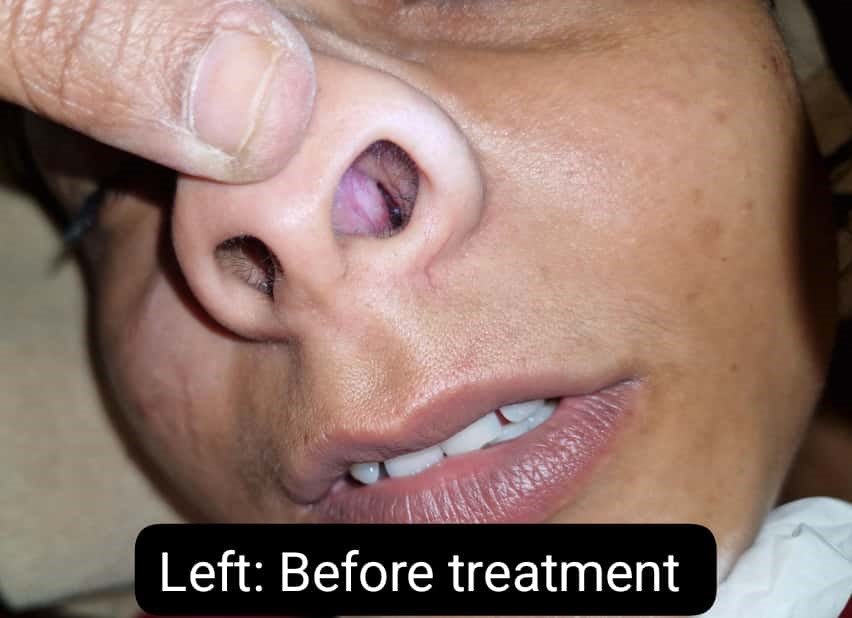
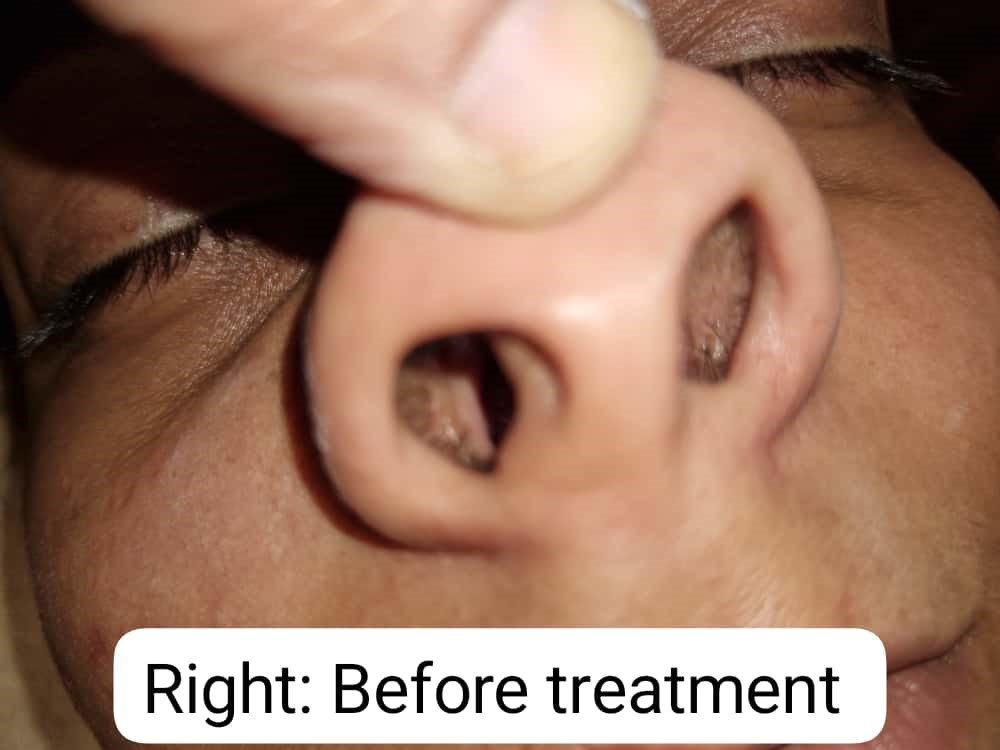
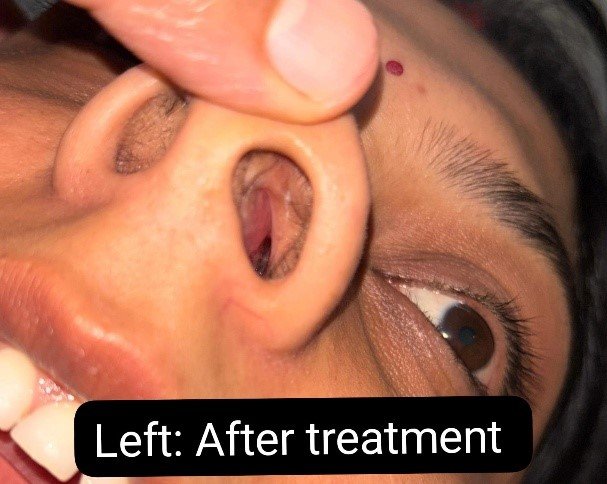
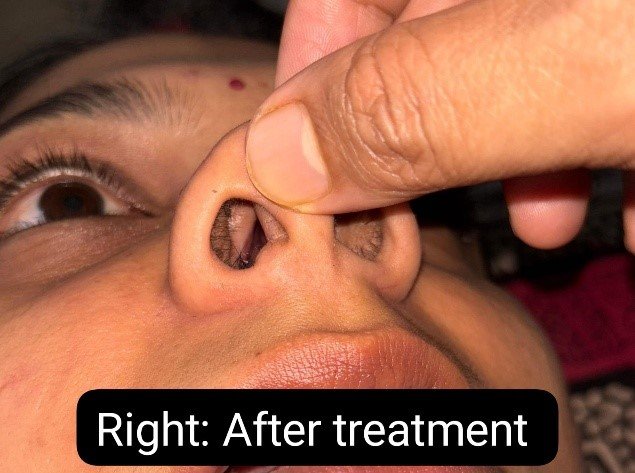
In this case study, Apamarga Kshara was applied over the nasal polyp (Nasara), and its therapeutic effect was assessed.
Materials and Methods
Patient Details
A 32-year-old female patient visited Adyant Ayurveda, Bengaluru, with complaints of:
Nasal blockage
Headache
Running nose
Duration: 6 years
History of Present Illness
Known case of Hypothyroidism, on Thyronorm 100 mcg.
6 years ago, she developed occasional nasal discharge.
Gradually developed right-sided nasal blockage (mild in the left), especially during sleep.
Used nasal decongestant sprays for relief; symptoms recurred after discontinuation.
Later developed persistent nasal discharge, nasal blockage, and dull headache.
ENT specialist advised polypectomy, which she refused and opted for Ayurveda.
Past History
Previous nasal disorder: Allergic rhinitis with congestion
Family history: Not significant
Personal History
Sleep: Disturbed due to nasal obstruction
Appetite: Good
Bowel: Once a day
Micturition: 5–6 times/day
General Examination
Pulse: 72/min
Respiratory rate: 17/min
Blood pressure: 120/80 mmHg
Temperature: 98.6°F
Systemic examination: Within normal limits.
Local Examination (Nose & Paranasal Sinuses)
Sense of smell: Reduced
Rhinolalia: Present
External Nose
Inspection: Normal
Palpation: Mild tenderness, no deformities
Medial Wall
Position: Central
Colour: Pink
Surface: Smooth
Polyp Findings
Site: Bilateral nostrils
Size: Large in the right nostril
Number: One
Treatment Procedure
1. Poorvakarma
Nasya Karma was performed prior to Kshara application.
2. Pradhana Karma
Apamarga Kshara was applied using a probe with sterile cotton at its tip.
Retention time: 3 minutes
3. Pashchat Karma
Kshara was wiped using sterile gauze dipped in lemon juice.
Honey and ghee are applied afterwards.
Procedure repeated on alternate days for 10 days.
Observation and Results
A significant reduction in the size of the nasal polyp was observed after 10 days of treatment.
Changes in Signs & Symptoms
| Sl No | Assessment Criteria | Before Treatment | After Treatment |
|---|---|---|---|
| 1 | Nasal Obstruction | Severe | Reduced |
| 2 | Nasal Discharge | Profuse | Reduced |
| 3 | Headache | Dull | Absent |
| 4 | Anosmia | Present | No Anosmia |
| 5 | Rhinolalia | Present | Clear |
| 6 | Polyp Grade | Grade 2 | Grade 1 |
Discussion
Kshara is considered the superior surgical and para-surgical tool due to its chedana, bhedana, lekhana, and tridoshaghna properties.
Apamarga Kshara, prepared from Achyranthes aspera, possesses teekshna, ushna, shodhana, and ropana actions.
Its mechanism includes:
Saponification and breakdown of fatty acids in the cell membrane
Destruction of abnormal tissue
Hygroscopic action leading to dehydration of the polyp tissue
Protein coagulation causes necrosis and fibrosis
Prevention of recurrence through chemical cauterisation
These actions collectively contributed to the reduction in size of the nasal polyp and improvement in symptoms.
Conclusion
Apamarga Kshara Pratisarana is effective in the management of Nasara (nasal polyp) and can be considered as a beneficial non-surgical treatment option.
References
Vagbhata. Ashtanga Hridaya. Uttarasthana 19/26.
Sushruta. Sushruta Samhita. Sutrasthana 11/1 & 5.