

Table of Contents
ToggleGlaucoma is one of the most serious eye diseases that can slowly damage vision. It is often called the “silent thief of sight” because many people do not notice symptoms in the early stages.
If glaucoma is not treated early, it can damage the optic nerve and lead to permanent vision loss. According to global health reports, glaucoma is the second leading cause of blindness worldwide.
Modern medicine focuses mainly on controlling eye pressure through eye drops, medicines, or surgery. However, many patients are now exploring Ayurvedic treatment for glaucoma because Ayurveda focuses on protecting eye tissues, improving circulation to the optic nerve, and supporting long-term eye health naturally.
At Adyant Ayurveda, experienced Ayurvedic doctors provide personalized glaucoma Ayurvedic treatment using herbal medicines, Panchakarma therapies, and lifestyle guidance.
What is Glaucoma?
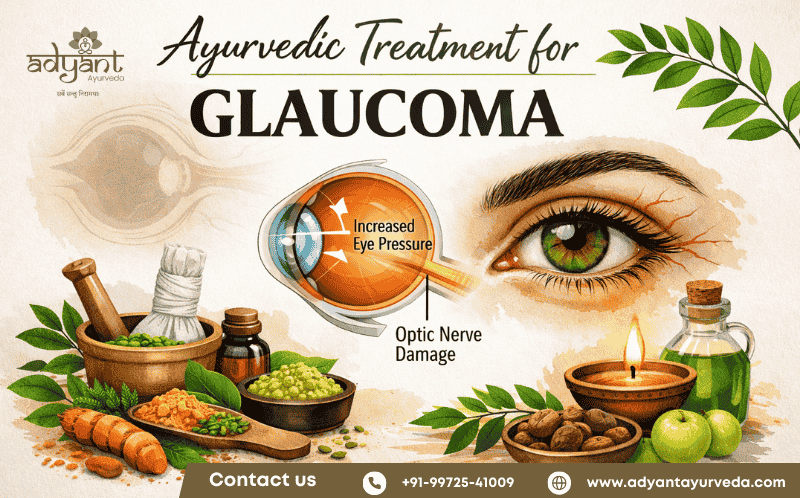
Glaucoma is a group of eye diseases that damage the optic nerve due to increased pressure inside the eye, called intraocular pressure (IOP). If this pressure remains high for a long time, it can gradually lead to vision loss and even blindness.
The optic nerve plays a very important role because it sends visual signals from the eye to the brain. When this nerve becomes damaged, vision slowly becomes weaker.
Glaucoma Statistics
Glaucoma is a major public health problem across the world.
| Statistic | Data |
|---|---|
| People affected worldwide | 76 million |
| Expected cases by 2040 | 111 million |
| People affected in India | Around 12 million |
| Blindness caused by glaucoma in India | 12–13% |
Because glaucoma progresses slowly, regular eye checkups and early treatment are very important.
Types of Glaucoma
Glaucoma can occur in different forms depending on how eye pressure affects the optic nerve.
| Type of Glaucoma | Description |
|---|---|
| Open Angle Glaucoma | Most common type, develops slowly |
| Angle Closure Glaucoma | Sudden blockage of eye drainage |
| Normal Tension Glaucoma | Optic nerve damage despite normal pressure |
| Secondary Glaucoma | Caused by other diseases or medications |
| Congenital Glaucoma | Present at birth in infants |
Open-angle glaucoma is responsible for about 90% of glaucoma cases.
Symptoms of Glaucoma
Glaucoma often develops slowly, so many patients notice symptoms only after the disease has progressed.
Early Symptoms
• Mild eye discomfort
• Frequent headaches
• Eye fatigue
• Slight blurred vision
Advanced Symptoms
• Loss of peripheral (side) vision
• Tunnel vision
• Halos around lights
• Eye redness
• Severe eye pain
In some cases, especially angle-closure glaucoma, symptoms may appear suddenly and require immediate medical attention.
Causes of Glaucoma
Glaucoma usually occurs when the fluid inside the eye does not drain properly.
The eye continuously produces a fluid called aqueous humor. This fluid normally drains through a natural channel. If the drainage system becomes blocked, the fluid builds up and increases pressure inside the eye.
Common Causes
• Increased intraocular pressure
• Poor blood circulation to the optic nerve
• Aging
• Genetic factors
• Diabetes
• Eye injuries
• Long-term steroid use
Risk Factors for Glaucoma
Certain people have a higher risk of developing glaucoma.
| Risk Factor | Explanation |
|---|---|
| Age above 40 | Risk increases with age |
| Family history | Genetics may increase risk |
| High eye pressure | Main cause of optic nerve damage |
| Diabetes | Affects blood vessels |
| Steroid medications | Can increase eye pressure |
People with these risk factors should get regular eye examinations.
Glaucoma in Ayurveda
In Ayurveda, glaucoma is related to a serious eye disease known as Adhimantha.
Ayurveda explains that eye diseases occur when the three doshas — Vata, Pitta, and Kapha — become imbalanced.
When these doshas disturb the natural flow of fluids in the eye, pressure increases and damages the optic nerve.
Ayurvedic Classification of Glaucoma
| Type | Symptoms |
|---|---|
| Vataja Adhimantha | Dryness, pain, visual disturbances |
| Pittaja Adhimantha | Burning sensation, redness |
| Kaphaja Adhimantha | Heaviness and swelling in eyes |
| Raktaja Adhimantha | Severe inflammation and redness |
The goal of Ayurvedic treatment for glaucoma is to balance these doshas and support healthy eye function.
Ayurvedic Treatment for Glaucoma
Ayurvedic treatment for glaucoma focuses on reducing eye pressure, nourishing the optic nerve, improving blood circulation, and balancing Vata and Pitta doshas through herbal medicines, Panchakarma therapies, and lifestyle changes.
Ayurveda aims to slow the progression of glaucoma and protect vision naturally.
Ayurvedic Eye Therapies for Glaucoma
Ayurveda uses specialized therapies to improve eye health and strengthen eye tissues.
| Therapy | Benefits |
|---|---|
| Netra Tarpana | Nourishes optic nerve and eye tissues |
| Nasya | Improves circulation to head and eyes |
| Seka | Herbal liquid therapy for eye relaxation |
| Aschyotana | Herbal eye drops that cleanse eyes |
| Shirodhara | Reduces stress affecting eye pressure |
These therapies are usually recommended along with herbal medicines.
Panchakarma Detox for Eye Health
Panchakarma therapies help remove toxins (Ama) from the body and restore balance.
Important Panchakarma therapies include:
• Virechana – detox therapy for Pitta imbalance
• Nasya – nasal therapy improving head circulation
• Basti – balances Vata dosha
These treatments support long-term eye health and nerve nourishment.
Ayurvedic Herbs for Glaucoma
Ayurvedic herbs help reduce inflammation, improve blood circulation, and support optic nerve health.
| Herb | Benefits |
|---|---|
| Triphala | Strengthens eye tissues and detoxifies body |
| Punarnava | Helps reduce fluid buildup |
| Amla | Rich source of antioxidants |
| Brahmi | Supports nerve health |
| Guggulu | Improves blood circulation |
These herbs are usually prescribed as customized Ayurvedic medicines.
Diet for Glaucoma Patients
Diet plays an important role in protecting eye health.
Recommended Foods
| Food | Benefit |
|---|---|
| Spinach | Rich in antioxidants |
| Carrots | High in vitamin A |
| Amla | Supports optic nerve |
| Almonds | Rich in vitamin E |
| Cow ghee | Nourishes eye tissues |
Foods to Avoid
• Excess salt
• Processed foods
• Alcohol
• Excess caffeine
A balanced diet helps maintain healthy blood circulation to the eyes.
Lifestyle Tips for Glaucoma
Healthy lifestyle habits can support glaucoma treatment.
Recommended Habits
• Practice yoga and meditation
• Reduce screen time
• Maintain healthy blood pressure
• Exercise regularly
• Get enough sleep
Eye relaxation exercises such as palming and Trataka may also reduce eye strain.
When to See a Doctor
You should consult an eye specialist if you experience:
• Gradual loss of vision
• Severe eye pain
• Frequent headaches with eye pressure
• Halos around lights
Early treatment can help prevent serious vision damage.
Ayurvedic Treatment for Glaucoma in Bangalore
Adyant Ayurveda offers specialized Ayurvedic treatment for glaucoma in Bangalore through personalized treatment programs.
The treatment approach focuses on:
• Root cause treatment
• Herbal medicines
• Panchakarma therapies
• Diet and lifestyle guidance
• Long-term eye care
Adyant Ayurveda Clinics in Bangalore
Patients can consult experienced Ayurvedic doctors at the following clinics:
| Location |
|---|
| Jayanagar |
| Indiranagar |
| RR Nagar |
| Kalyan Nagar |
| Bannerghatta Road |
These clinics provide authentic Ayurvedic treatment for glaucoma under expert supervision.
Why Choose Ayurveda for Glaucoma?
Ayurveda focuses on improving overall eye health rather than only controlling symptoms.
Benefits of Ayurvedic Treatment
• Natural treatment approach
• Personalized therapies
• Strengthens optic nerve
• Helps slow glaucoma progression
• Improves overall eye health
This makes glaucoma Ayurvedic treatment a valuable supportive therapy.
Book Consultation for Glaucoma Ayurvedic Treatment
If you or your family member is experiencing glaucoma symptoms, early treatment is important. Adyant Ayurveda provides personalized Ayurvedic treatment for glaucoma with expert doctors and authentic therapies.
📞 Call: 9972541009
Visit your nearest Adyant Ayurveda clinic in Bangalore.
Jayanagar | Indiranagar | RR Nagar | Kalyan Nagar | Bannerghatta Road
FAQs- Ayurvedic Treatment for Glaucoma
What is the best Ayurvedic treatment for glaucoma?
Ayurvedic treatment for glaucoma focuses on reducing eye pressure, nourishing the optic nerve, and balancing doshas through herbal medicines, Panchakarma therapies like Netra Tarpana and Nasya, and lifestyle changes that support long-term eye health.
Is there a natural treatment for glaucoma without surgery?
Yes, Ayurveda offers natural management methods for glaucoma using herbal medicines, Panchakarma therapies, and lifestyle changes. These treatments focus on improving eye circulation and balancing body doshas, which may help manage symptoms without surgery in some cases.
How long does Ayurvedic treatment for glaucoma take?
The duration of treatment depends on the stage of glaucoma, eye pressure levels, and the patient’s overall health. Some patients notice improvement in eye comfort within weeks, while long-term care may be required to maintain stable vision.
Is glaucoma hereditary?
Yes, glaucoma can run in families. People with a family history of glaucoma have a higher risk of developing the condition and should undergo regular eye checkups to detect it early.
How often should glaucoma patients get their eyes checked?
People above 40 years of age or those with risk factors should get a comprehensive eye examination every 1–2 years. Regular eye screening helps detect glaucoma early and prevent serious vision loss.
Can diet help in managing glaucoma?
A healthy diet rich in antioxidants, vitamins A, C, and E, and leafy green vegetables may support eye health. However, diet alone cannot treat glaucoma and should be combined with proper medical care.
Which Ayurvedic herbs are helpful for glaucoma?
Several herbs are traditionally used in Ayurveda to support eye health. Commonly recommended herbs include Triphala, Punarnava, Amla, Brahmi, and Guggulu, which may help reduce inflammation, improve circulation, and protect the optic nerve.
Educational Disclaimer: This article is for educational purposes only and does not replace medical advice. Treatment results may vary. Please consult a qualified Ayurvedic doctor or healthcare professional before starting any treatment.
Last Updated: 4 March 2026
Content Update Policy
Our articles are reviewed and refreshed regularly to reflect the latest information. Our experts continuously monitor developments in the health and wellness field to ensure the content remains accurate and up to date.
Author: Dr. Shree Lakshmi, BAMS
Senior Ayurvedic Physician, Adyant Ayurveda
Medical Reviewer: Dr. Sumana Patvardhan, MD (Ayurveda)
Consultant Ayurvedic Physician, Adyant Ayurveda