


Table of Contents
ToggleWritten by: Dr. Deepa, BAMS, MS (Shalya Tantra) – Ayurvedic Proctologist
Reviewed & Updated on: March 2026
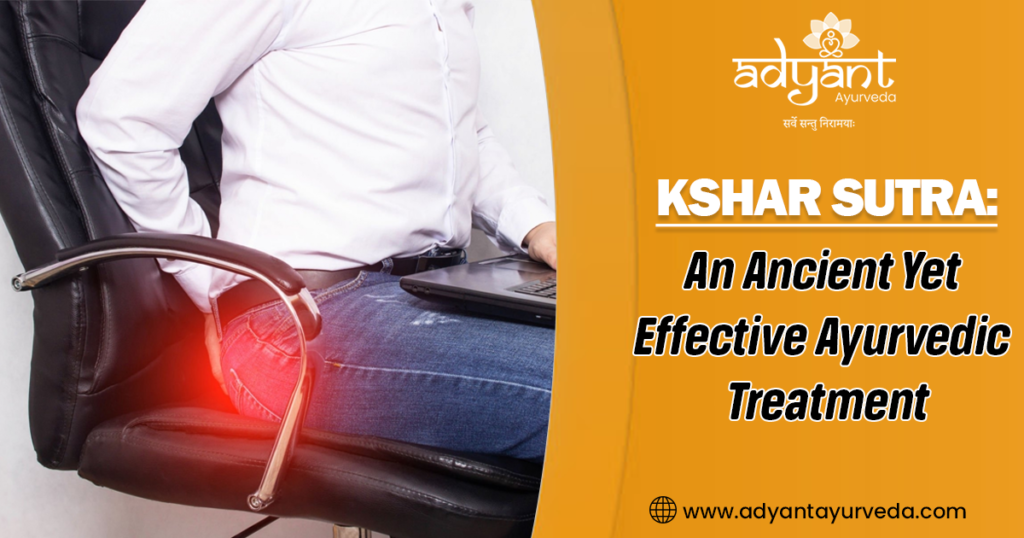
Kshar Sutra Treatment: Ayurvedic Solution for Piles, Fissure, Fistula & Pilonidal Sinus
Kshar Sutra Treatment is an ancient Ayurvedic para-surgical technique used for managing anorectal disorders such as piles (Arsha), anal fissure (Parikartika), anal fistula (Bhagandara), and pilonidal sinus (Nadi Vrana). Rooted in classical Ayurvedic texts like Sushruta Samhita, it has been practiced for centuries due to its minimally invasive nature, good clinical outcomes, and studies suggest a lower recurrence rate compared to conventional surgery.
In today’s lifestyle, long hours of sitting, low fiber intake, and chronic constipation contribute significantly to these conditions. Many patients delay treatment due to fear or embarrassment. Kshar Sutra therapy offers a minimally invasive approach that supports healing when performed under expert supervision.
Who Should Consider Kshar Sutra Treatment?
Kshar Sutra treatment may be beneficial for:
- Patients with recurrent anal fistula or pilonidal sinus
- Individuals with chronic fissure or non-healing anorectal conditions
- Patients seeking a minimally invasive alternative to surgery
- Those suitable for procedures under local anesthesia
- Patients where preservation of anal sphincter is important
Final suitability is determined after evaluation by a qualified Ayurvedic proctologist.
What is Kshar Sutra Treatment?
Kshar Sutra treatment is done through a medicated surgical thread prepared using herbal components:
- Apamarga Kshara (Achyranthes aspera)
- Snuhi Ksheera (Euphorbia neriifolia)
- Haridra (Turmeric)
The thread is coated in 21 layers (11 Snuhi, 7 Kshara, 3 Haridra), giving it alkaline, antimicrobial, and healing properties. It works by gradually cutting and healing the affected tissue simultaneously.
How is Kshar Sutra Prepared?
The preparation is done under strict sterile conditions:
- Surgical linen thread is placed in a UV cabinet
- Coated 11 times with Snuhi latex
- Followed by 7 coatings of Kshara
- Final 3 coatings with turmeric powder
- Dried, cut, and sealed in sterile packaging
This ensures safety, uniformity, and therapeutic effectiveness.
How Does Kshar Sutra Work?
Kshar Sutra treatment works through combined actions:
- Mechanical cutting of unhealthy tissue
- Chemical debridement due to the alkaline nature
- Antimicrobial protection
- Anti-inflammatory and healing support
This allows controlled healing while preserving surrounding structures.
Modern Medical Correlation
Kshar Sutra therapy is comparable to the seton technique used in modern surgery for fistula management. However, Kshar Sutra treatment offers additional herbal benefits such as:
- Enhanced wound healing
- Antimicrobial action
- Controlled tissue debridement
Ayurvedic Background
Described in Sushruta Samhita under Shalya Tantra, Kshar Sutra is indicated for:
- Bhagandara (Fistula)
- Arsha (Piles)
- Nadi Vrana (Sinus)
Benefits of Kshar Sutra Treatment (Real, Practical, Research-Backed)
1. Low Recurrence Rate (This is the biggest differentiator)
Most patients don’t just want relief—they want a solution that doesn’t come back. That’s where Kshar Sutra stands out.
Clinical data shows very low recurrence and negligible incontinence risk (PMC)
Some reports even suggest recurrence rates as low as 3–4% (ScienceDirect)
Unlike surgery that may close the tract but leave infection behind, Kshar Sutra gradually destroys the infected pathway from inside, reducing relapse chances.
2. Minimally Invasive (No major surgery stress)
It’s considered a minimally invasive or para-surgical procedure
No large cuts, no stitches, and often done as a day-care procedure
3. Faster Return to Daily Life
Patients can resume work early because it’s an outpatient procedure
Healing happens gradually without aggressive tissue damage
You’re not bedridden for weeks like in conventional surgery.
4. Preserves Muscle Function (No risk to control)
One major concern in fistula surgery is damage to anal sphincter muscles.
Kshar Sutra is a sphincter-saving technique
Studies highlight no or minimal risk of incontinence (PMC)
5. High Success Rate (Not just claims—data supports it)
You’ll see many clinics quoting success rates—and they’re not random.
Some comparative data shows ~97% success vs ~83% in laser cases (Dr. Pronab Haldar)
Multiple studies confirm effective healing of fistula tract (ScienceDirect)
6. Cost-Effective Treatment
This is where Ayurveda quietly wins.
- Considered low-cost compared to surgery (PMC)
- No hospitalization = reduced overall expense
When you factor surgery + hospital + post-op care, Kshar Sutra often ends up significantly cheaper.
7. Continuous Healing + Infection Control
- The medicated thread keeps draining infection and promotes internal healing
- It prevents premature closure (which is a common reason for recurrence)
In simple terms: It doesn’t just close the wound—it cleans it while healing.
8. Suitable for Chronic & Recurrent Cases
Many patients come after failed surgeries or repeated abscess issues.
Recommended for complex or recurring fistula cases
9. Fewer Complications & Side Effects
Compared to surgery, complication rates are lower.
Studies report minimal complications and good patient tolerance (Lippincott Journals)
No major bleeding, no severe post-op issues in many cases (PMC)
The Benefits of Kshar Sutra Treatment are not just Ayurvedic claims—they’re supported by clinical observations and real patient outcomes.
If someone is deciding between surgery, laser, or Ayurveda, the decision usually comes down to this:
Want faster but higher recurrence risk → surgery/laser
Want slower but more reliable, root-level healing → Kshar Sutra
And that’s exactly why this therapy continues to stay relevant—even in modern treatment comparisons.
Conditions Treated with Kshar Sutra Treatment
1. Anal Fistula (Bhagandara)
An abnormal tunnel between the anal canal and skin causes discharge and infection.
Benefits:
- Helps preserve sphincter function
- OPD-based procedure
- Studies suggest lower recurrence rates
2. Piles (Arsha)
Swollen veins in the rectal region are causing bleeding and discomfort.
Benefits:
- Minimally invasive
- No major surgical incision
- May help reduce recurrence
Read Also – Ayurvedic Treatment for Piles (Hemorrhoids)
3. Pilonidal Sinus (Nadi Vrana)
A sinus tract near the tailbone is often associated with hair and infection.
Benefits:
- Minimally invasive approach
- Reduced scarring
- Faster return to routine activity
4. Fissure-in-Ano (Parikartika)
A small tear in the anal lining causes severe pain during bowel movements.
Clinical Insight:
- Studies report significant pain relief within 2 weeks
- Helps in healing chronic fissures
Read Also – Ayurvedic Treatment for Fissure-in-Ano
Possible Risks and Side Effects
Kshar Sutra is generally considered safe when performed by trained professionals. However:
- Mild pain or discomfort may occur
- Temporary discharge during healing
- Multiple sittings may be required
- Rare risk of infection if hygiene is poor
Proper follow-up reduces these risks.
Step-by-Step Procedure
- Pre-assessment and diagnosis
- Local anesthesia
- Tract identification and thread placement
- Weekly thread changes (in fistula cases)
What to Expect During Treatment
- Week 1: Initial symptom relief
- Week 2–3: Gradual healing
- Weekly: Follow-ups for thread change
- Complete healing varies by condition
Doctor’s Clinical Experience Insight
In clinical practice, Kshar Sutra therapy has shown consistent results in managing chronic and recurrent anorectal conditions, especially fistula-in-ano. Patients often report gradual but steady improvement without the need for major surgical intervention.
The key to successful outcomes lies in proper case selection, precise technique, and regular follow-up care.
Kshar Sutra vs Modern Surgery
| Factor | Kshar Sutra | Surgery |
|---|---|---|
| Invasiveness | Minimally invasive | Invasive |
| Hospital Stay | OPD | 2–4 days |
| Recovery | 2–4 weeks | 4–8 weeks |
| Recurrence | Generally lower (studies suggest) | Moderate |
| Cost | Affordable | Higher |
| Sphincter Safety | Preserved | May vary |
Ayurvedic Medicines Used
- Triphala Guggulu – Supports healing
- Gandhak Rasayana – Antimicrobial
- Panchasakar Churna – Relieves constipation
- Abhayarishta – Improves digestion
- Jatyadi Taila – Local wound healing
Post-Surgery Instructions for Kshar Sutra Surgery Patients
Proper aftercare is key to faster healing, reduced discomfort, and preventing recurrence after Kshar Sutra treatment. Following your doctor’s advice consistently can significantly improve outcomes and help you return to normal life smoothly.
Diet & Bowel Care
- Follow a high-fiber diet (vegetables, fruits, whole grains) to prevent constipation
- Drink 2.5–3 liters of water daily to keep stools soft
- Avoid spicy, oily, and processed foods that may irritate the anal region
- Do not strain during bowel movements
A smooth bowel routine reduces pressure on the healing tract.
Hygiene & Local Care
- Take warm sitz baths (2–3 times daily), especially after bowel movements
- Keep the anal area clean and dry to prevent infection
- Use prescribed medicated oils or ointments (like Jatyadi Taila if advised)
- Change dressings regularly as per doctor’s guidance
Medications & Follow-ups
- Take all prescribed Ayurvedic medicines on time (e.g., Triphala Guggulu, Gandhak Rasayana)
- Attend weekly follow-ups for thread change (especially in fistula cases)
- Do not skip appointments, as regular monitoring ensures proper healing
Activity & Lifestyle
- Resume light daily activities, but avoid heavy lifting or strenuous exercise
- Avoid prolonged sitting or standing for long hours
- Maintain a regular routine for sleep and meals
- Gentle walking is encouraged to improve circulation
When Kshar Sutra is Not Recommended
- Pregnancy
- Uncontrolled diabetes
- Immunocompromised conditions
- Bleeding disorders
- Undrained abscess
Recovery Timeline
- Initial healing: 3–4 weeks
- Full recovery: 6–8 weeks
- Complete healing: Up to 3–6 months
Scientific Evidence and Research Support
- Sharma A. et al. Clinical Evaluation of Kshar Sutra in Bhagandara. AYU Journal, 2018
- Singh R. Comparative Study of Kshar Sutra vs Fistulectomy. JAIMS, 2020
- Patel K. Role of Kshar Sutra in Pilonidal Sinus. IJAR, 2019
Studies indicate good clinical outcomes, reduced symptoms, and preservation of sphincter function.
Best Kshar Sutra Doctor in Bangalore | Best Ayurveda Proctologist in Bangalore
Adyant Ayurveda is a premier Ayurvedic centre specialising in proctology, offering advanced Kshar Sutra therapy for conditions such as piles (haemorrhoids), fissures, and fistulas. Our expert Ayurvedic proctologists in Bangalore combine traditional wisdom with modern expertise to deliver effective and holistic treatments.
Our team includes experienced Ayurvedic proctologists:
- Dr. Deepa (BAMS, MS Shalya Tantra)
- Dr. Manjunath R. Joshi
- Dr. Vasudha (BAMS, MS Shalya)
- Dr. Srinivasa N. V
Diagnosis and Evaluation
- Digital Rectal Examination
- Proctoscopy
- Ultrasound / MRI (if required)
- Blood tests
Patient Outcomes
Patients commonly report:
- Relief from pain and discharge
- Improved healing
- Better quality of life
Case Example: Kshar Sutra Treatment for Fistula
A 35-year-old male patient presented with complaints of recurrent discharge and pain in the anal region for over 1 year. He had previously undergone surgical treatment but experienced recurrence within 6 months.
After clinical evaluation, Kshar Sutra therapy was planned. The medicated thread was placed in the fistulous tract under local anesthesia.
- Week 1–2: Reduction in pain and discharge
- Week 3–5: Gradual cutting and healing of the tract
- Week 6: Significant closure of the tract with minimal discomfort
The patient was able to continue daily activities during treatment and reported improved quality of life post-recovery.
Note: Individual results may vary depending on the severity of the condition.
Patient Feedback
Patients undergoing Kshar Sutra treatment at our center often appreciate:
- Personalized care and detailed guidance
- Minimal disruption to daily routine
- Regular monitoring and support
- Gradual and sustained improvement
Kshar Sutra Treatment in Bangalore
Kshar Sutra therapy is available at Adyant Ayurveda, one of the best Ayurvedic clinics in Bangalore. At Adyant Ayurveda, treatment is planned using both classical Ayurvedic methods and modern diagnostics.
Why Choose Adyant Ayurveda for Kshar Sutra Treatment in Bangalore?
- Experienced Ayurvedic proctologists specialized in Shalya Tantra
- Use of standardized and sterile Kshar Sutra preparation
- A combination of classical Ayurvedic methods with modern diagnostics
- Personalized treatment plans based on individual conditions
- Continuous follow-up and patient support
Our clinic focuses on patient safety, hygiene, and evidence-based Ayurvedic care.
Kshar Sutra Treatment Cost in Bangalore
Understanding the cost of Kshar Sutra treatment in Bangalore helps you plan your care with clarity and confidence. The overall expense can vary based on factors like the severity of the condition, number of sittings required, the doctor’s expertise, and clinic’s facilities. Here’s a simple breakdown of the treatment cost:
- Piles: ₹15,000 – ₹25,000
- Fissure: ₹20,000 – ₹35,000
- Fistula: ₹30,000 – ₹60,000
- Pilonidal Sinus: ₹30,000 – ₹50,000
Medical Disclaimer
This content is for educational purposes only and is not a substitute for medical advice. Always consult a qualified healthcare professional before starting treatment.
Conclusion
Kshar Sutra Treatment or Therapy is a time-tested Ayurvedic approach for managing anorectal disorders. It offers a minimally invasive option supported by clinical evidence and should be considered following appropriate medical consultation.
FAQs Related to Kshar Sutra Treatment
Is Kshar Sutra painful?
Done under local anesthesia. Discomfort is usually mild and manageable.
How long does treatment take?
Piles: 10–15 days | Fissure: 10–15 days | Fistula: 4–6 weeks | Pilonidal Sinus: 5–15 weeks
Can I continue working during treatment?
Yes. Most resume work is completed within 1–2 days, depending on the condition.
Are there food restrictions?
Avoid spicy, oily foods. Follow a high-fiber, sattvic diet.
Will there be scars?
Minimal to none, especially when treated by experienced doctors.
Is it effective for recurrent fistula after surgery?
Yes, particularly in complex or relapsed cases.
How often is the thread changed?
Weekly, until complete tract healing.
Are there any side effects?
Rare. Some may experience mild discharge or swelling.
Is hospitalization required?
No. It’s a day-care outpatient procedure.
Can it treat all fistula types?
Yes, including high-level and complex tracts, with proper evaluation.
What’s the success rate?
Over 85% success rate with proper follow-up.
Can women undergo this treatment?
Yes, but not during pregnancy.
Is it covered by insurance?
Check with your provider—some cover daycare procedures.
When can I resume exercise?
Light activities after 3–5 days. Avoid strenuous workouts for 2–3 weeks.
Any home remedies to support healing?
Sitz baths, fiber intake, Triphala powder at night, and Jatyadi Taila help.
Educational Disclaimer: This information is intended for educational purposes only. Scalp conditions with flaking, redness, itching, irritation, or hair shedding may resemble other dermatological disorders, so professional evaluation helps determine the most appropriate treatment approach.
Last Updated: 26 March 2026
Content Update Policy
Our articles are reviewed and refreshed regularly to reflect the latest information. Our experts continuously monitor developments in the health and wellness field to ensure the content remains accurate and up to date.
Author: Dr. Deepa, BAMS, MS (Shalya Tantra) – Ayurvedic Proctologist
Medical Reviewer: Dr. Sumana Patvardhan, MD (Ayurveda)
Consultant Ayurvedic Physician, Adyant Ayurveda