Written by Dr. Preethi J
Medically reviewed by Dr. Sumana
Last updated: March 2026
This content has been prepared and medically reviewed by qualified Ayurvedic doctors at Adyant Ayurveda to improve educational accuracy, clinical relevance, and patient safety.
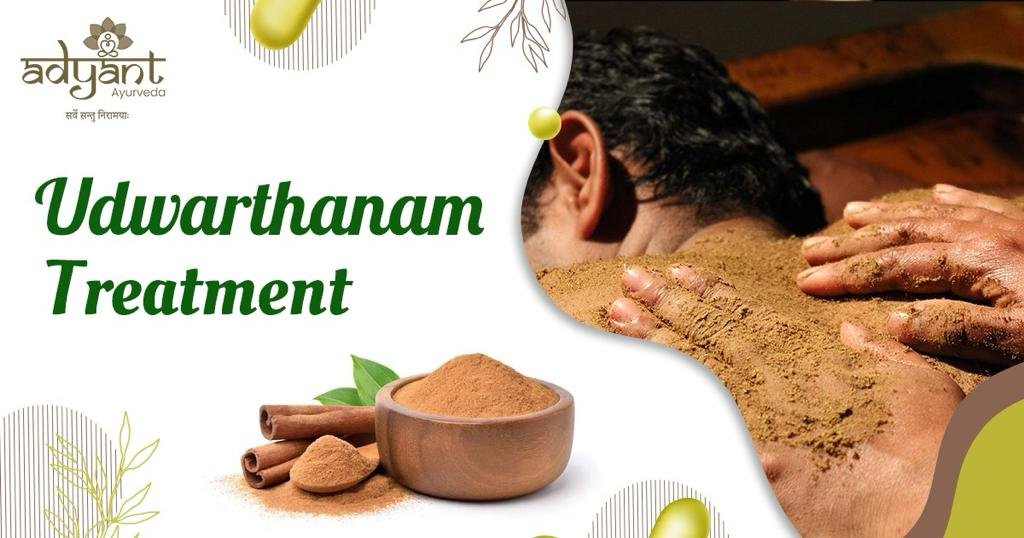
Udwarthanam is a traditional Ayurvedic herbal powder massage used to support circulation, skin cleansing, Kapha balancing, and body lightness.
At Adyant Ayurveda, this therapy is offered under physician supervision as part of broader Ayurvedic wellness care, especially for individuals experiencing heaviness, sluggish metabolism, body stiffness, and Kapha-related imbalance.
A prior Ayurvedic consultation is recommended before starting Udwarthanam so that suitability, body constitution, and treatment goals can be assessed properly.
What is Udwarthanam?
Udwarthanam is a traditional Ayurvedic therapy in which specially selected herbal powders are applied over the body using firm upward strokes.
Unlike oil-based therapies such as Abhyanga Massage, Udwarthanam uses dry powders or oil-assisted powders depending on the person’s constitution and therapeutic requirement.
The upward friction produced during therapy is traditionally believed to help:
- stimulate superficial blood circulation
- support lymphatic movement
- remove dead skin cells
- improve skin texture
- create a feeling of body lightness
- support Kapha reduction
Selection of therapy depends on Prakriti (body constitution), Dosha status, age, skin condition, and physician assessment.
Ayurvedic Background and Classical Importance
Udwarthanam is described in classical Ayurvedic literature, including Ashtanga Hridaya and Charaka Samhita.
In Ayurveda, body function is understood through the balance of:
Kapha predominance is traditionally associated with heaviness, lethargy, sluggish digestion, and reduced movement in body channels. Udwarthanam is used to create stimulation and support lightness.
Primary Objective of Udwarthanam
The primary Ayurvedic objective is to support:
- Kapha balancing
- improved movement of body channels (Srotas)
- stimulation of circulation
- reduction of body heaviness
This therapy is generally used as supportive care and should not be considered a standalone treatment for obesity, endocrine disease, arthritis, or chronic illness.
Types of Udwarthanam
1. Snigdha Udwarthanam (Oil-Assisted Herbal Massage)
- Uses medicated oils combined with herbal powders
- Often selected when dryness is present
- Traditionally preferred for Vata predominance
2. Ruksha Udwarthanam (Dry Powder Massage)
- Uses dry herbal powders without oil
- Commonly selected in Kapha-dominant presentations
- Frequently included in Ayurvedic detox programs
Choice of method depends on the physician’s evaluation.
Who May Benefit from Udwarthanam?
This therapy may be considered for individuals with:
- sedentary lifestyle-related heaviness
- mild water retention
- body stiffness
- sluggish metabolism
- Kapha predominance
- skin dullness
- body-toning goals
Suitability varies from person to person and should always be medically assessed.
Therapeutic Uses of Udwarthanam in Ayurveda
Under Ayurvedic supervision, Udwarthanam may be included within wellness plans designed to support:
- weight-management routines
- reduction in the appearance of cellulite
- muscular tightness
- feelings of sluggish circulation
- stress-related body heaviness
- chronic fatigue
- mild sleep disturbance
For individuals with arthritis, sciatica, thyroid disorders, diabetes, or inflammatory skin disease, ayurvedic treatment should always be individualized.
Scientific Understanding of Udwarthanam
From a modern perspective, the friction generated during herbal powder massage may temporarily support:
- superficial circulation
- skin exfoliation
- local warmth generation
- temporary improvement in skin freshness
The treatment may also create a subjective feeling of lightness because of the mechanical stimulation of the skin surface.
Published clinical evidence remains limited, and outcomes may differ depending on treatment protocol, lifestyle, and individual physiology.
Current Evidence and Clinical Perspective
Although Udwarthanam is widely practiced in Ayurvedic clinical settings, modern scientific evidence regarding long-term fat-loss or metabolic outcomes remains limited.
Current use is best understood as a supportive wellness therapy that may work alongside:
- diet regulation
- physical activity
- sleep correction
- physician-guided Ayurvedic treatment
Clinical response varies according to body constitution, health condition, and treatment frequency.
Key Benefits of Udwarthanam Massage
Possible benefits include:
- improved feeling of body lightness
- smoother skin texture
- removal of surface dead skin cells
- temporary freshness
- support for relaxation
- support for Ayurvedic detox routines
Individual response depends on diet, activity level, body constitution, and associated medical conditions.
Duration and Recommended Number of Sessions
A typical session lasts:
Treatment courses may include:
- 7 sessions
- 14 sessions
- 21 sessions
Depending on the physician’s assessment.
The number of sessions may vary depending on body constitution, treatment goals, associated health conditions, and physician recommendations.
When Can Results Be Seen?
Some individuals notice:
- smoother skin after 1–3 sessions
- temporary body lightness early in treatment
- inch-loss support over multiple sessions when combined with lifestyle correction
Results vary and cannot be uniformly predicted.
Udwarthanam vs Abhyanga
| Udwarthanam | Abhyanga |
|---|
| Herbal powder massage | Oil massage |
| Upward vigorous strokes | Gentle oil strokes |
| Often selected for Kapha support | Often selected for Vata support |
| Body-toning support | Relaxation-oriented |
You May Like to Read: Abhyanga Massage
Ingredients Commonly Used in Udwarthanam Powder
| Herb | Traditional Ayurvedic Use |
|---|
| Triphala | Digestive support |
| Turmeric | Skin support |
| Ginger | Circulation support |
| Neem | Skin cleansing |
| Horse Gram | Traditionally used in Kapha reduction |
| Mustha | Digestive balancing |
Herbal combinations are selected according to individual therapeutic needs.
Herbal powders are selected based on skin sensitivity, Dosha predominance, and therapeutic objective rather than using a fixed combination for all individuals.
Step-by-Step Procedure at Adyant Ayurveda
- Ayurvedic consultation and body analysis
- Selection of herbal powder according to Dosha
- Warm powder application
- Upward massage technique
- Rest period
- Optional steam therapy (Swedana)
- Post-treatment advice
Clinical Individualization of Treatment
In Ayurvedic practice, pressure, powder selection, duration, and frequency of Udwarthanam are adjusted according to body constitution, age, skin condition, strength, and treatment objective.
Steam therapy may be modified or avoided in individuals with heat sensitivity, certain skin conditions, or physician-identified contraindications.
Before the Session
Patients are generally advised to:
- avoid heavy meals
- stay hydrated
- report skin sensitivity
- wear loose clothing
Aftercare Guidelines
After therapy:
- Drink warm water
- Avoid cold food immediately
- Eat light meals
- Follow the prescribed Ayurvedic advice
- Avoid sudden cold exposure
Possible Temporary Effects After Udwarthanam
Some individuals may experience:
- temporary skin redness
- mild warmth
- slight dryness
- temporary skin sensitivity in friction-prone areas
- These effects usually settle quickly.
If persistent irritation, unusual discomfort, or allergy develops, medical review is advised before continuing further sessions.
Possible Limitations of Udwarthanam
Udwarthanam may not produce identical outcomes in all individuals.
Best results are usually seen when therapy is combined with:
- regulated diet
- physical activity
- sleep correction
- physician-guided Ayurvedic care
It should not replace treatment for chronic disease.
Who Should Avoid Udwarthanam? (Contraindications)
This therapy may not be advised in:
- pregnancy
- fever
- acute infection
- open wounds
- severe skin irritation
- recent surgery
- severe weakness
When to Seek Medical Advice Before Therapy
Consult a physician before treatment if you have:
- diabetes
- thyroid disorders
- uncontrolled hypertension
- severe varicose veins
- autoimmune disease
- active inflammatory conditions
Cost of Udwarthanam Treatment at Adyant Ayurveda
Cost of Udwarthanam treatment at Adyant Ayurveda may vary depending on the session plan, associated therapies, and physician advice.
Available at our Bangalore centers:
- Jayanagar
- Indiranagar
- Kalyan Nagar
- Rajarajeshwari Nagar
- Bannerghatta Road
Price per session: ₹2000
Special packages may be available.
Why Choose Adyant Ayurveda?
- 28+ years of Ayurvedic clinical experience
- Qualified Ayurvedic doctors
- Customized treatment plans
- Traditional herbal formulations
- Dedicated Panchakarma therapy rooms
All therapies are performed after a physician assessment and adapted to individual therapeutic needs.
Medical Disclaimer
Udwarthanam is an Ayurvedic supportive wellness therapy and should not replace diagnosis, emergency care, or prescribed medical treatment for acute or chronic disease.
Treatment suitability depends on:
- age
- health condition
- medications
- skin status
- physician evaluation
Book Your Consultation
📞 Call: 9972541009



 Frequently Asked Questions (FAQs) About Udwarthanam
 Health condition & metabolic rate
 Yoga & Meditation – Enhances circulation & mental well-being
 Ayurvedic Diet – Supports detoxification & metabolism
 Abhyanga (Oil Massage) – For deep tissue relaxation and enhanced results
 A balanced Ayurvedic diet