

Table of Contents
ToggleHypothyroidism is a common hormonal disorder that can affect energy levels, digestion, menstrual cycles, and overall well-being. In this hypothyroid ayurvedic treatment case study, we share the real results of a 26-year-old female patient who came to Adyant Ayurveda with symptoms like irregular periods, hair fall, improper appetite, and frequent bloating.
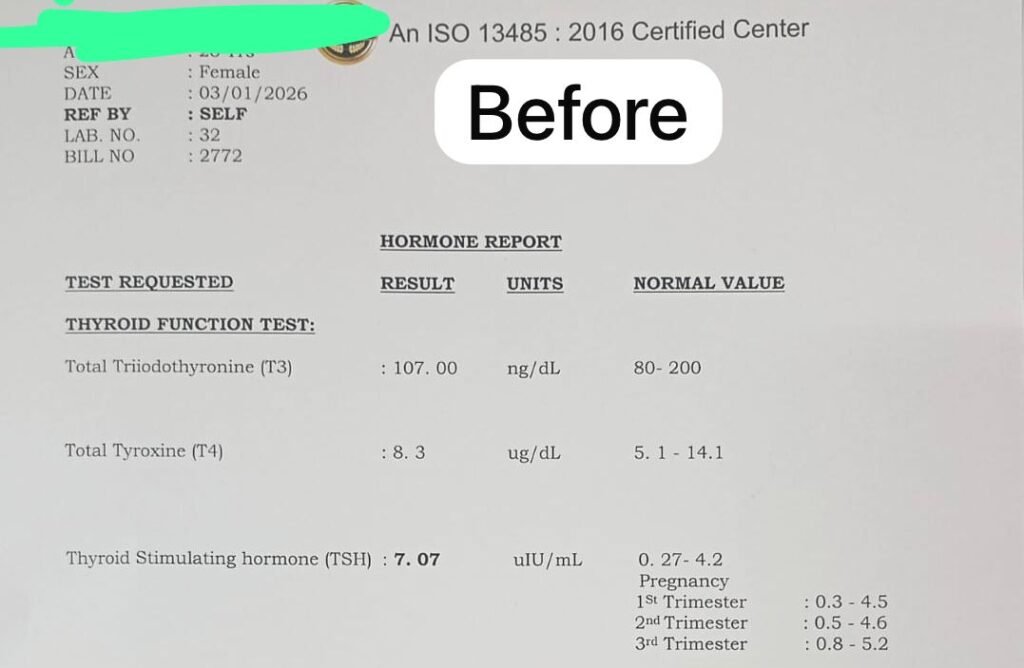
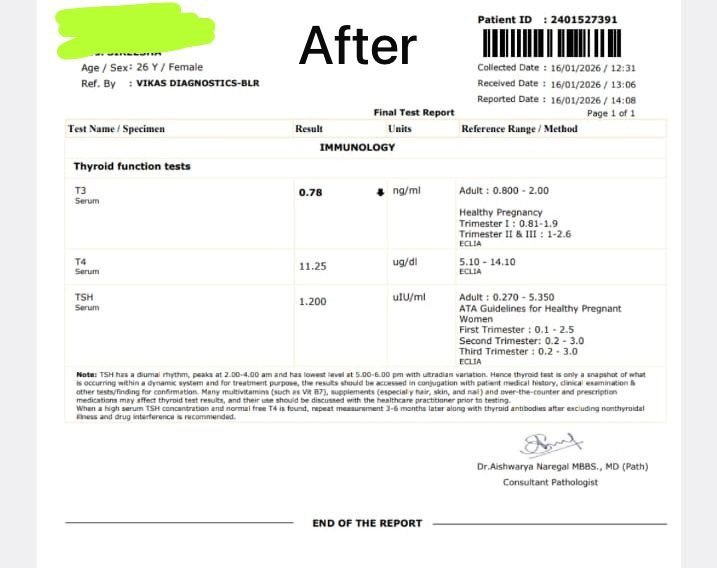
She was a known case of hypothyroidism for the last 4 years and had raised thyroid values. After a personalized Ayurvedic treatment plan including Panchakarma Sadyo Virechana and herbal medicines, her TSH reduced from 7.07 to 1.20 within 13 days.
- Appetite-Improper
- Bowels-regular
- Sleep-Regular
- Appearance: lean build
- Diet – unhealthy, untimely
- Lifestyle-sedentary
- Needs to address raised TSH-7.07 (dated 3/01/2026).
Within a time span of 13 days, TSH values of -1.200 (16/1/2026) were reported – the reports are attached below.
The patient was prescribed herbal medications along with panchakarma Sadyo virechana.
Hypothyroid Patient Profile
Demographics:
- Age – 26 yrs
- Gender – Female
- Occupation: IT employee
- Medical history – known case of hypothyroidism.
- Family history – Nothing contributory
Ayurvedic Diagnosis (Nidana Panchaka)
Ayurvedic Classification:
- Condition: Galaganda
Dosha Analysis:
- Prakriti -Kaphavata.
- Vikriti -Pitta vata
- Dominant doshas: Pitta
Samprapti (Pathogenesis):
Component | Assessment |
Dosha | Pitta predominance |
Dushya | Rasa, Rakta, Mamsa dhatus affected |
Agni Status | Mandagni (low digestive fire) |
Ama | Present with severity |
Srotas | Rasavaha, Raktavaha, Mamsavaha |
Nidana (Causative Factors):
- Ahara (dietary factors) – Apathya ahara sevana, like spicy, oily, junk, and stale foods, and improper timings of meals
- Vihara (lifestyle factors) – sedentary, no exercise.
- Manasika (psychological stress) – slight stress levels
Treatment Protocol (Case Study: Ayurvedic Treatment for Hypothyroid)
The treatment was planned in phases to correct digestion, remove Ama, and balance Doshas.
Phase 1: Preparation (4 Days) – Amapachana
A. Deepana-Pachana (digestive enhancement):
Agnitundi Vati – 1-1-1 before food
B. Snehapana (internal oleation):
Guggulu Tiktaka Ghrita
Day 1: 20 ml
Day 2: 30 ml
Day 3: 50 ml
Day 4: 80 ml
C. Bahya Snehana & Swedana (external oleation and sudation):
1 day with Mahamasha Taila
D. Virechana:
Trivrit Lehya – 30 gms
With Triphala Kashaya – 50 ml
During Virechana, the patient had 7 vegas. She was advised to follow Samsarjana Krama diet:
- Manda
- Peya
- Vilepi
After Virechana, the patient was asked to recheck thyroid values. The TSH values were normal post-treatment, which makes this hypothyroid ayurvedic treatment case study clinically significant.
Shamana Aushadha (Internal Medicines)
The patient was advised to continue the following medicines:
Arogyavardhini Rasa – 2-0-2 before food
TFN-34 – 1-1-1 after food
Thyrojith – 1-1-1 after food
Duration: 4 weeks with follow-up
She was also advised to continue Pathya Ahara-Vihara and strictly avoid Apathya Ahara-Vihara.
Diet & Lifestyle Modifications for Hypothyroid (Pathya-Apathya)
Diet and lifestyle correction plays a major role in long-term results in any hypothyroid ayurvedic treatment case study.
Pathya (Recommended Diet)
Vegetables: Bottle gourd, Ridge gourd, Fenugreek
Cereals: Wheat, Barley, Rice
Others: Honey, Ghee, Warm milk
Apathya (Foods to Avoid)
Vegetables: Brinjal, Okra, Tomatoes, Radish
Foods: Sour fruits, Fermented foods, Junk foods
Beverages: Ice cream, Cold drinks, Alcohol
Lifestyle Recommendations
Follow Dinacharya (daily routine)
Yoga & Pranayama:
Sheetali
Anulom-Vilom
Proper sleep hygiene
Stress management:
Meditation
Secondary Outcomes Observed
Along with thyroid improvement, the patient also experienced:
Improved digestive health
Better sleep quality
Reduced stress levels
Enhanced confidence and quality of life
Hair regrowth observed
These improvements show that hypothyroid ayurvedic treatment works beyond lab reports by supporting the whole system.
Reports Before and After Hypothyroid Treatment
Discussion & Analysis (Why This Hypothyroid Ayurvedic Treatment Worked)
Why Ayurvedic Treatment Worked in This Case
Ayurveda focuses on the root cause, not only symptoms
Multi-modal therapy works on:
Digestion (Agni)
Ama removal
Dosha balance
Mental wellbeing
Key Success Factors
- Good patient compliance
- Personalized treatment protocol
- Panchakarma + herbal medicines integration
- Diet and lifestyle correction
- Regular monitoring and timely adjustments
This is why this hypothyroid ayurvedic treatment case study achieved measurable improvement in a short time.
Prevention & Long-Term Management
Hypothyroid needs consistent long-term care. After detox and stabilization, maintenance becomes the key.
Maintenance Protocol
- Monthly/quarterly follow-ups
- Seasonal Panchakarma (Ritu Shodhana)
- Continued stress management practices
Lifestyle as Medicine
- Sustainable diet habits
- Regular yoga and meditation
- Work-life balance
About Adyant Ayurveda (Bangalore)
Adyant Ayurveda is known for authentic Ayurvedic care with classical Panchakarma protocols and personalized treatments.
Why Patients Trust Adyant Ayurveda
- 28+ years of clinical experience
- 5 centers across Bangalore
- Team of expert Ayurvedic doctors
- Treatment based on:
Prakriti assessment
Classical Panchakarma procedures
Evidence-based herbal medicines
Complete patient support
If you are looking for expert guidance similar to this hypothyroid ayurvedic treatment case study, you can consult our doctors for a personalised plan.
Conclusion
Key Takeaways from This Hypothyroid Ayurvedic Treatment Case Study
- Hypothyroid can be managed with Ayurveda under expert supervision
- Panchakarma, like Sadyo Virechan, supports detox and metabolism correction
- Herbal medicines and diet changes give better long-term results
- Patient awareness and lifestyle discipline are important
Want to Start Your Treatment?
If you are experiencing symptoms like fatigue, hair fall, irregular periods, weight changes, or digestive issues, consult our Ayurvedic doctors at Adyant Ayurveda.
📍 Book your consultation at Adyant Ayurveda, Bangalore (Online & in-clinic appointments available)
Safety & Disclaimer
- Every patient needs an individualized treatment plan based on Dosha, Agni, and severity
- Do not self-medicate with Ayurvedic medicines or Panchakarma therapies
- Always consult a qualified Ayurvedic doctor for hypothyroid management