
Table of Contents
ToggleJoint pains have become very common due to a sedentary lifestyle, long sitting hours, weight gain, poor posture, and reduced physical activity. Knee pain, in particular, affects people across all age groups—from working professionals to elderly individuals—impacting mobility, independence, and overall quality of life.
One of the most effective and time-tested Ayurvedic therapies for knee joint disorders is Janu Vasti, also known as Janu Basti.
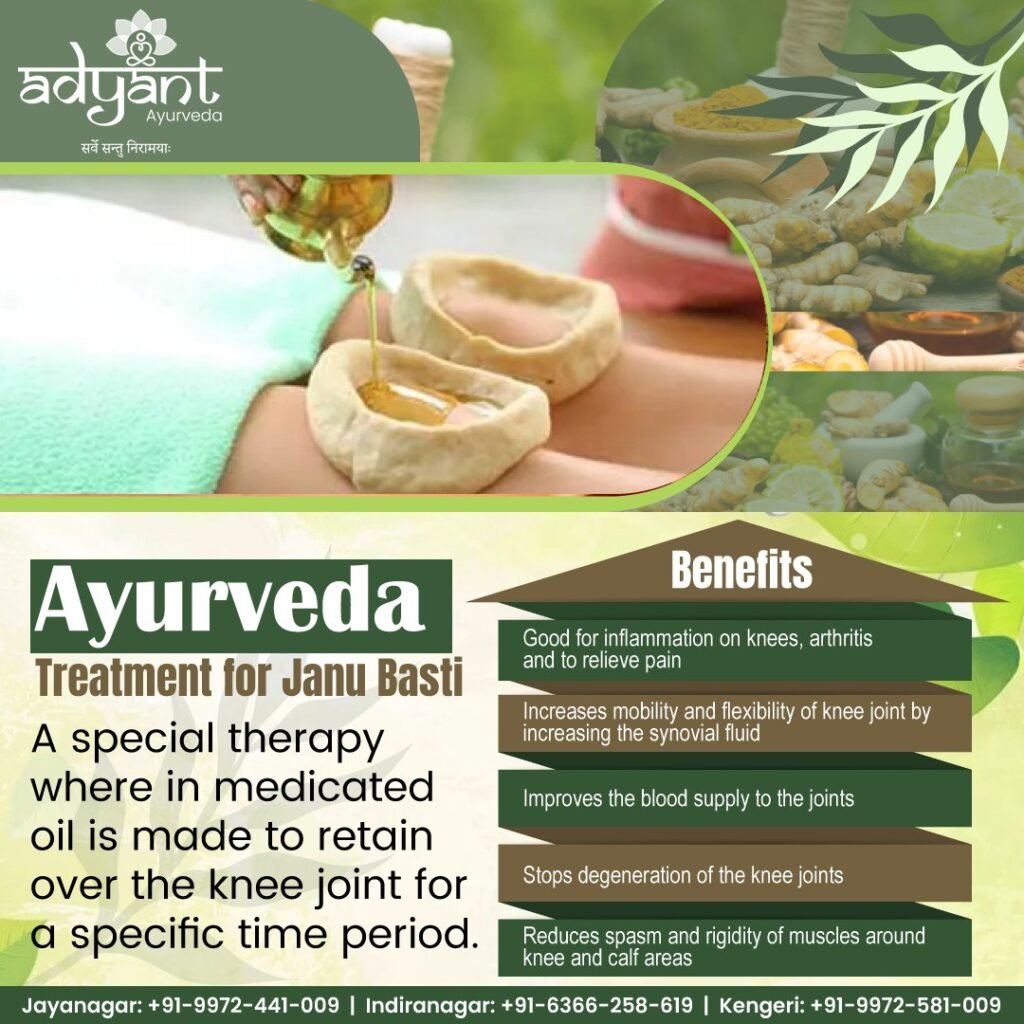
Janu Vasti is a localized Panchakarma therapy that focuses directly on the knee joint by retaining warm medicated oil over the affected area for a fixed duration. This therapeutic approach helps reduce pain, stiffness, and swelling while improving joint lubrication, flexibility, and functional mobility.
In Ayurveda, the objective is not merely temporary pain relief, but addressing the root doshic imbalance, slowing degeneration, and supporting long-term joint health.
What Causes Knee Pain?
Understanding the root cause of knee pain is essential for selecting the correct treatment approach. In Ayurveda, most joint disorders are associated with Vata imbalance and accumulation of Ama (metabolic toxins).
Common Causes of Knee Pain
- Osteoarthritis (age-related cartilage degeneration)
- Rheumatoid arthritis (autoimmune inflammation)
- Meniscus tears or ligament injuries (sports or trauma)
- Overuse and repetitive strain
- Poor posture and prolonged sitting or standing
- Obesity causes excessive joint load
- Reduced synovial fluid and joint lubrication
- Osteoporosis and bone degeneration
- Metabolic disorders such as gout or elevated uric acid
- Post-surgical or post-fracture stiffness
Chronic or recurrent knee pain often requires a structured, physician-guided approach such as Janu Vasti therapy.
What Is Janu Vasti / Janu Basti?
Janu = Knee
Vasti / Basti = To retain or hold
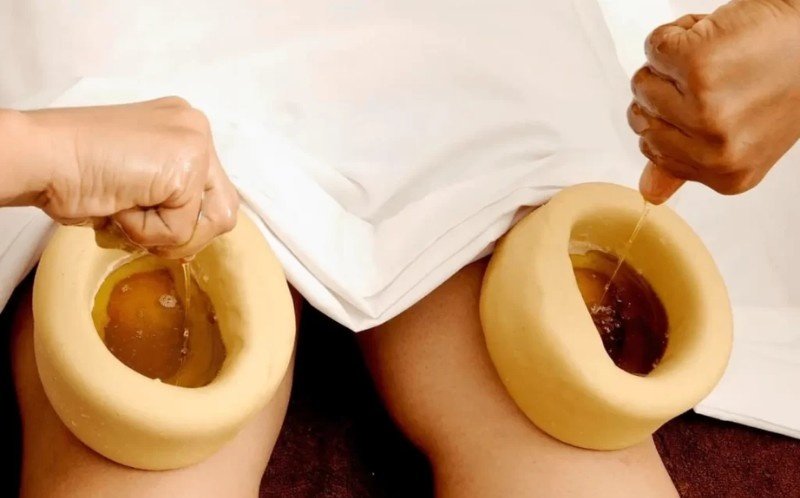
Janu Vasti is a localized Panchakarma therapy in which warm medicated oil or ghee is retained over the knee joint using a specially prepared black gram dough ring. This allows sustained contact of the medicated oil with deeper joint tissues, supporting lubrication, nourishment, and pain relief.
Janu Vasti Is Commonly Used For
- Osteoarthritis of the knee
- Rheumatoid arthritis (chronic, stable phase)
- Ligament and meniscal injuries
- Degenerative knee joint conditions
- Sports-related knee pain
Why Janu Basti Treatment Is Becoming Popular
In an era where joint replacement surgeries are increasingly common—but not always necessary—Janu Vasti offers a non-invasive, natural, and rejuvenative approach for managing chronic knee disorders.
Janu Vasti Works By
- Pacifying aggravated Vata dosha
- Improving synovial fluid quality and joint lubrication
- Enhancing local circulation and tissue nourishment
- Supporting ligaments, cartilage, and surrounding muscles
Clinical Note:
Janu Vasti is traditionally used in Ayurvedic clinical practice to support joint lubrication, reduce stiffness, and improve functional mobility in chronic knee conditions. It does not claim to cure structural deformities or regenerate severely damaged cartilage. Outcomes depend on disease stage, associated conditions, and adherence to medical advice.
Janu Basti Procedure (Step by Step)
Materials Used (Janu Basti Oil)
- Medicated oil (Taila) or medicated ghee
- Black gram flour dough
- Hot water for temperature maintenance
- Cotton, towels, and sterile vessels
Procedure
1. Purva Karma (Pre-procedure)
- Patient lies comfortably on the treatment table (Droni)
- The dough ring is placed around the knee joint
- A gentle local oil massage is performed
2. Pradhana Karma (Main Procedure)
- Warm medicated oil or ghee is retained for 30–45 minutes
- Temperature is maintained consistently
- Heat facilitates deeper penetration into joint tissues
3. Paschat Karma (Post-procedure)
- Oil is removed and the knee is cleaned
- Patient rests for 20–30 minutes
- Mild massage or Nadisweda may follow
Duration and Frequency of Janu Vasti Treatment
- Typical course: 5–7 sessions, extendable up to 14 days
- Frequency: Daily or on alternate days
Often combined with:
- Abhyanga
- Swedana
- Internal Ayurvedic medicines (if prescribed)
The exact protocol is decided by the attending Ayurvedic physician.
Ayurvedic Perspective: Sandhigata Vata (Knee Joint Pain)
In Ayurveda, knee pain is commonly explained under Sandhigata Vata, where aggravated Vata lodges in joint spaces.
Key Features
- Shoola (pain)
- Shotha (swelling)
- Sparsha Asahatva (tenderness)
- Pain during movement
Janu Vasti supports recovery through Snehana (oleation) and Swedana (sudation).
Correlation: Sandhigata Vata and Osteoarthritis
Modern osteoarthritis involves:
- Cartilage degeneration
- Joint space narrowing
- Reduced synovial fluid
- Chronic low-grade inflammation
These changes correlate with Dhatu Kshaya (tissue depletion) and Rukshata (dryness) described in Ayurvedic texts.
Basis of Ayurvedic Knowledge and Clinical Practice
The therapeutic application of Janu Vasti is derived from classical Ayurvedic texts addressing Vata Vyadhi management, including principles outlined in Charaka Samhita and Ashtanga Hridaya. Its clinical use is guided by individualized assessment, physician expertise, and traditional principles of Snehana and Swedana.
Clinical outcomes vary depending on the patient’s constitution, disease chronicity, and compliance.
Benefits of Janu Vasti (Janu Basti)
- Reduces knee pain and stiffness
- Improves joint flexibility and mobility
- Strengthens supporting structures
- Enhances local circulation
- Helps reduce swelling
- May slow degenerative progression
What Janu Vasti Can and Cannot Do
May Help With
- Pain and stiffness reduction
- Improved functional mobility
- Support in early to moderate degeneration
Does Not
- Reverse severe joint deformities
- Replace surgery in advanced cases
- Act as emergency treatment
Informed Consent & Treatment Limitations
Before initiating Janu Vasti therapy, patients are informed about its scope, limitations, and realistic expectations. Improvement is gradual and depends on disease stage, lifestyle compliance, and overall health. No guaranteed or permanent cure is claimed.
Indications & Contraindications
Indications
- Osteoarthritis
- Chronic knee pain
- Degenerative joint disorders
- Post-operative stiffness (non-acute)
Contraindications
- Acute inflammation
- Active infections or open wounds
- Recent fractures
- Severe swelling with redness
When to Seek Immediate Medical Attention
Janu Vasti is intended only for chronic, non-emergency conditions.
Seek urgent medical care if there is:
- Sudden severe injury
- Fever with joint pain
- Rapid swelling or redness
- Inability to bear weight
Safety, Aftercare & Lifestyle Support
Janu Vasti is generally safe when performed under professional supervision. Mild heaviness or stiffness may occur temporarily.
Post-care Guidelines
- Avoid cold exposure
- Rest after therapy
- Follow the prescribed diet and lifestyle advice
Janu Vasti Cost & Treatment in Bangalore
The cost typically ranges between ₹2,000 and ₹2,500 per session, depending on the oil used, the number of sessions, and therapy combinations.
At Adyant Ayurveda, Janu Vasti is administered only after a detailed physician evaluation and under strict Panchakarma protocols.
✨ Final Thoughts
Don’t let knee pain slow you down. Whether you’re struggling with osteoarthritis, injury, or chronic stiffness, Janu Vasti / Janu Basti offers a safe, natural, and time-tested Ayurvedic solution.
Rediscover pain-free movement and knee strength with the power of Ayurveda at Adyant Ayurveda.
References
Clinical Study on Janu Basti and Janu Pichu with Murivenna
Research assessing the effectiveness of Janu Basti combined with Murivenna oil in treating Janu Sandhigata Vata (knee osteoarthritis).
View the researchOsteoarthritis of the Knee through Janu Basti Procedure
A study detailing the application of Janu Basti in patients with knee osteoarthritis, highlighting improvements in pain and mobility.
Access the studyEvaluation of the Efficacy of Marma Therapy with Janu Basti
This research explores the combined effect of Marma therapy and Janu Basti in managing osteoarthritis of the knee.
Read moreControlled Clinical Study on Janu Basti and Asthi Shrinkhala
A recent study compared the effects of Janu Basti combined with Asthi Shrinkhala versus Glucosamine sulfate in managing knee osteoarthritis.
View the study
FAQs about Janu Vasti / Janu Basti
Is Janu Vasti and Janu Basti the same therapy?
Yes. Janu Vasti and Janu Basti refer to the same treatment. The spelling differs, but the procedure and benefits are the same.
Is Janu Vasti painful?
No. It is a soothing and deeply relaxing therapy.
How many sessions are needed?
Typically, 7 to 15 sessions. Chronic issues may need 10.
What is the duration of each session?
Approximately 45 minutes to 1 hour.
Will I feel better after one session?
Relief may start from the first session, but full benefits appear over time.
Which oils are used?
- Mahanarayana Taila
- Dhanwantharam Taila
- Balashwagandhadi Taila
(Selected based on your condition and Dosha)
Can it be done at home?
Not advised. It needs expert handling for oil temperature, positioning, and selection.
Is it safe for elderly patients?
Yes. It’s especially beneficial for age-related joint issues.
Can it be combined with physiotherapy?
Yes, under expert guidance for better results.
Any side effects of Janu Basti?
When Janu Basti done correctly, none. But incorrect temperature may cause burns.
What is the Janu Basti cost in Bangalore?
At Adyant Ayurveda, sessions cost Rs. 1500 to Rs. 2200, depending on the oil and protocol.
📞 Call 9972541009 to inquire about packages.
What precautions should be followed after Janu Basti treatment?
After the session, avoid cold exposure, heavy exercise, and cold-water bathing for a few hours. Follow the diet and lifestyle advice given by the Ayurvedic doctor for better results.
Where can I get Janu Vasti treatment in Bangalore?
You can get Janu Vasti (Janu Basti) treatment in Bangalore at Adyant Ayurveda across branches in Jayanagar, Indiranagar, Kalyan Nagar, Bannerghatta Road, and Rajarajeshwari Nagar, under experienced Ayurvedic doctor supervision.
Authored by:
Dr. Shree Lakshmi N BAMS (Ayurveda)
Senior Ayurvedic Physician | Panchakarma Specialist
Clinical experience in musculoskeletal and joint disorders
Medically Reviewed by:
Dr. Sumana Patwardhan, MD (Ayurveda)
Consultant Panchakarma & Vata Vyadhi Specialist
Last Content Review: 22 January 2026
Medical Disclaimer: This content is intended for educational and informational purposes only and does not constitute medical advice. Janu Vasti (Janu Basti) is an Ayurvedic therapeutic procedure that should be undertaken only after proper clinical evaluation by a qualified Ayurvedic physician. Results may vary depending on individual constitution (Prakriti), age, severity of the condition, and associated medical conditions. This therapy is not a substitute for emergency care, orthopedic intervention, or surgical treatment where indicated.


