


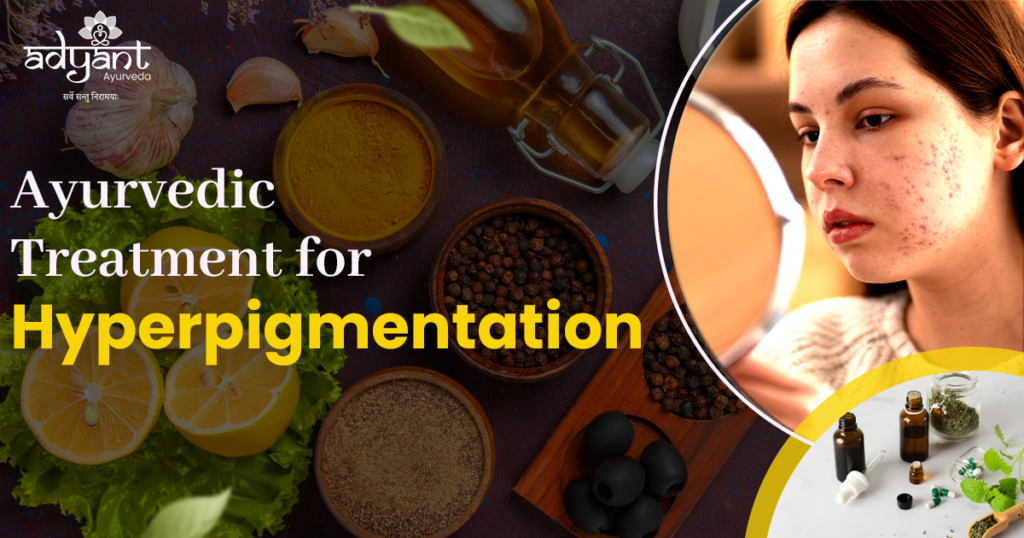
Ayurvedic treatment for hyperpigmentation focuses on reducing excess melanin by balancing Pitta dosha, purifying the blood, and removing toxins. Key treatments include herbs like Manjistha, Neem, and Turmeric, detox therapies such as Virechana, and topical oils like Kumkumadi Tailam. With consistent use, Ayurveda helps improve skin tone naturally and prevent recurrence.
Hyperpigmentation is a common skin condition characterized by dark patches, uneven skin tone, and localized discoloration. It develops gradually due to multiple factors such as prolonged sun exposure, hormonal imbalances, inflammation, aging, or internal metabolic disturbances.
From an Ayurvedic perspective, hyperpigmentation is not merely a superficial cosmetic concern. It is considered a manifestation of deeper internal imbalances, primarily involving Pitta dosha, along with Kapha imbalance and impurities in the blood tissue known as Rakta Dhatu.
Unlike conventional dermatological treatments that focus mainly on reducing pigmentation externally, Ayurveda adopts a holistic approach. It emphasizes identifying the root cause, detoxifying the body, correcting digestion, balancing doshas, and restoring natural skin health for long-term and sustainable results.
Modern Understanding of Hyperpigmentation
Scientifically, hyperpigmentation occurs due to excessive production of melanin, the pigment responsible for determining skin color. This process is regulated by an enzyme called tyrosinase, which becomes overactive under certain internal and external conditions.
Common Causes of Hyperpigmentation
- Prolonged exposure to ultraviolet radiation from sunlight
- Hormonal fluctuations, especially during pregnancy or due to medications (melasma)
- Inflammatory skin conditions such as acne, burns, or injuries
- Oxidative stress caused by environmental pollution and free radical damage
- Aging-related changes in skin metabolism
You may also like – Ayurvedic Treatment for Acne
Ayurvedic Correlation of Hyperpigmentation
Ayurveda correlates these modern causes with internal imbalances in the body:
- Pitta Dosha imbalance leading to excess heat in the body
- Rakta Dushti, meaning impurities in the blood affecting skin clarity
- Ama accumulation, which refers to toxins formed due to poor digestion
This integrative understanding allows Ayurveda to treat both the internal causes and external manifestations of hyperpigmentation effectively.
Understanding Hyperpigmentation in Ayurveda
In classical Ayurvedic texts, hyperpigmentation is described under the conditions:
- Vyanga, referring to facial discoloration
- Neelika, referring to bluish-black pigmentation
These conditions occur when internal balance is disturbed, leading to visible changes in skin tone and texture.
Key Contributing Factors
- Excess intake of spicy, oily, and heat-inducing foods
- Chronic stress and irregular lifestyle habits
- Weak digestion leading to toxin accumulation
- Hormonal imbalance affecting skin metabolism
- Excessive exposure to sunlight
Read Also – Ayurvedic Treatment for Hormonal Imbalance
Types of Hyperpigmentation
- Melasma is caused by a hormonal imbalance
- Post-inflammatory hyperpigmentation resulting from acne or injuries
- Sunspots or age spots due to prolonged sun exposure
- Freckles influenced by genetic factors and sunlight
Signs and Symptoms
- Dark patches on the face, neck, or hands
- Uneven skin tone and dull complexion
- Persistent acne marks or discoloration
- Symmetrical pigmentation patterns, especially in melasma
- Increased pigmentation after sun exposure
Read Also – Ayurvedic Treatment for Facial Pigmentation
Best Ayurvedic Treatment for Hyperpigmentation
Hyperpigmentation isn’t just a cosmetic issue. It’s often a sign that something inside your body is out of balance. The best Ayurvedic treatment for hyperpigmentation focuses on correcting internal imbalances, especially excess Pitta dosha and blood impurities, which directly impact skin health.
Instead of targeting only the dark spots, Ayurveda takes a deeper approach — detoxifying the body, restoring balance, and nourishing the skin from within. The result is not just temporary improvement, but clearer, healthier skin that lasts over time.
Key Ayurvedic Herbs for Hyperpigmentation: Ayurvedic Treatment
Ayurveda uses powerful herbs known for their detoxifying, cooling, and skin-rejuvenating properties.
- Manjistha supports blood purification and reduces discoloration
- Neem helps reduce inflammation and detoxifies the skin
- Turmeric regulates melanin production and enhances skin glow
- Yashtimadhu (Licorice) helps improve skin tone and reduce pigmentation
- Aloe Vera promotes healing and hydration
Additional beneficial herbs include Sariva, Guduchi (Giloy), and Chandana (Sandalwood), which provide cooling and detoxifying effects.
Key Ayurvedic Medicine for Hyperpigmentation
Internal Ayurvedic Medicine for Hyperpigmentation is often prescribed to address the root cause:
- Khadirarishta
- Mahamanjishtadi Kwath
- Arogyavardhini Vati
- Gandhak Rasayan
- Triphala
These should always be taken under the guidance of a qualified Ayurvedic practitioner.
Ayurvedic Oils
- Kumkumadi Tailam improves complexion and reduces dark spots
- Nalpramadi Tailam helps reduce tanning and pigmentation
- Chandanadi Tailam provides a cooling effect and balances Pitta
Panchakarma Therapies
Panchakarma plays a vital role in detoxification and skin rejuvenation.
- Virechana helps eliminate excess Pitta and toxins
- Raktamokshana purifies the blood and improves skin clarity
- Nasya supports hormonal balance
Pre-treatment procedures include Snehana (oil therapy) and Swedana (steam therapy). Post-treatment care involves maintaining a light diet, sun protection, and proper skincare.
Ayurvedic Diet for Hyperpigmentation
Diet is a key factor in managing pigmentation.
Foods to Include
- Cooling fruits such as pomegranate, grapes, and watermelon
- Leafy green vegetables
- Healthy fats like ghee and coconut oil
- Herbal teas for detoxification
Foods to Avoid
- Spicy and oily foods
- Fermented and processed foods
- Excess caffeine and alcohol
Lifestyle Practices
Maintaining a balanced lifestyle is essential for skin health.
- Ensure proper sleep of 7 to 8 hours daily
- Practice stress management through yoga and meditation
- Stay hydrated throughout the day
- Avoid prolonged sun exposure
- Follow regular detox practices
Ayurvedic Home Remedies for Hyperpigmentation
- Sandalwood and rose water paste
- Aloe vera with lemon application
- Turmeric mixed with milk
Expected Results of Ayurvedic Hyperpigmentation Treatment
- Improvement in skin texture and glow within 2 to 4 weeks
- Reduction in mild pigmentation within 4 to 8 weeks
- Noticeable improvement in deeper pigmentation within 3 to 6 months
Results depend on consistency, skin type, and severity of the condition.
Daily Ayurvedic Skincare Routine
Morning routine includes gentle cleansing with herbal ingredients, toning with rose water, moisturizing with Ayurvedic oils, and applying sun protection.
Night routine includes double cleansing, mild exfoliation two to three times a week, and application of herbal masks or serums for nourishment.
Role of Bhrajaka Pitta in Skin Pigmentation
Bhrajaka Pitta is a subtype of Pitta dosha located in the skin. It plays a crucial role in maintaining skin color, temperature, and response to environmental factors such as heat and sunlight.
When Bhrajaka Pitta becomes imbalanced, it can lead to:
- Increased sensitivity to sunlight
- Uneven skin tone and dullness
- Development of dark patches, melasma, and pigmentation
Balancing Bhrajaka Pitta is essential for restoring healthy and radiant skin.
Learn more – Ayurvedic Pitta Dosha
Root Cause Analysis in Ayurveda for Hyperpigmentation
Ayurveda focuses deeply on identifying the underlying causes of hyperpigmentation.
Core Root Causes
- Agnimandya (weak digestive fire) leading to toxin formation
- Rakta Dushti (impure blood) affects skin health
- Pitta Prakopa (excess heat in the body) triggering melanin overproduction
- Yakrit Vikara (liver dysfunction), impairing detoxification
When the liver is unable to eliminate toxins efficiently, they accumulate in the bloodstream and manifest through the skin as pigmentation.
Ayurveda vs Modern Treatment
Ayurveda focuses on root cause correction, while modern treatments primarily target visible symptoms.
Ayurveda uses herbs, detox therapies, and lifestyle correction to provide gradual but long-lasting results with minimal side effects when supervised properly.
Conventional treatments such as creams, chemical peels, and lasers may offer faster results but are often temporary and may cause skin sensitivity.
When to Consult a Doctor
- Sudden or rapidly increasing pigmentation
- Associated itching, pain, or bleeding
- No improvement after consistent care
- Suspected hormonal imbalance
Book an appointment for Hyperpigmentation at Adyant Ayurveda in Bangalore!
Adyant Ayurveda offers personalized treatment plans based on individual body constitution and root cause analysis.
Call 9972541009
Location Bangalore
Conclusion – Ayurvedic Treatment for Hyperpigmentation
Hyperpigmentation can be effectively managed through Ayurveda’s holistic approach, which focuses on correcting internal imbalances, detoxifying the body, and restoring natural skin health.
With consistent treatment, proper diet, and a balanced lifestyle, Ayurveda helps achieve clear, healthy, and radiant skin safely and sustainably.
Ayurvedic treatment for hyperpigmentation works by balancing Pitta dosha, purifying the blood, and removing toxins from the body. It uses herbs such as Manjistha, Neem, and Turmeric, along with therapies such as Virechana and topical oils such as Kumkumadi Tailam. This approach helps reduce dark spots, improve skin tone, and prevent recurrence naturally.
Medical Disclaimer
This content is for educational purposes only and should not be considered medical advice. Please consult a qualified Ayurvedic practitioner before starting any treatment.
“Results may vary depending on individual body constitution (Prakriti) and severity of the condition.”
Medically Reviewed Content
Author Dr. Shree Lakshmi BAMS
Senior Ayurvedic Physician with 28 plus years of clinical experience in skin disorders and Panchakarma
Medical Reviewer Dr. Sumana Patvardhan BAMS MD Ayurveda
Specialist in Ayurvedic Dermatology and Integrative Skin Care
FAQ - Ayurvedic Treatment for Hyperpigmentation
How long does Ayurvedic treatment take for hyperpigmentation?
Ayurvedic treatment for hyperpigmentation typically shows visible improvement within 4 to 8 weeks. However, deeper or chronic pigmentation may take 3 to 6 months depending on the skin type, severity, and consistency of treatment.
Is Ayurveda safe for treating hyperpigmentation?
Yes, Ayurveda is generally safe for treating hyperpigmentation when therapies and medicines are prescribed by a qualified Ayurvedic practitioner. It uses natural herbs and focuses on balancing internal health along with external care.
Can Ayurveda cure hyperpigmentation permanently?
Ayurveda aims to treat the root cause of hyperpigmentation, such as hormonal imbalance or excess Pitta, which can lead to long-term improvement. However, results depend on maintaining a proper diet and lifestyle, otherwise pigmentation may return.
Can pigmentation come back?
Yes, hyperpigmentation can recur if underlying triggers like sun exposure, stress, poor diet, or hormonal imbalance are not properly managed even after treatment.
Which oil is best for pigmentation?
Kumkumadi Tailam is considered one of the best Ayurvedic oils for pigmentation. It helps improve skin complexion, reduce dark spots, and enhance overall skin glow with regular use.