


Table of Contents
ToggleMedically reviewed by Dr. Preethi, BAMS, Ayurvedic Physician, with clinical experience in chronic skin disorders at Adyant Ayurveda, Bengaluru.
This article provides general educational information about Seborrheic Dermatitis and the Ayurvedic perspective on skin health, scalp disorders, and holistic treatment approaches.
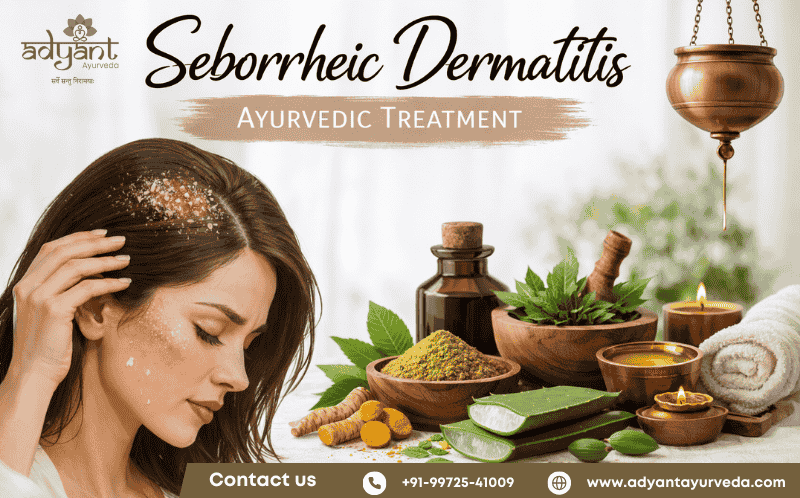
Seborrheic dermatitis is a common chronic skin condition that affects areas rich in oil glands, especially the scalp, eyebrows, sides of the nose, ears, and beard area. It often presents as dandruff, itching, redness, and greasy flakes. Many individuals searching for seborrheic dermatitis ayurvedic treatment seek long-term approaches because while conventional treatments may provide temporary relief, recurrence is common.
Seborrheic Dermatitis Ayurvedic Treatment focuses on treating the root cause of the disease. Ayurveda works by balancing internal body energies, improving digestion, detoxifying the body, and healing the skin naturally.
Seborrheic dermatitis often follows a relapsing pattern, with symptoms becoming worse during stress, seasonal changes, sweating, irregular sleep, or inconsistent lifestyle habits. Many individuals observe temporary improvement followed by recurrence, especially when internal triggers such as digestive disturbance, fatigue, or irregular routine are not addressed.
Seborrheic dermatitis can affect different age groups, including infants, adolescents, and adults, though symptom patterns may vary depending on age, scalp condition, and skin sensitivity. The scalp is commonly affected because seborrheic dermatitis tends to develop in areas where oil gland activity is naturally higher.
Read Also: Ayurvedic Treatment dandruff
Common Symptoms of Seborrheic Dermatitis
Typical symptoms may include:
- White or yellowish flakes on the scalp
- Itching and irritation
- Red patches of skin
- Greasy scaling
- Flaking around eyebrows, nose, ears, or beard region
- Mild dandruff to thick scaling, depending on severity
- Occasional burning sensation or scalp sensitivity
- Scaling may also appear on the upper chest or behind the ears in some individuals
- Symptoms may increase during periods of stress or weather change
Symptom intensity may vary from mild intermittent flaking to more persistent irritation depending on recurrence, scalp sensitivity, and associated triggers.
You may also like – Ayurvedic Treatment for Skin Allergy
Can Seborrheic Dermatitis Cause Hair Fall?
Persistent inflammation, repeated scratching, thick scaling, and ongoing scalp irritation may contribute to temporary hair shedding in some individuals. Seborrheic dermatitis itself does not directly damage hair roots, but hair fall may become more noticeable when itching remains frequent or scalp sensitivity persists for a prolonged duration.
In many cases, hair shedding improves when scalp irritation and active inflammation are better controlled.
Causes and Contributing Factors
Several factors may contribute to seborrheic dermatitis:
- Excess sebum production
- Overgrowth of skin yeast
- Stress and irregular sleep
- Weather changes
- Hormonal imbalance
- Reduced digestive efficiency and immunity
Symptoms may worsen during cold weather, humidity changes, prolonged sweating, or irregular scalp cleansing, especially when scalp oil production and skin sensitivity increase.
Individual skin sensitivity, genetic tendency, and variations in skin barrier function may also influence recurrence. The skin yeast commonly associated with seborrheic dermatitis is Malassezia, which may contribute to inflammation in individuals with sensitive scalp conditions. Use of unsuitable scalp products, harsh shampoos, excessive sweating, or irregular scalp hygiene may further aggravate symptoms in some individuals. Seborrheic dermatitis may become more noticeable in people with oily scalp tendency, recurrent dandruff history, prolonged stress, irregular sleep, dietary irregularity, or sensitivity to seasonal climate changes.
Read Also – Ayurvedic Treatment for Scalp Psoriasis
Seborrheic Dermatitis vs Dandruff
Many people assume seborrheic dermatitis is just dandruff, but there are important differences.
| Feature | Seborrheic Dermatitis | Dandruff |
|---|---|---|
| Severity | Moderate to severe | Mild |
| Redness | Present | Usually absent |
| Skin flakes | Yellow oily flakes | Dry white flakes |
| Areas affected | Scalp, face, chest | Mainly scalp |
| Inflammation | Common | Rare |
Dandruff is considered a mild form of seborrheic dermatitis.
How Ayurveda Understands Seborrheic Dermatitis
Ayurveda views seborrheic dermatitis as a systemic imbalance rather than just a skin problem. The condition is associated with dosha imbalance and toxin accumulation.
Ayurvedic Explanation
- Pitta Dosha imbalance: Causes redness, inflammation, and burning sensation.
- Kapha Dosha imbalance: Causes oiliness, thick flakes, and sticky dandruff.
- Ama (toxins): Accumulates due to weak digestion and poor metabolism.
When these imbalances affect Twak Dhatu (skin tissues) and the scalp, symptoms like itching, dandruff, and irritation appear.
Read Also: Ayurvedic Doshas
Seborrheic Dermatitis Ayurvedic Treatment
Seborrheic Dermatitis Ayurvedic Treatment focuses on balancing Pitta and Kapha dosha, detoxifying the body, improving digestion, and healing the scalp through herbal medicines and therapies. Unlike temporary treatments, Ayurveda aims to provide long-term scalp health and prevent recurrence. Treatment plans usually include:
- Herbal medicines
- Medicated oils
- Panchakarma detox therapies
- Diet changes
- Lifestyle modifications
Ayurvedic Medicines for Seborrheic Dermatitis
Ayurvedic herbs play an important role in controlling scalp inflammation and flakes.
| Herb | Benefits |
|---|---|
| Neem | Antifungal and antibacterial |
| Manjistha | Blood purifier |
| Bhringraj | Nourishes scalp |
| Triphala | Detoxifies body |
| Guduchi | Reduces inflammation |
| Amla | Improves immunity |
These herbs help reduce:
- itching
- dandruff
- scalp inflammation
They also support healthy skin regeneration.
Ayurvedic Oils for Seborrheic Dermatitis
Medicated oils help nourish the scalp and reduce irritation. Common oils used include:
- Bhringraj oil
- Neem oil
- Coconut oil infused with herbs
- Brahmi oil
Benefits include:
- soothing scalp irritation
- reducing flakes
- improving hair health
Panchakarma Treatment for Seborrheic Dermatitis
In chronic or severe cases, Ayurvedic doctors may recommend Panchakarma detox therapies. Common Panchakarma Therapies for Seborrheic Dermatitis are following:
- Virechana Treatment: A detox therapy that removes excess Pitta toxins and improves skin health.
- Takradhara Treatment: Buttermilk therapy used for Pitta-related scalp conditions.
- Shiro Abhyanga: Medicated oil massage that improves scalp circulation.
- Nasya Therapy: Nasal therapy that supports scalp and sinus health.
These treatments help reduce inflammation and prevent recurring dandruff.
Diet for Seborrheic Dermatitis
Diet plays a major role in skin health according to Ayurveda. Recommended Foods according to Ayurveda for Seborrheic Dermatitis are:
| Food | Benefit |
|---|---|
| Green vegetables | Detoxify the body |
| Amla | Improves skin health |
| Coconut water | Reduces Pitta heat |
| Whole grains | Improves digestion |
| Herbal teas | Reduce inflammation |
Foods to Avoid
| Food | Reason |
|---|---|
| Spicy foods | Increase Pitta |
| Fried foods | Increase Kapha |
| Sugary foods | Increase inflammation |
| Processed foods | Produce toxins |
Following a balanced diet helps reduce flare-ups naturally.
Lifestyle Tips to Prevent Seborrheic Dermatitis
Healthy daily habits can significantly improve scalp health.
Helpful tips include:
- Wash hair regularly
- Avoid harsh chemical shampoos
- Reduce stress through yoga or meditation
- Maintain a proper sleep schedule
- Follow a balanced diet
These habits support healthy scalp and skin balance.
Why Seborrheic Dermatitis Often Returns
Seborrheic dermatitis commonly follows a chronic relapsing pattern because several triggers may continue to affect the scalp even after temporary improvement. Stress, irregular sleep, sweating, seasonal variation, digestive imbalance, scalp oil fluctuation, and unsuitable scalp products may all contribute to repeated flare-ups.
This is why long-term management often focuses not only on symptom control but also on identifying and reducing individual aggravating factors.
Seasonal Influence on Seborrheic Dermatitis
Many individuals notice that seborrheic dermatitis becomes more active during winter, humid weather, prolonged sweating, or sudden climate changes. Dry weather may increase visible flaking in some people, while humidity and sweating may aggravate itching or greasy scaling in others.
Seasonal variation often influences symptom intensity, especially in individuals with sensitive scalp conditions.
Conventional Treatments
Modern treatment usually includes medicated shampoos, anti-fungal lotions, and steroid-based creams. These may help control symptoms temporarily, but symptoms can return when treatment is stopped.
Long-term frequent use of steroid-based products may require medical supervision, especially when symptoms recur often. Conventional treatment often focuses on controlling visible symptoms, while recurrence may still occur if contributing factors continue.
Seborrheic Dermatitis Ayurvedic Treatment in Bangalore
If you are searching for Seborrheic Dermatitis Ayurvedic Treatment in Bangalore, professional diagnosis is important. At Adyant Ayurveda, Bangalore’s top Ayurvedic doctors analyze the root cause of scalp imbalance and create personalized treatment plans. Adyant Ayurveda Clinics Available across Bangalore:
- Jayanagar
- Indiranagar
- Rajarajeshwari Nagar (RR Nagar)
- Kalyan Nagar
- Bannerghatta Road
Treatment options includes Ayurvedic herbal medicines, scalp therapies, Panchakarma detox treatments, diet and lifestyle guidance.
Book an Appointment for Ayurvedic Seborrheic Dermatitis Treatment
Why Patients Choose Adyant Ayurveda
Patients choose Adyant Ayurveda for its holistic approach to skin and scalp diseases. Key benefits include:
- Experienced Ayurvedic doctors
- Personalized treatment plans
- Authentic herbal medicines
- Panchakarma therapy facilities
- Multiple clinics across Bangalore
The clinic treats various skin conditions such as dandruff, seborrheic dermatitis, psoriasis, and eczema.
Read more – Ayurvedic Treatment for Eczema
Clinical Experience at Adyant Ayurveda
In clinical practice, individuals with recurrent seborrheic dermatitis often report worsening of symptoms during stress, irregular sleep, prolonged sweating, seasonal changes, digestive irregularity, or repeated use of unsuitable scalp products. Some patients present with long-standing dandruff-like symptoms that gradually progress to redness, persistent itching, greasy scaling, or involvement of eyebrows, ears, and facial folds.
In many such cases, treatment planning often requires simultaneous attention to scalp care, digestive balance, recurrence triggers, and long-term follow-up rather than symptom control alone. Clinical response may vary depending on chronicity, scalp sensitivity, previous treatment history, and consistency in following dietary and lifestyle guidance.
Treatment Duration and Follow-Up
The duration of Ayurvedic management varies according to symptom severity, recurrence pattern, scalp sensitivity, and associated internal factors. Some individuals may require longer follow-up when flare-ups are frequent or symptoms have been present for a prolonged duration.
Periodic reassessment helps modify treatment according to seasonal variation, response pattern, and overall progress.
Practical Daily Scalp Care Support
Simple scalp-care measures often support comfort during active flare-ups:
- Wash hair with lukewarm or cool water
- Avoid excessive heat exposure
- Avoid harsh scratching
- Reduce friction over affected areas
- Use mild scalp care products
- Avoid frequent switching between multiple shampoos
Frequent use of strongly fragranced products may increase scalp sensitivity.
Common Mistakes That May Worsen Seborrheic Dermatitis
Certain daily habits may unintentionally aggravate scalp irritation or increase recurrence:
- Frequent scratching during itching
- Applying very hot water over the scalp
- Frequent switching between multiple shampoos
- Using harsh scalp products
- Excessive oil application during active flare-up without assessment
- Self-use of steroid creams for prolonged periods
- Ignoring sleep disturbance or stress-related triggers
Avoiding repeated scalp irritation often helps improve comfort during active phases.
When Seborrheic Dermatitis Needs Early Attention
Early professional assessment may be useful when:
- scaling becomes thick or widespread
- itching becomes frequent
- Redness persists for prolonged periods
- Sleep is disturbed by discomfort
- Symptoms extend to the face, ears, or chest
- Repeated recurrence occurs despite routine scalp care
Early evaluation helps differentiate seborrheic dermatitis from other scalp conditions and supports more appropriate treatment planning.
Seborrheic Dermatitis and Similar Scalp Conditions
Seborrheic dermatitis may resemble several other scalp conditions, which is why proper evaluation is important.
Similar symptoms may occur in:
- Psoriasis
- fungal scalp infection
- eczema
- allergic scalp reactions
While dandruff usually presents as mild flaking without significant redness, seborrheic dermatitis often includes greasy scaling, itching, irritation, and recurrent flare-ups.
Read Also – Ayurvedic Treatment for Fungal Infections
Clinical Observations in Ayurvedic Practice
Clinical observations in Ayurvedic practice suggest that recurrent scalp conditions often respond better when treatment planning includes internal assessment, scalp care guidance, digestive support, and lifestyle correction together. Because symptom triggers vary between individuals, treatment is generally individualized rather than based on a single standard approach.
Conclusion – Ayurvedic Treatment for Seborrheic Dermatitis
Seborrheic dermatitis can be frustrating because it causes persistent dandruff, itching, and scalp irritation. While conventional treatments provide temporary relief, Seborrheic Dermatitis Ayurvedic Treatment focuses on correcting the root cause of the problem. Through herbal medicines, Panchakarma detox therapies, diet correction, and lifestyle changes, Ayurveda helps restore healthy scalp balance and reduce flare-ups. If you are experiencing recurring dandruff or scalp inflammation, consulting an Ayurvedic expert can help you achieve long-term relief.
FAQs - Seborrheic Dermatitis Ayurvedic Treatment
Is seborrheic dermatitis the same as dandruff?
Dandruff is generally considered a mild form of seborrheic dermatitis. It usually causes dry white flakes on the scalp without significant redness or irritation. Seborrheic dermatitis is more pronounced and may include greasy scaling, itching, and redness, sometimes affecting other areas such as eyebrows, ears, or the sides of the nose.
Can seborrheic dermatitis affect the face?
Yes, seborrheic dermatitis can affect facial areas where oil glands are active. Common locations include the eyebrows, sides of the nose, beard area, and behind the ears. These areas may develop redness, flaking, mild itching, or greasy scaling. Symptoms often appear along with scalp dandruff in some individuals.
Can stress worsen seborrheic dermatitis?
Yes, stress can worsen seborrheic dermatitis symptoms. Emotional stress may influence skin inflammation, oil production, and immune response, which can trigger flare-ups. Many people notice increased itching, redness, or flaking during stressful periods, irregular sleep, or fatigue, making stress management an important part of long-term symptom control.
Is seborrheic dermatitis contagious?
No, seborrheic dermatitis is not contagious. It cannot spread through touch, sharing personal items, or close contact with others. The condition is usually linked to oil gland activity, skin sensitivity, and natural skin microorganisms. Proper evaluation helps distinguish it from other scalp or skin conditions with similar symptoms.
Can Ayurveda help reduce recurrence?
Ayurvedic management focuses on balancing internal factors along with external scalp care. Treatment may include herbal support, dietary guidance, and lifestyle adjustments based on individual assessment. By addressing triggers such as digestion, stress, and routine imbalance, Ayurveda aims to support skin health and reduce repeated flare-ups over time.
Is Panchakarma necessary for every patient?
No, Panchakarma is not necessary for every patient. These therapies are recommended only in selected cases after proper Ayurvedic evaluation. Many individuals manage seborrheic dermatitis through herbal medicines, scalp care, and lifestyle adjustments. Panchakarma may be considered when symptoms are persistent or recur frequently.
Can seborrheic dermatitis return after improvement?
Yes, seborrheic dermatitis can return even after symptoms improve. Recurrence may occur due to stress, seasonal changes, sleep disturbance, sweating, or dietary imbalance. Because the condition often follows a relapsing pattern, long-term management usually focuses on reducing triggers and maintaining consistent scalp and lifestyle care.
Educational Disclaimer: This information is intended for educational purposes only. Scalp conditions with flaking, redness, itching, irritation, or hair shedding may resemble other dermatological disorders, so professional evaluation helps determine the most appropriate treatment approach.
Last Updated: 14 March 2026
Content Update Policy
Our articles are reviewed and refreshed regularly to reflect the latest information. Our experts continuously monitor developments in the health and wellness field to ensure the content remains accurate and up to date.
Author: Dr. Shree Lakshmi, BAMS
Senior Ayurvedic Physician, Adyant Ayurveda
Medical Reviewer: Dr. Sumana Patvardhan, MD (Ayurveda)
Consultant Ayurvedic Physician, Adyant Ayurveda