

Table of Contents
ToggleAyurvedic Treatment for Back Pain: Causes, Therapies & Expert Care at Adyant Ayurveda

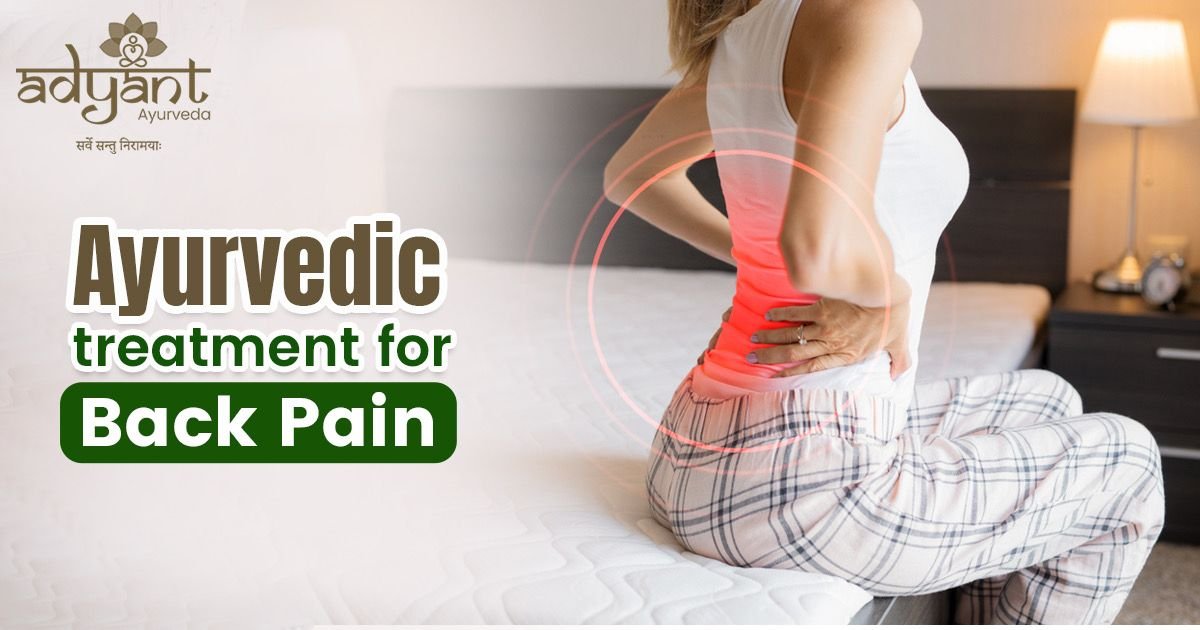
Back pain is one of the most widespread health complaints in India — affecting office workers, homemakers, athletes, and the elderly alike. Whether it is a sharp pull in the lower back after a long day at your desk or a persistent dull ache that has lingered for months, back pain can quietly erode your quality of life. Painkillers may offer temporary relief, but they rarely address why the pain keeps coming back.
This is precisely where Ayurveda offers a transformative advantage. Ayurvedic treatment for back pain is not limited to managing symptoms — it works to identify and correct the underlying imbalances that cause the pain in the first place. The result is more lasting relief, improved mobility, and a stronger, more resilient spine.
At Adyant Ayurveda, Bangalore’s trusted multi-branch Ayurvedic clinic with over 28 years of clinical experience, our physicians have helped thousands of patients overcome back pain through classical Panchakarma therapies and individualised herbal protocols. We are proud recipients of the Times Health Excellence in Panchakarma Treatments Award 2024 and the AYUSH Health Award 2024 — Best Ayurvedic Clinic in Bangalore.
Understanding Back Pain the Ayurvedic Way
Modern medicine classifies back pain by location, duration, and structural cause — disc herniation, muscle strain, arthritis, and so on. Ayurveda takes a different, more holistic lens. It looks at which dosha (bio-energy) is disturbed, which body tissues (dhatus) are affected, and what lifestyle or dietary factors have led to the imbalance.
Ayurvedic Names for Back Pain
In classical Ayurvedic texts, back pain is described under several conditions:
- Kati Shoola — Pain in the lumbar (lower back) region
- Gridhrasi — Sciatic nerve pain radiating down the leg
- Prishtha Shoola — Pain in the thoracic (mid and upper back) region
- Spondylosis / Disc disorders — Correlated with Asthikshaya (bone and cartilage degeneration)
The Root Cause: Vata Vitiation
Back pain in Ayurveda is predominantly a Vata disorder. The Vata dosha governs all movement in the body — including nerve impulses, muscle contractions, and joint mobility. When Vata becomes aggravated due to poor posture, irregular routines, cold or dry weather, stress, or inadequate nourishment, it begins to accumulate in the kati (lumbar) region, causing stiffness, pain, and restricted movement.
Chronic cases often also involve Ama (metabolic toxins) lodging in the joints and tissues, further aggravating inflammation and degeneration. A thorough Ayurvedic consultation at Adyant Ayurveda assesses your unique Prakriti (body constitution) and Vikriti (current imbalance) before designing your treatment plan.
Common Causes of Back Pain from an Ayurvedic Perspective
- Sedentary lifestyle and prolonged sitting (especially IT professionals, drivers)
- Heavy lifting with incorrect posture
- Sleeping on unsupportive mattresses
- Stress and emotional suppression (Vata aggravation through the nervous system)
- Irregular eating habits, skipping meals, excessive dry or raw food
- Overexertion or physically demanding work
- Age-related bone and cartilage changes (Asthikshaya)
Ayurvedic Medicine for Back Pain
Classical Ayurvedic pharmacology offers a rich arsenal of herbal and mineral formulations specifically designed to pacify Vata, reduce inflammation, strengthen the musculoskeletal system, and nourish nerve tissue. Below are key ayurvedic medicines for back pain used at Adyant Ayurveda — always prescribed after a thorough consultation.
Key Formulations
- Yogaraj Guggulu — Anti-inflammatory, Vata-pacifying resin-based tablet; widely used for joint and musculoskeletal pain
- Maharasnadi Kwatha — A powerful decoction effective for Vata disorders, sciatica, and lower back stiffness
- Shallaki (Boswellia serrata) — Clinical evidence supports its efficacy in reducing pain and improving joint function
- Dashamoola Kwatha — A blend of ten roots known to reduce inflammation, muscle spasms, and nerve pain
- Ashwagandha (Withania somnifera) — Strengthens muscles, nourishes nervous system, reduces stress-related pain
- Bala Taila preparations — Used internally and externally to nourish muscle and nerve tissue
- Guggulu Tiktaka Ghrita — For Vata-Pitta back pain with inflammatory component
For ayurvedic medicine for lower back pain specifically, our doctors often combine Vata-pacifying oral formulations with external therapies (described below) for synergistic results — addressing both the systemic imbalance and the localised site of pain simultaneously.
Important Note from Dr. Shreelakshmi
Ayurvedic medicines are not one-size-fits-all. The same symptom — back pain — can arise from different dosha imbalances in different people. What works for one patient may not suit another. At Adyant Ayurveda, every prescription follows a comprehensive Prakriti-Vikriti assessment by our experienced physicians. Please do not self-medicate with Ayurvedic formulations.
Ayurvedic Oil for Back Pain — The Power of Medicated Taila
Oil occupies a uniquely important role in Ayurvedic therapeutics. Medicated oils (Taila) are believed to penetrate through the skin (twak), reach deeper tissues (dhatus), and directly act on the site of Vata aggravation. Regular application of the right ayurvedic oil for back pain can relieve stiffness, reduce pain, nourish nerves, and improve circulation.
Commonly Used Ayurvedic Oils for Back Pain
- Mahanarayan Taila — The gold standard for musculoskeletal pain; deeply nourishes joints, muscles, and nerves. Excellent for chronic lower back ache and stiffness
- Ksheerabala Taila — Prepared with milk and Bala herb; superb for nerve conditions, sciatica, and degenerative spine disorders
- Sahacharadi Taila — Particularly effective for sciatica (Gridhrasi) and lower limb pain associated with lumbar compression
- Dhanwantharam Taila — Classical formulation for all Vata-related disorders; used both for massage and internal administration (in supervised doses)
- Murivenna — A Kerala tradition oil highly effective for acute injuries, sprains, and trauma-induced back pain
How to Apply Ayurvedic Oil for Back Pain at Home
- Warm the oil slightly (do not overheat) before application
- Apply using slow, firm strokes along the spine from the sacrum upward
- Massage gently with the palms — avoid aggressive kneading on acute pain
- Leave on for at least 30 minutes before a warm bath
- Best done in the morning before bathing or at bedtime
- Consistency matters — daily application for a minimum of 2–4 weeks shows results
Note: For clinical-grade application with precise technique and specific oil selection, Abhyanga (therapeutic massage) at our Adyant Ayurveda centres delivers far superior outcomes than home application alone.
Ayurvedic Massage for Back Pain — Therapies That Go Deeper
An ayurvedic massage for back pain is far more than a relaxation treatment. Each therapy is a precision clinical intervention — the oil, technique, pressure, temperature, and duration are all calibrated to the patient’s condition and dosha imbalance. At Adyant Ayurveda, our therapists are trained under the supervision of senior physicians to deliver authentic, therapeutically effective treatments.
1. Abhyanga (Full Body Medicated Oil Massage)
The foundation of Ayurvedic body therapy. Warm medicated oil is applied in synchronized strokes across the entire body. For back pain, specific attention is given to the lumbar, sacral, and paraspinal muscles. Abhyanga improves circulation, loosens deep-seated muscular tension, calms the nervous system, and prepares the body for deeper Panchakarma procedures.
Read More – Abhyanga Massage
2. Kati Basti (Warm Oil Pool Therapy for the Lower Back)
Kati Basti is one of the most distinctive and effective Ayurvedic treatments for lower back pain. A dam made of black gram dough is placed on the lumbar region, and warm medicated oil is poured inside and maintained at a therapeutic temperature for 30–45 minutes. The sustained warmth and penetrating properties of the oil work directly on the lumbar vertebrae, discs, and surrounding muscles — relieving stiffness, reducing disc compression, and nourishing the nerve roots. Kati Basti is especially indicated for lumbar spondylosis, disc bulge (PIVD), sacroiliac joint pain, and chronic lower back stiffness.
Read Also – Kati Basti Treatment for Lower Back Pain
3. Patra Pinda Sweda (Herbal Leaf Bolus Massage — Elakizhi)
Fresh herbal leaves and medicinal plants are chopped, mixed with specific oils, heated, and bound into boluses. The warm boluses are applied rhythmically across the back in swift, firm strokes. This combination of medicated heat and herbal active compounds significantly reduces inflammation, relieves nerve compression, and improves joint mobility. Highly effective for disc prolapse, sciatica, and inflammatory back pain.
Read More – Ayurvedic Patra Pinda Sweda Therapy
4. Navarakizhi (Rice Bolus Massage — Shashtika Shali Pinda Sweda)
Navara rice is cooked in a medicated milk decoction and made into boluses. The nourishing boluses are applied to the back to deeply nourish nerve tissue, muscles, and bone. This therapy is particularly beneficial for degenerative conditions, chronic weakness in the back muscles, and age-related spinal changes.
Read More – Navarakizhi Treatment
5. Pizhichil (Warm Oil Drizzle Therapy)
Warm medicated oil is poured in a continuous, gentle stream over the body while simultaneously massaged by two therapists. Pizhichil provides deep neuromuscular nourishment, relieves chronic pain, and is especially powerful for advanced Vata disorders such as severe sciatica and nerve-related back pain.
Read More – Pizhichil Ayurvedic Treatment
Award Recognition
Adyant Ayurveda has been awarded Excellence in Panchakarma Treatments by Times Health 2024 — recognising the clinical quality and consistency of our Panchakarma therapies across all Bangalore branches.
Panchakarma Treatments for Back Pain at Adyant Ayurveda
Panchakarma — Ayurveda’s system of five purificatory procedures — represents the highest level of Ayurvedic intervention. Unlike external therapies that provide localised relief, Panchakarma works at the systemic level: it removes deep-seated Ama (toxins), corrects dosha imbalances, and restores the body’s innate healing capacity. For chronic, recurring, or structural back pain, Panchakarma is transformative.
Panchakarma Procedures Most Relevant to Back Pain
- Basti (Medicated Enema Therapy) — Considered the most effective treatment for all Vata disorders. Medicated herbal decoctions or oils are administered as an enema to directly address Vata in the colon (its primary site). Basti softens compressed discs, nourishes the lumbar region through systemic correction, and provides lasting relief from chronic back pain. Both Anuvasana Basti (oil enema) and Kashaya Basti (decoction enema) may be prescribed in a series.
- Virechana Treatment (Therapeutic Purgation) — Used when back pain has a Pitta-inflammatory component; cleanses Pitta from the GI tract and reduces systemic inflammation
- Nasya Therapy (Nasal Administration) — For cervical and upper back pain; medicated oils administered through the nasal passages act on the cervical spine and cranial nerves
The Adyant Ayurveda Panchakarma Protocol
Our structured treatment process ensures that every patient receives care that is both safe and genuinely effective:
- Step 1 — Initial Consultation: Pulse diagnosis (Nadi Pariksha), Prakriti assessment, and review of existing reports
- Step 2 — Poorva Karma (Preparatory Phase): Snehana (internal and external oleation) and Swedana (therapeutic sweating) to loosen and mobilise toxins
- Step 3 — Pradhana Karma (Main Panchakarma Procedures): The core treatment phase — Basti, Kati Basti, Elakizhi, Pizhichil, etc., customised to the patient
- Step 4 — Paschat Karma (Post-Treatment Care): Dietary guidelines, lifestyle advice, and herbal medicines for consolidating results
- Step 5 — Follow-Up: Regular check-ins to monitor progress and adjust treatment
Our physicians — led by Dr. Shreelakshmi (BAMS, 20+ Years Clinical Experience) — personally supervise every Panchakarma protocol. To explore our full medical team at best ayurvedic doctor in Bangalore.
Ayurvedic Treatment for Lower Back Pain — A Closer Look
Lower back pain is the most common musculoskeletal complaint globally — and it is one of the conditions Adyant Ayurveda treats most frequently. The ayurvedic treatment for lower back pain at our clinics is tailored to the exact structural and constitutional cause of each patient’s symptoms.
Conditions We Address
- Lumbar Spondylosis — Degenerative wear of lumbar vertebrae and intervertebral discs
- Prolapsed Intervertebral Disc (PIVD / Slip Disc) — Disc bulge compressing nerve roots
- Sciatica (Gridhrasi) — Radiating pain from lower back through the leg
- Sacroiliac Joint Dysfunction — Pain at the base of the spine and tailbone region
- Muscle Strain and Spasm — Acute or chronic tightening of paraspinal muscles
- Osteoporosis-related back pain — Bone density loss affecting the lumbar spine
Read Also – Ayurvedic Treatment for Sciatica
Why Ayurveda Works Better for Lower Back Pain
Conventional treatment for lower back pain often relies on NSAIDs, muscle relaxants, physiotherapy, or in severe cases, surgery. These approaches do not address the underlying dosha imbalance, Ama accumulation, or tissue degeneration — which means the pain frequently recurs.
Ayurvedic treatment for lower back pain, by contrast, addresses these root causes directly:
- Basti corrects Vata imbalance at its source — the colon — delivering systemic relief
- Kati Basti nourishes and hydrates compressed discs and tense spinal muscles
- Herbal formulations reduce inflammation and rebuild damaged cartilage and bone
- Dietary and lifestyle guidance prevents recurrence
Patients at Adyant Ayurveda regularly report significant reduction in pain intensity, improved flexibility, better sleep, and reduced reliance on pain medications within a few weeks of commencing treatment. Individual results vary based on the severity and duration of the condition.
Best Ayurvedic Treatment for Back Pain in Bangalore — Why Adyant Ayurveda
If you have been searching for ayurvedic treatment for back pain near me or the best ayurvedic treatment for back pain in Bangalore, here is why thousands of patients from across the city trust Adyant Ayurveda.
28+ Years of Clinical Expertise
Our doctors bring decades of hands-on experience in classical Ayurveda. Dr. Shreelakshmi, our Lead Physician, has over 28 years of specialised clinical experience in Panchakarma therapies and chronic musculoskeletal conditions. Every treatment decision is made by qualified BAMS physicians — not delegated to junior staff.
Award-Winning Panchakarma Centre
We have been recognised with two prestigious national honours in 2024:
- Times Health Award 2024 — Excellence in Panchakarma Treatments
- AYUSH Health Award 2024 — Best Ayurvedic Clinic in Bangalore
These awards reflect our unwavering commitment to clinical quality, authentic protocols, and patient outcomes.
Premium Multi-Branch Presence Across Bangalore
With five strategically located clinics, expert Ayurvedic care for back pain is always near you:
- Jayanagar — South Bangalore
- RR Nagar — West Bangalore
- Kalyan Nagar — North Bangalore
- Indiranagar — East Bangalore
- Bannerghatta Road — South Bangalore
Each branch is equipped with dedicated Panchakarma treatment rooms, trained therapists, and visiting physicians maintaining the same clinical standards.
Personalised, Classical Ayurveda
We do not offer generic spa-style packages. Every treatment at Adyant Ayurveda begins with a thorough clinical consultation, Nadi Pariksha, and a personalised protocol. The oils used, the duration of therapies, the herbal medicines prescribed — everything is chosen for you.
Ayurvedic Lifestyle & Diet Recommendations for Back Pain
Treatment at the clinic delivers results. Sustaining those results depends equally on what you do at home. Our physicians provide detailed guidance tailored to your constitution, but these general Ayurvedic principles support back health universally.
Diet (Ahara)
- Favour warm, freshly cooked, well-oiled, and easily digestible foods (Vata-pacifying diet)
- Include sesame seeds, ghee, warm milk with ashwagandha, and root vegetables
- Avoid cold foods, dry snacks, carbonated drinks, and processed fast food
- Eat at regular times; never skip meals — erratic eating aggravates Vata
- Stay warm hydrated; warm water with ginger aids digestion and Vata balance
Yoga & Movement (Vyayama)
Gentle movement is essential — but must be appropriate to your condition. Always consult your physician before starting any exercise. Commonly recommended asanas:
- Balasana (Child’s Pose) — Gentle lumbar decompression
- Bhujangasana (Cobra Pose) — Strengthens back extensors; avoid in disc prolapse
- Supta Matsyendrasana (Supine Twist) — Releases sacroiliac tension
- Setu Bandhasana (Bridge Pose) — Builds core and glute support for the lower back
- Cat-Cow Stretch (Marjaryasana-Bitilasana) — Improves spinal mobility and reduces stiffness
Daily Routine (Dinacharya)
- Wake before sunrise (6 AM); avoid sleeping late — late sleep aggravates Vata
- Self-Abhyanga (oil massage) 3–4 times per week before bathing
- Warm bath rather than cold shower — particularly important in winter
- Sleep on a firm, supportive mattress; side sleeping with a pillow between the knees reduces lumbar strain
- Minimise prolonged sitting; stand and walk briefly every 30–40 minutes
- Avoid heavy lifting; when lifting is necessary, bend at the knees not the waist
FAQs on Ayurvedic Treatment for Back Pain
Yes. Ayurvedic treatment for back pain — particularly Panchakarma therapies like Kati Basti, Basti karma, and Elakizhi — addresses the root cause of chronic pain, not just the symptoms. At Adyant Ayurveda, we regularly treat patients with long-standing back pain conditions including spondylosis, disc prolapse, and sciatica with excellent results. Most patients notice significant improvement in pain, mobility, and quality of life within a few weeks of consistent treatment.
The number of sessions depends on the severity and duration of the condition. Acute or mild back pain may respond within 7–14 days. Chronic conditions such as disc herniation or advanced spondylosis typically require a 21–28 day protocol, sometimes in two cycles. Your Adyant Ayurveda physician will provide an accurate estimate after your initial consultation.
Mahanarayan Taila and Ksheerabala Taila are among the most widely used and effective Ayurvedic oils for back pain. However, the best oil for you depends on your specific condition and dosha imbalance — Sahacharadi Taila may be more appropriate for sciatica, while Dhanwantharam Taila is favoured for generalised Vata disorders. Our physicians at Adyant Ayurveda select the appropriate oil after assessment.
Ayurveda can provide significant relief and functional improvement for slip disc (PIVD) and sciatica (Gridhrasi). Kati Basti, Basti karma, and Elakizhi are particularly effective for these conditions. While ‘cure’ depends on the stage and severity of the condition, many patients at Adyant Ayurveda have achieved complete symptom remission and returned to normal activity without surgery.
Adyant Ayurveda has five branches across Bangalore — in Jayanagar, RR Nagar, Kalyan Nagar, Indiranagar, and Bannerghatta Road — making expert Ayurvedic care for back pain accessible across the city. All branches offer Panchakarma therapies and doctor consultations. You can book your consultation online or call your nearest branch directly.
Adyant Ayurveda combines 28+ years of clinical experience, award-winning Panchakarma expertise, and a team of highly qualified BAMS physicians. We are honoured with the Times Health Excellence in Panchakarma Treatments Award 2024 and the AYUSH Best Ayurvedic Clinic in Bangalore Award 2024. Every treatment is physician-designed and personally supervised — not a generic spa package. With five branches citywide, we combine premium quality with genuine accessibility.
Conclusion — A Path to Lasting Relief
Back pain does not have to be a permanent companion. Ayurvedic treatment for back pain offers a time-tested, evidence-informed path to genuine healing — not by masking pain, but by restoring balance, nourishing depleted tissues, and correcting the root imbalances that gave rise to it.
At Adyant Ayurveda, our doctors — with over 28 years of combined expertise and two prestigious awards recognising our clinical excellence — are ready to design a personalised treatment plan for you. Whether your concern is a nagging lower back stiffness, chronic sciatica, or post-surgical back pain, we have the knowledge, the therapies, and the commitment to help you heal.
Back Pain and Sciatica Patients Review
SPECIALITIES
Archives
- April 2026
- March 2026
- February 2026
- January 2026
- December 2025
- November 2025
- September 2025
- August 2025
- July 2025
- June 2025
- May 2025
- April 2025
- March 2025
- February 2025
- January 2025
- December 2024
- November 2024
- October 2024
- September 2024
- August 2024
- July 2024
- June 2024
- May 2024
- April 2024
- March 2024
- February 2024
- January 2024
- December 2023
- November 2023
- October 2023
- September 2023
- July 2023
- June 2023
- May 2023
- March 2023
- February 2023
- November 2022
- October 2022
- August 2021
- April 2021
Categories
About the Author
Dr. Shreelakshmi | BAMS, 20+ Years Clinical Experience
Dr. Shreelakshmi is the Lead Ayurvedic Physician at Adyant Ayurveda, Bangalore. A BAMS-qualified practitioner with over 20 years of specialised clinical experience, she is an authority in classical Panchakarma therapies and holistic management of chronic conditions — including musculoskeletal disorders, autoimmune conditions, thyroid imbalances, and PCOD. All articles published on this website are authored or medically reviewed by Dr. Shreelakshmi.
View Full Profile: adyantayurveda.com/doctors/dr-srilakshmi-n/