


Table of Contents
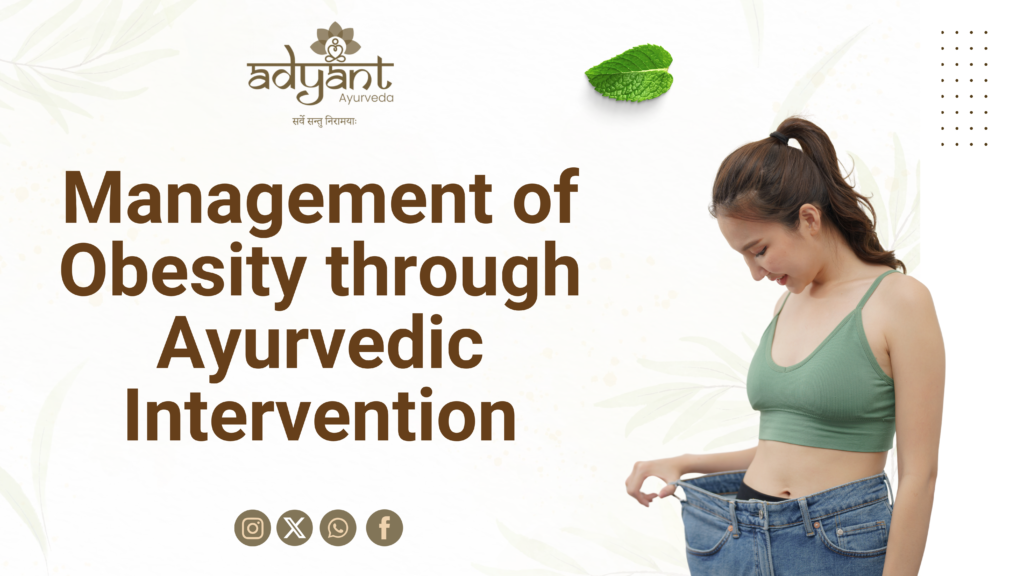
ToggleCase Study: Ayurvedic Management of Obesity (Sthoulya) through Panchakarma and Lifestyle Modification
Presented by: Dr. Vidya, BAMS
Specialization: Lifestyle Disorders & Metabolic Disease Management
Clinic: Adyant Ayurveda, Kalyan Nagar, Bangalore
Abstract
Obesity (Sthoulya) is a rapidly increasing lifestyle disorder globally, linked to sedentary habits, irregular dietary patterns, and stress. It contributes to diabetes, hypertension, cardiovascular conditions, and hormonal imbalance.
In Ayurveda, Sthoulya is viewed as a Kapha-Medo Dhatu imbalance caused by Agnimandya (weak digestion) and Ama (toxin accumulation). The Ayurvedic approach focuses on detoxification, metabolism correction, and sustainable lifestyle change rather than crash dieting.
This case study illustrates how a structured Ayurvedic program—integrating Virechana, Udwarthanam, internal herbal formulations, and lifestyle correction—achieved significant weight reduction and metabolic improvement in a 38-year-old female patient at Adyant Ayurveda, Bangalore.
Key Highlights
-
Condition: Obesity (Sthoulya)
-
Treatment Duration: 3 months
-
Total Weight Reduction: 7 kg
-
Therapies Used: Virechana and Udwarthanam Panchakarma
-
Outcome: Improved digestion, energy, mood, and metabolism
-
Location: Adyant Ayurveda, Kalyan Nagar, Bangalore
Case Profile
| Parameter | Details |
|---|---|
| Patient | 38-year-old married female |
| Chief Complaints | Progressive weight gain over the past year |
| Initial Weight | 85 kg |
| Diagnosis | Sthoulya (Obesity) based on Ayurvedic assessment and BMI |
| Treatment Duration | 3 months |
| Outcome | 7 kg weight loss, improved digestion, energy, and mental clarity |
Treatment Protocol at Adyant Ayurveda
1. Dietary and Lifestyle Modifications
The patient was counselled for sustainable habits aligned with her Prakriti and Vikriti.
Dietary Guidelines:
-
Warm, light, freshly prepared meals emphasizing millets, soups, and steamed vegetables.
-
Avoided curd, paneer, fried foods, sweets, and refrigerated items.
-
Consumed warm water infused with Trikatu or Lemon–Honey daily.
-
Followed regular meal timings and avoided late-night eating.
Lifestyle Guidelines:
-
Daily walking (45 minutes), Surya Namaskar, and Pranayama (Kapalabhati & Bhastrika).
-
Avoided daytime sleeping and excessive screen time.
-
Practiced mindfulness and meditation to manage stress.
2. Internal Medications
| Medicine | Dosage | Duration | Purpose |
|---|---|---|---|
| Medohara Guggulu | 2 tablets twice daily before food | 3 months | Reduces Medo Dhatu, enhances lipid metabolism |
| Chitrakadi Vati | 2 tablets twice daily before food | 7 days (Deepana–Pachana) | Improves Agni (digestive fire), eliminates Ama |
| Triphala Churna | 1 tsp at bedtime with warm water | 3 months | Detoxification, bowel regularity, antioxidant support |
3. Panchakarma Therapies
| Procedure | Date / Duration | Details & Medications Used |
|---|---|---|
| Deepana–Pachana | 13/02/2025 – 19/02/2025 | Chitrakadi Vati for stimulating digestion |
| Snehapana (Internal Oleation) | 20/02/2025 – 23/02/2025 | Kantakari Ghrita in ascending dosage |
| Abhyanga (Oil Massage) | 24/02/2025 – 26/02/2025 | Dhanwantharam Taila for body; Ksheerabala Taila for head |
| Swedana (Steam Therapy) | 24/02/2025 – 26/02/2025 | Dashamoola Nadi Sweda to expel toxins |
| Virechana (Therapeutic Purgation) | 27/02/2025 | Trivrut Lehya – 80g; 15 Vegas observed; procedure well tolerated |
| Udwarthanam (Dry Powder Massage) | 02/03/2025 – 10/03/2025 | Udwarthana Churnam (Kola–Kulattha–Yava) for fat mobilization |
Results and Outcome
| Parameter | Before Treatment | After 3 Months |
|---|---|---|
| Weight | 85 kg | 78 kg |
| Total Weight Loss | — | 7 kg |
| Digestion | Sluggish, bloating | Light and regular |
| Bowel Regularity | Irregular | Regular, clear |
| Energy & Mood | Lethargic, low energy | Active, stable mood |
Patient-Reported Benefits:
-
Feeling lighter and more energetic.
-
Reduced food cravings and bloating.
-
Improved self-confidence and focus.
Discussion
From an Ayurvedic perspective, obesity arises due to Kapha Dosha aggravation, Agnimandya, and Medovriddhi. The patient’s sedentary routine and heavy diet led to metabolic imbalance and toxin accumulation (Ama).
The treatment focused on:
-
Enhancing Agni to normalize digestion and metabolism.
-
Eliminating Ama through Virechana.
-
Mobilizing stored fat via Udwarthanam and Swedana.
-
Supporting fat metabolism through Medohara Guggulu and Triphala.
-
Sustaining results with diet and lifestyle discipline.
The synergy of internal medicines and Panchakarma therapy corrected underlying imbalances, improving both physical and psychological health. The outcome validates that Ayurveda provides a holistic, side-effect-free approach for weight loss and obesity management.
Patient Perspective
“After years of trying diets with no success, the Ayurvedic approach at Adyant Ayurveda helped me lose weight naturally. My digestion, energy, and sleep improved, and I now feel more balanced and positive.”
Conclusion
This case demonstrates the success of Ayurvedic obesity treatment in Bangalore through Panchakarma, internal herbal medications, and structured lifestyle modification. The patient achieved 7 kg weight loss and significant improvement in metabolic functions in just three months.
Therapies like Virechana and Udwarthanam, when administered by experienced Ayurvedic doctors, provide sustainable and natural weight management results.
Adyant Ayurveda continues to offer evidence-based, personalized Ayurvedic care for obesity, diabetes, thyroid disorders, and metabolic diseases through its multi-center presence in Bangalore.
Our Other Case Studies
1. A Classic Case Study of the Effectiveness of Panchakarma Virechana in Psoriasis
2. A Comprehensive Management of Hyperlipidemia With A Case Study From Adyant Ayurveda
3. Effect of Virechana for Diabetes – A Success Story From Adyant Ayurveda
4. Effect of Virechana on Hypothyroidism – A Case Study from Adyant Ayurveda
5. Female Infertility With Tubal Blockage And Hydrosalpinx Case Study
7. Management of PCOD Through Ayurvedic Intervention – A Case Study From Adyant Ayurveda
8. Management of Dyslipidaemia Through Ayurvedic Intervention -A Case Study from Adyant Ayurveda